
Royal Buffet has been a staple in the Woodridge area, particularly for those in the business community, thanks to its extensive and appealing menu, paired with high customer satisfaction. In this exploration, we delve into Royal Buffet’s robust menu diversity and the experiences shared by satisfied patrons, which underscore its significant place in the local dining scene and its appeal for businesses looking to cater events or entertain clients.
A Mosaic of Flavor: Navigating the Expansive Menu at Royal Buffet in Woodridge, IL
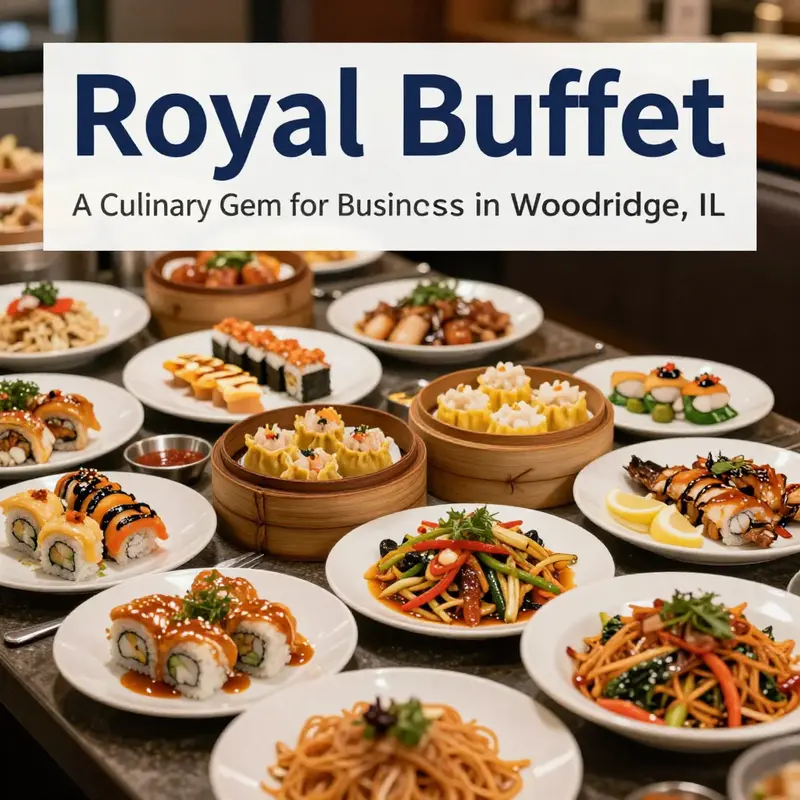
In Woodridge, Illinois, where the western edge of Chicago’s vast culinary landscape meets a neighborhood rhythm of family dinners and weekend gatherings, the Royal Buffet sits as a steady beacon for diners who crave both comfort and novelty in a single sitting. The restaurant, rooted at 1400 75th St, has earned a reputation not just for quantity but for a thoughtful breadth of offerings that invite a long, curious journey across cuisines and textures. It’s the kind of place where a single plate becomes a passport to familiar favorites and unexpected discoveries, all arranged in a way that encourages exploration without pressure. The layout and flow of the buffet are a quiet testament to how a menu can act as a map, guiding guests from warm, familiar fragrances to brighter, more adventurous notes as their appetite evolves through the course of a meal. Over the years, Royal Buffet has cultivated a dual promise: steady quality and generous variety, a combination that continues to draw regulars as well as newcomers who want to dip into a spectrum of flavors without needing multiple dining stops in a single afternoon or evening.
The centerpiece of this approach is the sheer scale of the menu, which leans into seafood abundance while weaving in a broad assortment of Chinese and Asian dishes. A long row of seafood selections often anchors the buffet’s most talked-about stations, featuring items prepared in ways that highlight freshness, texture, and the comforting, crowd-pleasing appeal of well-executed preparation. These offerings give guests the bite of the ocean with the accessibility of a buffet setting—no reservation required, no long wait for a kitchen to plate a dish, just a familiar rhythm of picking, sampling, and returning for one more helping. Beyond the seafood, the heart of Royal Buffet’s diversity rests in its ability to balance traditional staples with dishes that whisper of other regional sensibilities across Asia. The result is a dining experience that feels like a curated tour rather than a single recipe book, where every plate is a page and every station a chapter in a broader narrative about shared meals and generous spirit.
A walk through the menu reveals a spectrum that readers can imagine as both a pantry and a gallery. The Chinese and broader Asian sections offer a robust blend of textures: crisp-tender vegetables, marinated meats, and starches that soak up sauces in just the right way. For many guests, the comfort of classic combinations—think sweet elements paired with savory bases and the easy harmony of ginger, garlic, and scallion hints—provides a reliable anchor as they navigate the rest of the room. Yet the buffet does not stop at the predictable. It leans into the thrill of variety with a seafood emphasis that feels both celebratory and practical, especially for groups where different palates must be satisfied without turning the dining room into a menu compromise. The abundance invites a slow, deliberate approach to tasting, encouraging guests to compare textures, aromas, and temperatures across stations. If a plate once felt flat, a second pass often reveals a brighter citrus note or a subtler spice that had been tempered by a nearby dish and now emerges as a new highlight.
In this landscape, the seafood section is frequently a conversation starter. It’s not simply about quantity but about the way the kitchen handles seafood so that the natural sweetness and briny nuance come through without being submerged under heavy sauces. The result is a notion that seafood can be both luxurious and approachable within a buffet format. The fresh rolls and sushi offerings are another signature facet of the menu’s breadth. They introduce a texture contrast to the more familiar fried and sauced items, offering cool, delicate bites that cleanse the palate between richer choices and invite guests to reset their senses before returning to the next wave of dishes. Sushi here is not presented as a luxury add-on but as an integral part of the diverse menu experience, a reminder that a buffet can honor both traditional cooking methods and newer techniques without leaning too heavily in one direction.
The more traditional Cantonese and regional Chinese dishes share space with spicier excursions designed to awaken a different layer of appetite. Patrons who seek heat can encounter noodles and stir-fries that carry a defined, pepper-kissed heat, echoing Sichuan and broader Chinese culinary accents while remaining inviting to newcomers who are still calibrating their tolerance. The spicy options are balanced by milder preparations that emphasize the comforting warmth of a well-seasoned broth or a glossy, lightly sweet glaze that coats vegetables and protein in a way that invites a second helping rather than a single bite-and-move-on moment. The dining experience becomes a conversation between sweetness, sourness, salt, and a measured amount of heat—an invitation to gauge personal preferences by sampling slowly and letting each bite guide the next choice.
What makes the menu genuinely notable is its newly updated status, a sign that the restaurant remains committed to evolving while preserving what guests already love. The refresh is not simply about adding items; it’s about updating the balance and refining the execution across stations. Dishes that may have seemed casual in the past are revisited with sharper techniques, while popular staples receive updates that enhance their textures, consistency, and aroma. It’s a careful calibration that acknowledges both the time-tested comfort of familiar dishes and the excitement of new taste pairings. For guests who follow the restaurant’s updates on social platforms or its official channels, the refresh often brings seasonal or limited-time items that rotate in and out of the buffet lineup, a reminder that a buffet can be both a fixed anchor and a living menu that responds to palate trends, seasonal ingredients, and the preferences of a diverse clientele. This dynamic quality is what keeps a long-standing institution feeling fresh and relevant, and it aligns with the broader aim of a buffet that seeks to accommodate different ages, backgrounds, and dining rhythms in a single communal space.
A practical dimension of this diversity is how the menu supports different eating styles and dietary considerations without fragmenting the dining experience. Vegetarians and those seeking lighter options find a thoughtful array of vegetables, tofu preparations, and rice-based dishes that carry textures and seasonings distinct from meat-centric plates. Gluten-conscious guests can often navigate the selection with an eye toward sauces and marinades that lean on soy-based flavors alongside lighter broths and vegetable-forward preparations. The presence of a wide range of items also encourages families and groups to approach their plates with collaborative spirit: adults sampling more adventurous flavors while younger diners might gravitate toward milder options, and everyone meets at the same table to compare impressions and adjust plans for the next round. In this sense, diversity is less about novelty for its own sake and more about creating a shared space where different preferences coexist comfortably, allowing for conversation and connection to unfold around the table.
The dining tempo at Royal Buffet—how guests move from station to station, how plates accumulate, how conversations drift between bites—is also shaped by the restaurant’s layout and pacing. The room is organized to invite a broad sweep of the menu without overwhelming a first-time visitor. A confident, efficient service rhythm ensures that hot dishes stay hot and fresh items appear with reasonable frequency, so guests feel encouraged to revisit their favorites and re-evaluate what new flavors might be worth chasing after a second or third plate. The experience rewards curiosity without demanding it, a balance that matters when a menu spans so many potential paths. In practice, this means guests can spend a longer evening here, sampling smaller portions of several dishes to build a more complete memory of the menu, rather than rushing through a quick, linear tasting that favors speed over depth.
The value of such a diverse menu is not limited to personal satisfaction. For families, groups of friends, or coworkers gathering for celebrations or casual meals, the breadth of options translates into efficiency and inclusivity. It minimizes negotiations around what to order and maximizes the chance that everyone finds something to enjoy. It also frames the meal as a shared event—an opportunity to watch the kitchen’s artistry across different culinary languages converge in a single room. This sense of communal appetite is what turns a buffet into a social ritual, where strangers become companions who compare notes about spice levels, sauces, and textures as if they are cataloging memories rather than composing a shopping list. That social texture—the way people talk with their mouths full of steaming noodles, or with chopsticks poised mid-air over a bright plate of sushi—embeds the menu in the story of the place itself.
For readers who want to explore the menu in more detail, the restaurant makes it easy to glimpse the breadth and to track updates as they happen. The internal hub where the menu is presented offers a concise overview of categories and highlights, inviting curious guests to plan a first pass and a subsequent revisit with new eyes. This approach is especially helpful when visiting with a purpose beyond casual dining—for example, if you are coordinating a larger group order or designing a tasting sequence that showcases both comfort food and more exploratory options. The ability to see what’s newly added or refreshed can guide choices and set expectations for what to seek out on any given day. In this sense, the menu becomes a living document, a reflection of a kitchen that remains attentive to its diners while preserving the warmth and abundance that have defined the place for years.
For those who want a compact entry point to this diverse landscape, the best starting place is to explore the Royal Buffet Menu. It’s a concise map of the journey, highlighting the major stations and the flavors you can expect to encounter across the table. You can explore in detail at the Royal Buffet Menu. The menu’s spirit—an invitation to discover, compare, and delight—remains faithful to the core promise of the restaurant: generous portions, a spectrum of tastes, and a setting that makes shared meals feel both special and unpretentious. The update cycle reinforces this promise, ensuring that the menu remains relevant to current palates while honoring the comfort and reliability that keep guests returning.
As with any long-standing dining room, firsthand impressions matter most. The most persuasive testimony comes not from a single dish or a lone visit, but from the way a table of friends or family members experiences the menu over time. The sense of discovery—of new textures, new balance between heat and sweetness, or a refined update to a beloved staple—accumulates into a memory of a place that continues to evolve without losing its essential warmth. Royal Buffet in Woodridge has built a reputation on this balance: it satisfies the desire for abundance, respects the palate’s range, and remains attentive to the social fabric of shared meals. In a market crowded with quick-service options and fast-casual plates, a dining room that offers both breadth and care feels notable, even in a region dense with Chinese and Asian-influenced options.
For readers who want to gauge the restaurant’s current standing from the perspective of guests, the latest feedback captured on popular review platforms offers a useful barometer. You can browse recent impressions and experiences at the establishment on Yelp, where patrons share what stands out most in their visits, including how the updated menu resonated with their tastes and how the overall dining experience held up across varied appetites and group sizes: https://www.yelp.com/biz/royal-buffet-woodridge-illinois.
In sum, the menu at Royal Buffet in Woodridge is less a static lineup and more a living canvas, painted with broad strokes of seafood abundance, familiar Chinese staples, and adventurous notes that invite exploration. It is, in its ideal form, a space where a family can begin with comforting picks and then chart a course through noodles, sushi, and hot-pot-inspired flavors that feel both rooted in tradition and touched by contemporary tastes. The newly updated menu reinforces this dynamic, signaling that the restaurant remains attentive to its guests while continuing to refine what a modern buffet can be: a generous, shared table that honors diversity in a way that feels both welcoming and purposeful. If you are planning a visit, set aside room for a deliberate tasting, allow time for a second pass, and let the menu’s breadth guide you toward a restorative, communal dining experience that speaks to the heart of what a rich, well-curated buffet can offer.
Steaming Plates, Steady Hospitality: A Cohesive Portrait of Royal Buffet in Woodridge, IL

The moment you turn onto 75th Street in Woodridge, the building that houses Royal Buffet rises with the quiet confidence of a longtime local. It isn’t flashy, but the signage is clear, and the windows reveal a hall that feels both familiar and welcoming. This is a place that has stood the test of time in the Western Suburbs, where families and neighbors come together not for novelty but for consistency. The restaurant at 1400 75th St has earned a reputation not just for quantity but for a steady quality that keeps a steady stream of guests returning week after week. Inside, the air holds a gentle hum of conversations, the clink of plates, and the soft steam that often travels from the buffet lines to the tables. The environment does not rely on high spectacle; it relies on dependable rhythms: fresh pans being rolled out, clean surfaces wiped down with a practiced hand, and a staff that knows when to step in and when to step back. In many ways, the experience mirrors a neighborhood itself—unpretentious, reliable, and quietly attentive to the needs of varied diners who call this place a regular stop on their culinary maps.
The buffet’s breadth is one of its most inviting features. Patrons speak in superlatives about how the front lines are almost always fully stocked, and the presentation of dishes is kept orderly enough to minimize wandering, which matters when families with children are navigating a crowded room. The kitchen team appears to run a tight ship, with declarations of a clean and well-maintained dining floor echoing through conversations in the aisles. When guests describe a feast that stretches across multiple cuisines, it is not just about variety but about the confidence to sample widely without fear of underwhelming offerings. The seafood selections, in particular, receive frequent praise, and Sundays in many households become a ritual of loading plates with a generosity that feels more like a celebration than a simple meal. The abundance here isn’t merely indulgence; it’s a signal that this buffet’s organizers understand the impulse to share, especially when a family or a couple wants to explore a spectrum of tastes in one sitting.
The price point, often cited by families looking for a day-out option, sits around a value that makes a dinner out feel accessible rather than extravagant. A common snapshot centers on a family of three finding a comfortable balance between quantity and quality, leaving with a sense of satisfaction that doesn’t require compromising on the budget. This is relevant in a suburb where options can drift toward either higher-end experiences or more casual, quick-service formats. Royal Buffet positions itself in the middle ground, offering a broad array of dishes that can appeal to children and adults alike without the pressures that sometimes accompany more specialized meals. In tandem with the meals, the dining hours—Monday through Saturday from 11:00 AM to 9:00 PM, with Tuesdays closed—create a reliable window for families juggling school, work, and weekend activities. The predictability of hours, in a sense, is a form of hospitality itself, allowing guests to plan with a sense of ease rather than last-minute scrambles to fit a meal in.
In recent times the restaurant has taken visible steps to refresh its approach. Menu updates signal a balance between honoring the classics that regulars expect and weaving in updates that respond to evolving tastes. It is a reminder that a long-standing venue does not rest on past laurels but actively tunes its offerings to reflect the appetite of the neighborhood it serves. From a dining culture standpoint, this can feel like a subtle but meaningful invitation to return, to discover a new favorite among familiar dishes, and to observe how a kitchen, much like a community, grows more nuanced as it ages. The changes are not mere cosmetic wink-winks; they indicate a willingness to listen—an essential ingredient in any hospitality enterprise that aims to remain relevant.
For many families and local patrons, consistency is as important as novelty. The staff’s demeanor often frames the experience more than the variety itself. Quick, courteous refills, a readiness to answer questions about ingredients, and a steady presence on the dining floor all contribute to a sense of being cared for without the sense of being watched. This is not to say every visit unfolds without a hitch. The most discussed concerns around buffet dining tend to orbit around food safety, which can be a global undercurrent of skepticism for those who regularly navigate crowded, self-serve formats. In the case of Royal Buffet, the broader narrative includes both the abundance that invites indulgence and the cautions that remind guests to remain mindful about freshness and holding times. A notable thread in the conversation comes from reviews that emphasize the seriousness with which patrons should approach buffet dining as a practice of balance: enjoying a wide spectrum of dishes while staying attentive to how long items have been out, how they are stored between refills, and how well food hygiene standards are maintained across sections.
That tension—between abundance and vigilance—is not unique to this Woodridge venue. It echoes a larger conversation about buffets everywhere: the thrill of variety and the responsibility of keeping food safe for longer service windows. Some guests have shared experiences of feeling unwell after a visit. These anecdotes, while isolated in many ways, have a lasting impact on how new visitors approach a meal, especially when they arrive with a sense of caution shaped by online chatter and the memories of others. The reality is that buffet dining can introduce complexity around food safety that sits alongside the simple pleasure of piling a plate high. Prospective diners often weigh both the positive, such as the plentiful seafood on Sundays, and the potential downsides, including the need for vigilant assessment of freshness and temperature during their own visit. To those who come with children or aging relatives, this becomes a practical component of planning: when to visit for the best chance of freshness, how to observe the environment, and which lineups are most likely to be replenished with hot, well-holding dishes during the peak hours.
If there is a thread that unites most patrons’ experiences, it is a sense of belonging—the sort of reassurance that a family can walk into a buffet and feel at home. The lineup in the dining room often mirrors the mosaic of communities that fill the suburb: a mix of longtime locals, newcomers, and visitors who have driven from nearby towns in search of an affordable, convivial meal. The environment itself—clean enough to feel inviting, with a rhythm that can absorb a table full of chatter without becoming chaotic—helps sustain that sense of belonging. The restaurant’s ability to attract a range of tastes—from the simplest to the more adventurous—speaks to a careful curation of dishes that are plated with a recognizably consistent standard. In a space where time seems to move a little more slowly, and where families linger over conversations about daily life, Royal Buffet occupies a quiet importance. It becomes a backdrop for celebrations, a convenient stop after a long day at work, or a dependable weekend errand where the objective is comfort, flavor, and a shared experience that can accommodate different ages and preferences in the same room.
For readers who want a sense of the current scope of offerings and the latest updates, a quick check into the official page can be illuminating. The venue’s ongoing conversation with its guests—reflected not only in the kitchen’s evolving menu but in how the dining space is managed and cleaned—offers a model of how long-running restaurants remain relevant without sacrificing the core values that many customers first encountered when the doors opened. If curiosity leads you to look beyond the walls of the Woodridge location, you can explore related experiences in other towns as a point of comparison. Visitors often use these journeys to calibrate expectations about service styles, portion sizes, and overall atmosphere across the brand’s footprint. For a broader sense of the restaurant’s broader offerings and latest updates, see the official page royal-buffet.
In the end, what makes Royal Buffet in Woodridge a meaningful stop is less a single dish or a dramatic ambience and more a dependable scaffolding of hospitality. It is a place where the routine is comforting, where families can map out a Saturday evening around a tray of familiar favorites, and where the staff maintain a pace that respects a wide range of needs. The room remains a space of shared appetite, where the ritual of choosing, tasting, and returning to the table becomes part of the family memory. And while no dining scene is free from the variables of safety and freshness, the overall experience at this Woodridge staple leans toward the confident assertion that a well-run buffet, with its generous lines and steady service, still holds a special place in a community’s life. Those who come prepared—content with a broad tasting spectrum, mindful of the cues around cleanliness, and open to a bit of culinary surprise—often leave with that subdued, satisfied glow that marks a night well spent around steaming platters and the company of loved ones.
External resource: for additional perspectives and real-time reviews from diners, see the Yelp page linked to Royal Buffet in Woodridge. https://www.yelp.com/biz/royal-buffet-woodridge-illinois
Final thoughts
In conclusion, Royal Buffet not only stands out in the Woodridge dining scene due to its eclectic menu but also shines in customer satisfaction and experience. Business owners looking to explore catering options or host gatherings can confidently rely on Royal Buffet’s offerings. As you consider dining options or event planning, keep in mind how a well-rounded menu and positive customer experiences can enhance engagement and satisfaction for your business gatherings.