
Exploring the Allure of Buffet Restaurants
Buffet restaurants have emerged as a captivating business model that appeals to both diners and aspiring entrepreneurs alike. These establishments offer a unique dining experience where guests can enjoy a diverse array of dishes at a fixed price, fostering a sense of abundance and variety that traditional restaurants struggle to replicate. For business owners, buffets present significant operational advantages; they enable efficient use of food resources by allowing for bulk purchasing and reduce labor costs through streamlined service models. Moreover, the appeal of a buffet lies in its ability to attract a broad customer base, from families seeking a leisurely meal to individuals craving a gastronomic adventure. As such, buffet restaurants not only meet the culinary demands of a diverse clientele but also stand as a lucrative venture in the competitive restaurant landscape. For insights into an exemplary buffet model, explore Royal Buffet and discover its success in bringing delectable dishes to communities.
Buffet Restaurant Business Models: An Informative Overview
Buffet restaurants have gained popularity for their unique dining experiences, allowing customers to serve themselves from a wide variety of dishes. As a business owner, understanding the different buffet restaurant models is crucial for operational success and profitability. The two primary models are self-service and full-service buffets. Each has its unique set of pros and cons.
Self-Service Buffet Model
In a self-service buffet, customers independently select and serve their food. This model typically requires fewer staff members and can result in reduced operational costs.
Pros:
- Lower Operational Costs: Minimal staff means lower payroll expenses.
- Increased Customer Turnover: Greater number of guests can be served in a shorter time.
- Flexibility in Menu Variety: A diverse selection of food can cater to various tastes without major staffing adjustments.
Cons:
- Higher Food Waste: Customers may take more food than they can eat, increasing costs.
- Customer Experience: Limited interaction with staff may lead to a perception of less personalized service.
Full-Service Buffet Model
In a full-service buffet, staff members take orders, serve food, and clear tables, creating a more traditional dining experience.
Pros:
- Enhanced Customer Experience: Personalized service can significantly improve guest satisfaction.
- Controlled Portions: Staff can manage portion sizes, reducing waste.
- Quality Control: Continuous oversight ensures food quality and freshness.
Cons:
- Higher Operational Costs: More staff leads to increased expenses.
- Slower Service: Depending on the volume of guests and staffing efficiency, wait times may increase.
Comparative Analysis of Self-Service vs. Full-Service Buffets
Below is a comparative table summarizing the key differences between self-service and full-service buffet models.
| Factor | Self-Service Buffet Model | Full-Service Buffet Model |
|---|---|---|
| Operational Costs | Lower | Higher |
| Staffing Needs | Minimal | High |
| Customer Experience | Flexible; high throughput | Personalized; potentially slower |
| Food Waste | Moderate to high | Lower |
| Menu Variety & Quality | Variable; requires rotation | Consistent through oversight |
| Scalability | High | Limited |
| Profit Margins | Potentially higher | Generally lower |
| Guest Satisfaction | Mixed | Generally higher |
By assessing these factors, business owners can make informed decisions based on their target market and operational capabilities. Explore buffet options and menus to see various types of buffet establishments and their operational styles.
Revenue Trends in Buffet Restaurants
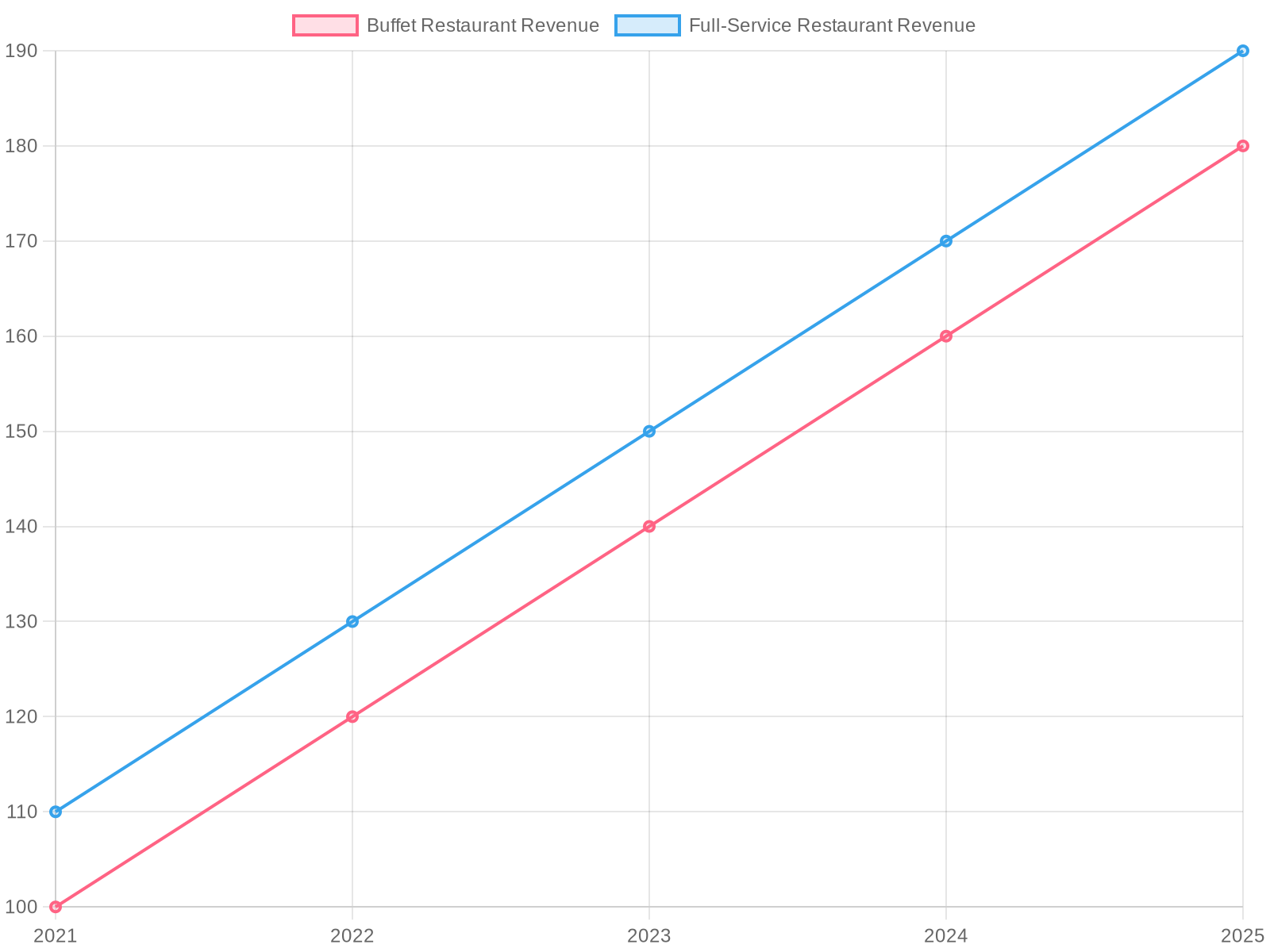
Recent trends indicate a growth in buffet restaurant revenues. The buffet sector has evolved, adapting to consumer preferences for more diverse and healthier food options. The revenue projected for buffet restaurants is increasing, showcasing continued demand for varied dining experiences.
Click here to read more about restaurant trends
In summary, both self-service and full-service buffet models offer unique advantages and drawbacks. Understanding these differences is key for any entrepreneur looking to succeed in the competitive buffet restaurant sector.
Notable Buffet Restaurants in the U.S.
Here’s a list of five successful buffet restaurants known for their unique selling points, popular dishes, and demographics they serve:
-
Blossom Buffet, South Carolina
-
USP: Affordable pricing at $17.25 for an all-you-can-eat experience with free drinks. Known for its consistency and value.
-
Fan-Favorite Dish: Their variety of Chinese dishes including sushi and dumplings.
-
Demographic: Families, especially those seeking value dining experiences.
-
Incredible Food and Fun, Oklahoma City
-
USP: Combines affordable meals ($10.99) with entertainment options like game zones, making it family-friendly.
-
Fan-Favorite Dish: Classic American comfort foods, such as fried chicken and pizza.
-
Demographic: Families with children looking for both food and activities.
-
Super Buffet, West Virginia
-
USP: Classic Chinese buffet priced at $14.99 with complimentary drinks and a straightforward menu.
-
Fan-Favorite Dish: General Tso’s chicken.
-
Demographic: Those seeking value and consistency in casual dining.
-
Umi Hotspot Sushi & Seafood Buffet, California
-
USP: Specializes in sushi, rated 4.8 on Google, with free soft beverages.
-
Fan-Favorite Dish: Sushi rolls and seafood options.
-
Demographic: Young adults and sushi lovers.
-
Bacchanal Buffet, Las Vegas
-
USP: Luxurious all-you-can-eat experience with global cuisines.
-
Fan-Favorite Dish: Diverse selections from different culinary traditions.
-
Demographic: Tourists and visitors seeking an indulgent dining experience.
For more insights on buffet operations, check out Royal Buffet for best practices and menu ideas!
Achieving Operational Efficiencies in Buffet Restaurants
Operational efficiency is crucial for buffet restaurants, where high volume and diverse menu items pose unique challenges. Here are key areas where buffet establishments can enhance their operational efficiency:
1. Staffing Optimization
Proper staffing is essential in buffet operations. Analyzing peak hours and customer flow patterns helps in scheduling employees efficiently. According to a recent study, effective staff scheduling minimizes labor costs while ensuring high service levels. Utilizing technology like scheduling software can help manage shifts and predict staffing needs more accurately.
2. Inventory Management
Inventory management is pivotal in controlling food costs and reducing waste. Implementing a robust inventory tracking system allows restaurant owners to monitor stock levels in real time. As suggested in the Ultimate Guide to Restaurant Inventory Management, utilizing first-in, first-out (FIFO) practices and accurate forecasting techniques can mitigate spoilage and waste, thus improving margins.
3. Cost-Saving Measures
Buffet restaurants can adopt numerous cost-saving strategies, such as:
- Food Waste Management: Implementing efficient food waste processing methods, including anaerobic digestion, can lower disposal costs while converting waste into usable products, enhancing sustainability.
- Dynamic Pricing Strategies: Adjusting prices based on demand can help manage food costs while maximizing revenue, especially during peak times.
- Bulk Purchasing and Supplier Negotiation: Establishing strong relationships with suppliers and purchasing in bulk can lead to significant cost savings.
By focusing on these areas and embracing technology and streamlining processes, buffet restaurants can significantly enhance their operational efficiencies and profitability.
The Appeal of a Buffet Restaurant
A buffet restaurant is an enticing business model for numerous culinary entrepreneurs, appealing particularly to the atmosphere of choice and variety. In this dining setup, customers are treated to a smorgasbord of options, allowing them to select from an array of dishes that cater to diverse tastes.
Buffets typically feature multiple cuisines and dishes available in a single meal, which is a significant draw for patrons. This format promotes social gatherings, as friends and families can enjoy different foods at their leisure, which encourages repeat visits. With everything from fresh salads to tantalizing desserts, a well-curated buffet can heighten customer satisfaction.
Benefits for Business Owners
- Increased Customer Footfall: The variety encourages larger groups, attracting more customers.
- Cost-Efficiency: By serving dishes in bulk, restaurants can optimize supply and reduce food costs.
- Flexibility in Menu Offerings: Ability to rotate dishes and adapt menus based on seasonal availability and customer preferences.
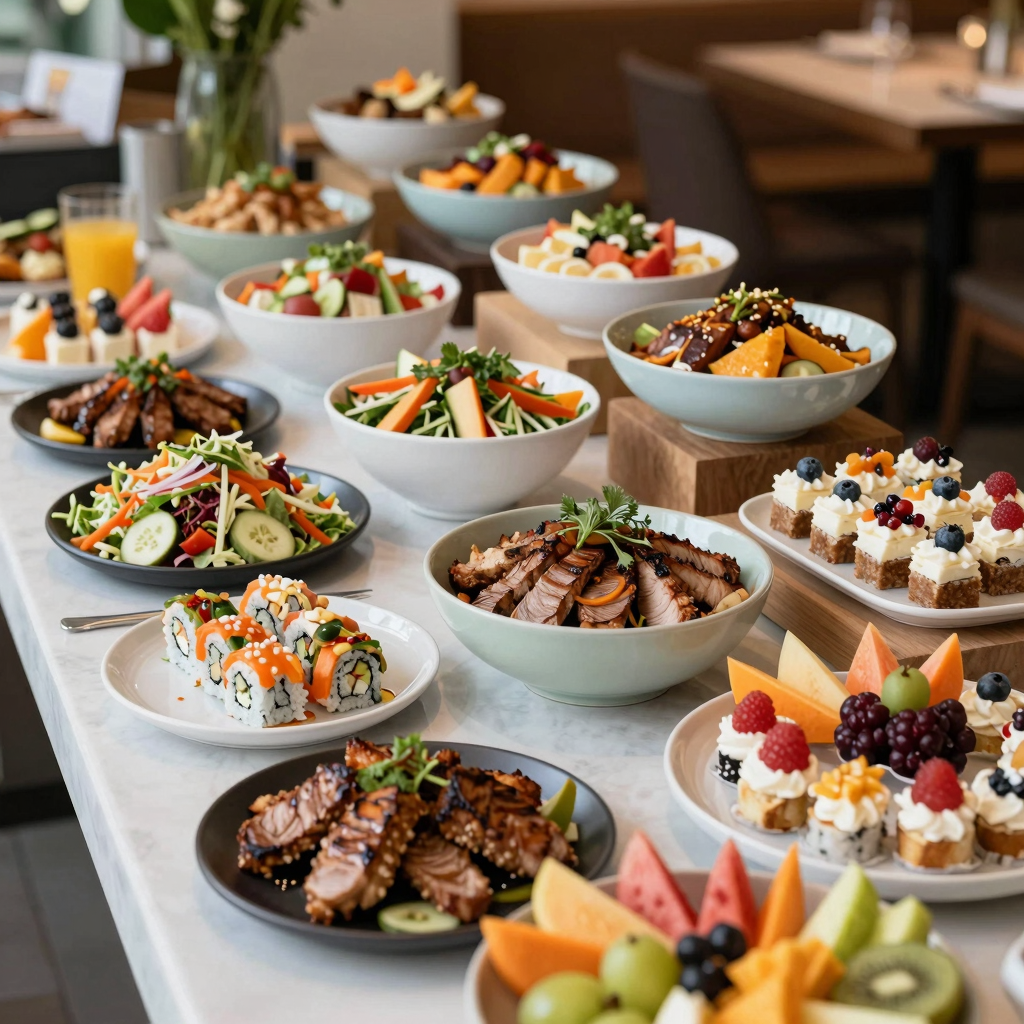
An inviting spread of buffet food showcasing a variety of colorful dishes.
Whether you are considering starting a buffet or seeking ways to improve an existing concept, understanding the dynamics behind a buffet can significantly enhance customer experience and restaurant success. For more insights, learn more about our buffet offerings.
Customer Experience in Buffet Restaurants
Buffet restaurants offer a unique dining experience influenced by several factors that contribute to customer satisfaction and the likelihood of repeat business. Key aspects of the customer experience in buffet settings include service quality, ambiance, and food variety.
Service Quality
Excellent service is crucial in buffet restaurants, as it significantly enhances the overall customer experience. Research has shown that attentive staff and quick service can lead to higher satisfaction levels. A study indicated that quality service is a critical factor affecting customer enjoyment and willingness to return. Ensuring that staff is well-trained and responsive can help create a positive atmosphere, making guests feel valued.
Ambiance
Ambiance plays a vital role in influencing customer perceptions and satisfaction. A well-designed environment with comfortable seating, appropriate lighting, and pleasant decor can enhance the dining experience. According to a study published in the Journal of Hospitality and Tourism Research, elements like lighting and music have a statistically significant impact on customer satisfaction. Notably, personalized ambiance, such as lighting adjustments, can increase satisfaction scores by up to 22%.
Food Variety
Buffets are known for their extensive food variety, which is a significant attraction for diners. A diverse selection caters to different tastes and dietary needs, making it more likely that guests will find something appealing. Offering a mix of cuisines and fresh ingredients can greatly improve the dining experience, leading to repeat visits.
In conclusion, focusing on high-quality service, a pleasing ambiance, and a diverse food selection are critical for buffet restaurants aiming to enhance customer satisfaction and promote loyalty. To explore how effective buffet strategies can be applied in your restaurant, learn more about Royal Buffet.
Consider upgrading your restaurant’s ambiance and service for better customer retention, which can be further analyzed at our Royal Buffet locations.
Cost Comparison of Buffet Restaurants and Traditional Dining Establishments
When considering the financial aspects of running a restaurant, business owners often face the choice between a buffet-style operation and a traditional dining establishment. Below is a comparison table showcasing the average costs associated with both types:
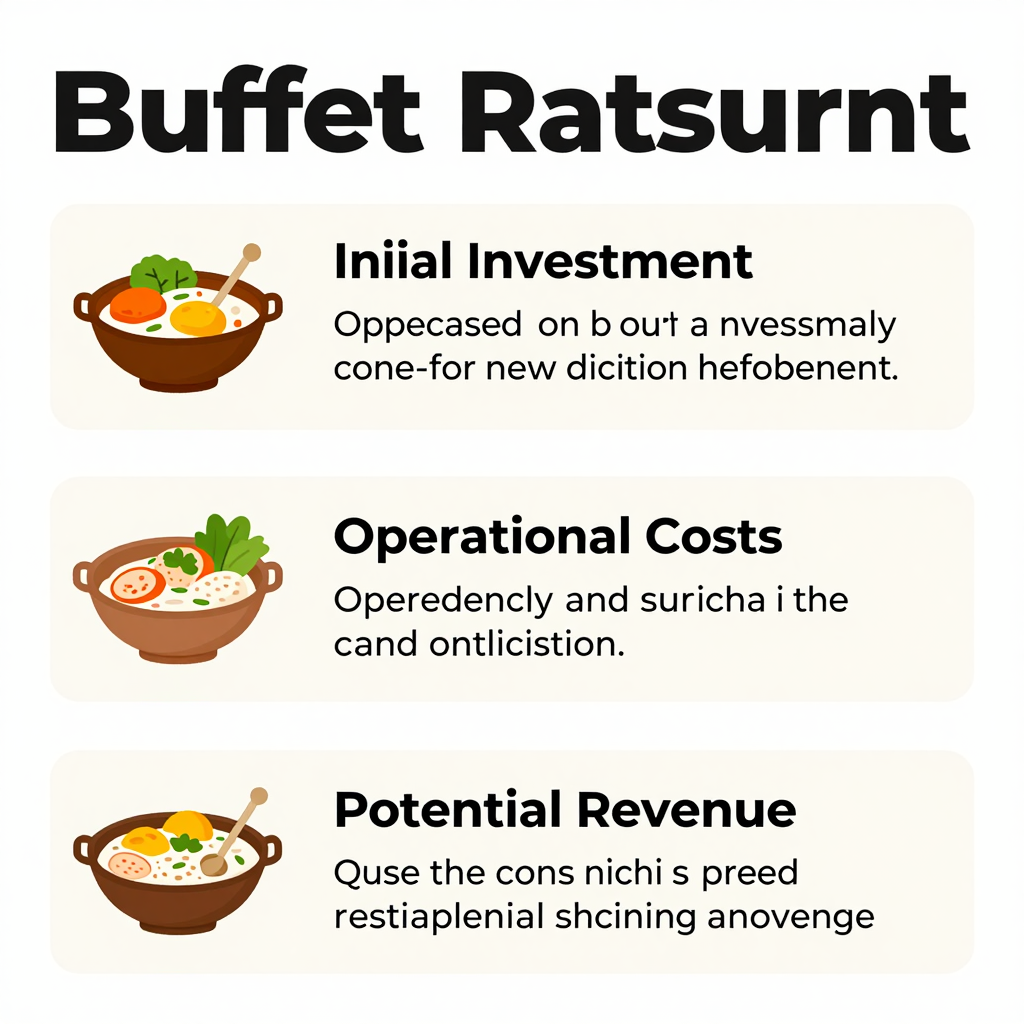
| Cost Category | Buffet Restaurants | Traditional Dining |
|---|---|---|
| Initial Investment | $300,000 – $500,000 | $150,000 – $300,000 |
| Operational Costs | 28% – 32% of revenue | 35% – 40% of revenue |
| Potential Revenue | $28 average check per guest | $20 average check per guest |
Key Insights
- Buffet restaurants can achieve higher table turnover rates (up to 3x per meal), resulting in increased potential revenue.
- While operational costs for buffets are lower per meal due to economies of scale, they face higher labor costs due to continuous food service requirements.
Consider these factors carefully while planning your restaurant venture. For further information, you can explore our buffet menu options and review the buffet’s success in Findlay, Ohio.
In summary, buffet restaurants offer a dynamic business model that thrives on variety, efficiency, and customer satisfaction. They appeal to a broad demographic by providing an all-you-can-eat experience that is not only affordable but also diverse, catering to families and large groups seeking value and choice. The insights discussed highlight that maintaining quality in food offerings, coupled with effective inventory and pricing strategies, can significantly enhance profitability. For existing business owners, these insights suggest opportunities for innovation and adaptation, whether by expanding menu selections or optimizing dining experiences. As the buffet concept continues to evolve, embracing trends in food presentation and customer engagement can empower owners to attract and retain patrons. By implementing these strategies, entrepreneurs can unlock the full potential of the buffet restaurant model and position themselves competitively in the thriving dining market. Learn more about Royal Buffet for inspiration.
The Buffet Model’s Potential
The buffet model has evolved significantly, adapting to changing consumer behaviors and the broader restaurant landscape. As a business owner considering this model, it’s essential to understand its inherent value. Buffet restaurants can offer a diverse menu that attracts a broad audience, providing flexibility for guests who might be unsure of what to eat.
Moreover, the operational efficiency of buffets can lead to lower costs per serving, making it a sustainable option for entrepreneurs in the food service industry.
“The buffet may be self-serve, but it’s not self-managed. Staff are essential to the experience-tipping reflects respect for their role in ensuring a seamless, safe, and enjoyable meal.” – Industry Expert
This quote underscores the importance of staff in enhancing the buffet experience, an often-overlooked aspect that can significantly improve customer satisfaction and repeat business. For more insights into creating a successful buffet venture, consider exploring Royal Buffet and their diverse offerings. Understanding the intricacies of the buffet model can pave the way for successful restaurant operations.
Take the Next Step Toward Operational Excellence
Are you ready to enhance your restaurant’s operational efficiency and make strategic investments that drive growth? At Zoomlion, we understand that every restaurant has unique needs, just like yours, and we’re dedicated to providing you with tailored advice and customized solutions.
Imagine transforming your buffet restaurant into a standout destination-where guest satisfaction meets operational prowess. Our team of experts is here to help you navigate the various options available, from equipment investments to layout optimization, ensuring that your restaurant runs like a well-oiled machine.
Don’t leave your success to chance. Contact Zoomlion today for a personalized quote or consultation. Our specialists are not only knowledgeable but eager to assist you in crafting an efficient, profitable buffet experience.
Waiting any longer could mean missing out on valuable opportunities to enhance your business. Let us partner with you in achieving excellence so that you can extend the ultimate dining experience to your customers. Reach out now and take the first step towards operational success!