
In the ever-evolving culinary landscape, buffet restaurants stand out as a remarkable dining concept that caters to diverse tastes and preferences. For business owners seeking opportunities in the food service industry, these establishments offer a unique model that combines variety, affordability, and convenience, making them highly attractive to consumers. Buffet restaurants not only allow patrons to explore a range of cuisines under one roof but also provide an engaging dining experience that keeps customers coming back for more. With the flexibility to adapt to different trends and dietary needs, buffet restaurants can thrive in various markets, whether in bustling city centers or quaint suburban areas.
As the interest in health-conscious, multicultural options continues to rise, understanding the landscape of buffet dining can unlock lucrative prospects. If you’re curious about this enticing sector, learn more about our offerings at Royal Buffet, where variety and quality meet the needs of today’s consumers.

Benefits of Owning a Buffet Restaurant
Buffet restaurants present unique opportunities for business owners looking to maximize their operations and profits. Here are several persuasive advantages that cater to those exploring this business model:
Higher Customer Turnover
The self-service format of buffet restaurants allows for a significantly higher customer turnover rate compared to traditional dining establishments. Patrons serve themselves, which minimizes wait times and maximizes capacity during peak hours. As reported in a recent Forbes article, this efficiency enables buffet owners to serve more guests, leading to higher revenue generation per hour.
Variety in Menu Offerings
Buffets allow business owners to provide a vast array of food options, catering to diverse tastes and dietary preferences. This variety enhances the customer experience, making it more appealing for families and groups who can select from different cuisines. Additionally, the extensive menu structure may help buffer against fluctuations in ingredient prices, resulting in better inventory management. As stated in an NRA report, buffet restaurants often enjoy a gross profit margin of around 30% to 35%, supported by strategically balancing menu items.
Potential for Themed Events
Hosting themed events is another lucrative aspect of buffet operations. Buffets can create unique dining experiences by offering special menus for holidays or cultural celebrations. These events drive traffic to the restaurant and foster customer loyalty. Themed nights, such as “Taco Tuesdays” or “International Nights,” encourage patrons to return regularly for a memorable social experience, further enhancing profitability.
Conclusion
The buffet restaurant model not only offers significant advantages like increased customer turnover and diverse menu options but also opens doors for creative business opportunities. By leveraging these benefits, owners can effectively enhance the customer experience while achieving favorable profit margins.
Comparing Popular Buffet Restaurant Chains
Buffet restaurants cater to a diverse clientele by offering a wide array of menu items at affordable prices. Here’s a comparison of some notable buffet restaurant chains based on average price per person, menu offerings, and target demographics.
| Restaurant Chain | Average Price Per Person | Menu Offerings | Target Demographics |
|---|---|---|---|
| Golden Corral | $9.99 – $14.99 | American-style dishes including grilled meats, seafood, chicken, ribs, veggies, and desserts. | Middle-income families, working professionals (ages 30-55) Learn more about Golden Corral. |
| Pizza Ranch | $12 – $15 | Pizza, chicken, salad bar, desserts; known for gluten-free options. | Families, groups celebrating events, local community members Learn more about Pizza Ranch. |
| Hometown Buffet | $10 | Standard buffet fare, primarily American dishes; less variety on average. | Families seeking casual dining experiences, budget-conscious diners. |
Insights for Business Owners
- Market Trends: The buffet restaurant model continues to evolve, with family-oriented and budget-friendly approaches being primary focuses for attracting customers. The average meal prices tend to hover under $15, making buffets an attractive option for families.
- Menu Diversity: Restaurants like Golden Corral are expanding their offerings to include themed dinners and special events, enhancing customer engagement and increasing average ticket size.
- Demographics: Understanding your main customer bases can facilitate targeted marketing. For example, Golden Corral primarily serves families and professionals, while Pizza Ranch is focused on local community groups and family events.
This table can serve as a foundation for your market analysis as you consider entering or expanding in the buffet sector.
The buffet restaurant industry is actively evolving, with numerous trends coming to the forefront that business owners should closely monitor. These trends revolve around health-conscious dining, sustainability in food sourcing, and the integration of technology to enhance customer experiences. Here’s a summary of the current trends that buffet restaurants should consider for their business strategies.
1. Health-Conscious Options
Today’s consumers are increasingly health-conscious, and buffet restaurants are adapting by incorporating healthier options into their menus. This includes:
- Low-Sugar and High-Protein Alternatives: Buffets are now providing dishes that cater to various dietary needs, including low-sugar, high-protein, gluten-free, and plant-based options. This adaptation not only attracts health-oriented diners but also aligns with growing trends in functional foods.
- Creative Menu Presentations: Offering visually appealing food that highlights fresh ingredients and nutritional content is essential. These creative presentations encourage customers to choose healthier options available at the buffet.
By embracing health-conscious selections, buffet restaurants can significantly improve customer satisfaction and loyalty.
2. Sustainability in Food Sourcing
Sustainability is increasingly essential in the dining industry, and buffet restaurants are taking action:
- Local Sourcing: Many buffets are choosing to source ingredients locally, supporting regional farmers and reducing transportation emissions. This not only promotes fresh produce but also appeals to customers who are mindful of their environmental impact.
- Waste Reduction Strategies: Implementing systems to minimize food waste is crucial. Many establishments have adopted smart inventory management that helps accurately predict food needs, consequently reducing overproduction and waste.
- Eco-Friendly Practices: The use of biodegradable containers and utensils, alongside composting programs, contribute to a restaurant’s sustainability goals. These practices resonate well with consumers who prioritize environmentally responsible dining.
3. Technology Integration
Integrating technology within buffet restaurants has proven to enhance operations and customer experiences:
- Smart Ordering Systems: Technology such as mobile ordering apps and self-service kiosks can streamline the dining experience, reduce wait times, and personalize meals based on individual dietary preferences.
- Dynamic Pricing and Analytics: Advanced analytics allow buffet owners to adjust price points based on real-time data, helping to manage customer flow and inventory better.
- Customer Insights: Tools that analyze customer preferences can lead to menu adjustments based on what diners want most, ultimately driving sales and enhancing satisfaction.
Conclusion
In conclusion, buffet restaurants face an exciting yet challenging landscape driven by health trends, sustainability, and technology. To stay competitive, businesses should consider implementing health-conscious menu items, sustainable practices, and innovative technology solutions. By doing so, they not only meet customer expectations but also ensure long-term success in the buffet dining sector. For those interested in exploring more about buffet offerings, check out Royal Buffet for a local option that embraces these trends.
For business owners looking to adapt to these industry trends, investing in a robust operational strategy that aligns with health, sustainability, and technological advancements is key to thriving in the buffet restaurant industry.
Growth Trends in the Buffet Restaurant Segment
The buffet restaurant industry has shown significant growth in recent years, recovering gradually from the impacts of the pandemic. According to 2023 data, the total revenue in the buffet segment reached 52,890 billion CNY, marking a 20.4% increase from 2022. Additionally, competition from the western dining market is notable, which has surged to a revenue of 756 billion CNY in 2023.
Revenue Trends Chart
Below is a chart visualizing the revenue trends in the buffet restaurant segment and its comparison to the western dining market:
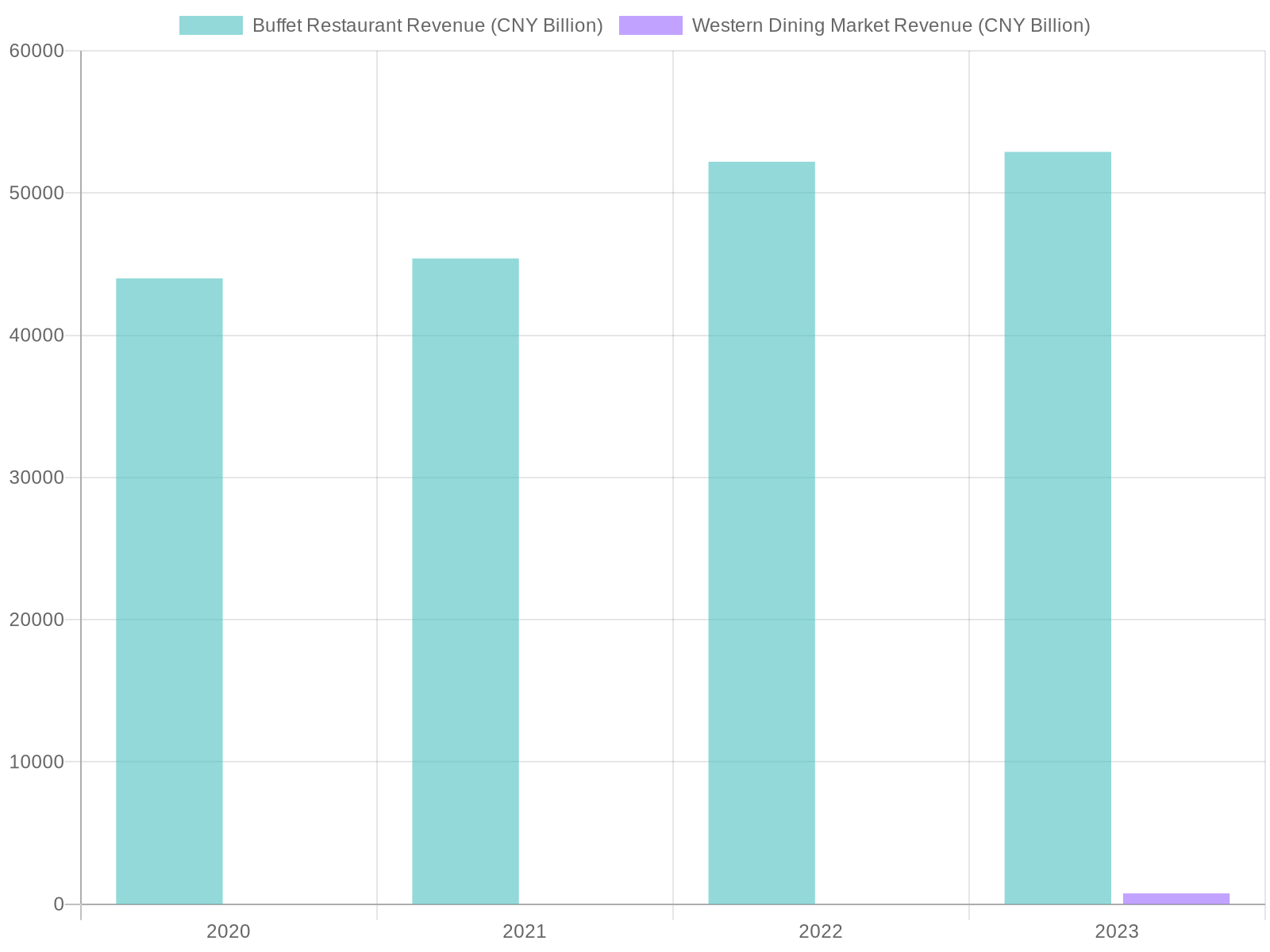
| Year | Buffet Restaurant Revenue (CNY Billion) | Western Dining Market Revenue (CNY Billion) | Growth Rate (Buffet, YoY) |
|---|---|---|---|
| 2020 | 44,000 | – | – |
| 2021 | 45,400 | – | +3.18% |
| 2022 | 52,200 | – | +15.0% |
| 2023 | 52,890 | 756 | +20.4% |
Certainly, the buffet model, particularly the “beef steak + buffet” concept, continues to gain traction due to its affordability and variety. If you’re interested in exploring buffet options, consider visiting Royal Buffet or find more information regarding local locations here.
Best Practices for Running a Successful Buffet Restaurant
Running a successful buffet restaurant involves a blend of food quality, customer service, operational efficiency, and effective marketing strategies. Here are some best practices to consider:
-
Maintain Food Quality: Ensure high standards of freshness and taste. Regularly rotate food items using the FIFO (First In, First Out) method to minimize waste and enhance quality. Additionally, focus on offering signature and seasonal dishes that provide value to customers.
-
Optimize Buffet Layout: Design a logical flow for the buffet that guides guests through different stations while avoiding congestion. Utilize clear signage to help customers navigate the offerings, ensuring they can easily find their favorite dishes.
-
Train Your Staff: Invest in comprehensive training for your staff on food safety standards, customer service, and how to efficiently replenish food stations. Proactive staff can significantly enhance the overall dining experience.
-
Leverage Technology: Utilize digital signage for menu displays and promotions. Implement a POS system to track inventory and customer preferences. This data-driven approach can help you manage costs and improve menu offerings.
-
Implement Tiered Pricing: Consider offering different pricing tiers based on meal times or food quality, which can help maximize revenue.
-
Create Buzz with Themed Events: Organize special themed buffets or limited-time offers to attract new customers and encourage return visits. Using seasonal themes can refresh your offerings regularly.
For more insights into buffet management, check out successful buffet strategies and cost control tips.
“The future isn’t just about quantity-it’s about quality, customization, and sustainability. Innovations like interactive food stations, real-time ingredient tracking, and AI-curated meal plans are becoming standard. Reducing food waste through data analytics is no longer optional but a competitive necessity.”
- Hospitality Analyst (source: Trends Shaping the Buffet Dining Industry)
In today’s rapidly evolving restaurant landscape, business owners considering entering the buffet segment must recognize that success hinges on adopting innovative practices. By focusing on quality and sustainability while leveraging technology, new buffets can not only attract customers but also ensure long-term viability in a competitive market.
In conclusion, buffet restaurants present a lucrative opportunity for business owners seeking to increase profitability and attract diverse clientele. The operational efficiencies derived from the buffet model enable owners to maintain lower food costs while maximizing revenue through effective portion control and menu variety. Moreover, as noted in industry analysis, the buffet dining experience fosters customer loyalty by delivering consistent quality and perceived value, which can elevate user engagement and repeat visits. As the market steadily grows, with a projected annual growth rate of 3.8% through 2026, now is the ideal time to consider the advantages of entering this dynamic sector. Don’t wait – contact us today to discuss your needs and explore how we can support your culinary vision, ensuring your buffet restaurant thrives and becomes a staple in your community.
Successful Buffet Restaurants Case Studies
Buffet restaurants have carved a niche by offering diverse cuisines and experiences, but their success often hinges on innovative strategies and the ability to adapt to challenges. This article summarizes key case studies highlighting effective strategies, challenges overcome, and lessons learned in the buffet dining segment.
Strategies for Success
| Strategy | Description | Source |
|---|---|---|
| AI for Cost Control | The KAMII restaurant case demonstrated how integrating AI can optimize ingredient procurement and minimize waste. By monitoring consumption in real-time, it significantly reduced operational costs while improving service efficiency. | KAMII Case Study |
| Qualitative Menu Labeling | Implementing descriptive labels on dishes helps customers make informed choices, enhancing their overall dining experience. Restaurants reported better customer engagement and satisfaction through this practice. | Menu Labeling Study |
| Waste Reduction Initiatives | Addressing food waste through better portion controls and customer education led many establishments to improve sustainability while maintaining profitability. Engaging customers in the waste reduction process has proven effective. | Waste Reduction Study |
Challenges Faced
Buffet restaurants often encounter unique challenges such as:
- Food Waste Management: Balancing variety to attract customers while minimizing waste is critical.
- Labor Efficiency: High turnover rates necessitate continuous staff training to maintain service standards.
- Customer Preferences: Adapting to varying customer preferences, including dietary restrictions, can be resource-intensive.
Lessons Learned
Business owners in the buffet sector can leverage the following lessons:
- Invest in Technology: Embracing technology like AI can lead to cost savings and enhanced customer satisfaction.
- Market Responsively: Actively seeking customer feedback on menu options helps refine offerings and cater to evolving tastes.
- Crisis Preparedness: Establishing robust operational protocols allows businesses to navigate unexpected challenges, from supply chain disruptions to health emergencies.
These case studies illustrate that buffet restaurants can thrive by employing innovative strategies, understanding customer preferences, and efficiently managing resources.
For further details on options for buffet restaurants, consider exploring the menu at Royal Buffet or the experience offered at Royal Buffet in Findlay, Ohio.