
In the culinary world, a debate brews over the profitability of two contrasting dining experiences: buffets and table service. Buffets, often characterized by their vast assortments and fixed pricing, invite diners to sample a variety of cuisines, enticing customers with the allure of ‘all-you-can-eat’ value. On the other hand, traditional table service relies on personalized attention and curated dining experiences, often resulting in higher per-plate pricing.
The profitability of these dining formats is crucial for restaurant owners, especially in today’s competitive market. According to recent data, full-service restaurants maintain an average profit margin of around 10.6%, while larger establishments can reach approximately 13% (TouchBistro Report 2023). These figures underscore the pressing need for restaurant proprietors to evaluate their operational models closely. In an age where 54% of restaurateurs list food costs as their top financial pressure, the potential of buffets to mitigate these challenges by maximizing customer turnover is particularly compelling. This article delves into buffets’ profitability compared to table service and what this means for the future of the restaurant business.
Are Buffets More Profitable Than Table Service?
The ongoing debate regarding the profitability of buffet-style restaurants versus traditional table service has become more relevant, especially with changing consumer preferences and market demands in 2023. Recent statistics reveal significant differences in profitability metrics between these two types of dining experiences.
Profit Margins Comparison
A comprehensive analysis conducted by recognized sources indicates:
| Metric | Buffet | Table Service |
|---|---|---|
| Average Gross Profit Margin (2023) | 55% | 65% |
| Average Net Profit Margin (2023) | 7.3% | 12.7% |
Key Insights:
- Gross Profit Margin: Buffet operations report an average gross profit margin of 55%, while table service establishments achieve an average of 65%. This margin difference primarily stems from the ability of table service restaurants to maintain better price control and offer personalized menu options.
- Net Profit Margin: The net profit margin for buffets is significantly lower at 7.3%, compared to a notable 12.7% for table service venues. This disparity underscores that while buffets can attract high foot traffic, their profitability is often hampered by factors like food waste and operational inefficiencies.
Factors Influencing Profitability
- Customer Behavior: Buffets tend to lure larger crowds, especially during lunch and on weekends, due to the perceived value they offer. However, this can lead to increased waste and higher costs associated with managing food freshness and quality. Conversely, table service restaurants typically generate higher average transaction values owing to personalized services, which enhance customer satisfaction and likely increase repeat visits.
- Revenue During Special Events: Table service restaurants capitalize on special occasions by offering premium pricing for holidays and events, with booking systems that ensure optimal revenue generation. In contrast, buffets, while also busy during such times, face greater risks of overspending on food preparation, thus affecting their margins despite high customer volumes.
In conclusion, while buffet restaurants may excel in volume during peak times, table service establishments demonstrate more robust profitability through effective pricing and service differentiation. Business owners should weigh these insights to determine the best operational model for their market goals. For further insights into buffet offerings, visit our Royal Buffet Menu.
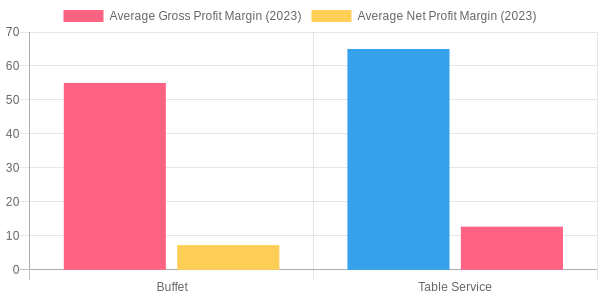
Note: The visual representation of profit margins is available above for a quick comparison.
Comparison of Buffet and Table Service Restaurants’ Profitability Metrics
When evaluating whether buffets are more profitable than table service restaurants, it’s essential to analyze several key profitability metrics, including average revenue per customer, food cost percentages, labor costs, and customer turnover rates. Here’s a detailed comparison based on current industry data:
| Metric | Buffet Restaurants | Table Service Restaurants |
|---|---|---|
| Average Revenue per Customer | $22.50 – $37.50 | $25 – $45 |
| Food Cost Percentage | 30.5% | 29.8% |
| Labor Costs Percentage | 32.6% | 28% – 35% |
| Customer Turnover Rate (lunch) | 1.8 turns per hour | 1.5 – 2.0 turns per hour |
| Customer Turnover Rate (dinner) | 1.2 turns per hour | 1.0 – 1.5 turns per hour |
Key Insights:
- Average Revenue per Customer: Table service restaurants generally have a higher average revenue per customer than buffet restaurants, indicating a potential for higher profit margins per visit.
- Food Cost Percentage: Buffets tend to have marginally higher food cost percentages, suggesting challenges in managing food waste and inventory.
- Labor Costs: Labor costs in buffet restaurants are significant, possibly due to the need for more staff to monitor the self-service stations.
- Customer Turnover Rates: Buffets generally have higher turnover rates during lunch, which can enhance revenue potential, especially in busy locations.
For a deeper understanding of how these metrics impact profitability, you can learn more about the benefits of buffet dining and how they compare to managed table service.
Conclusion
Overall, while buffets display certain competitive advantages like higher turnover rates, table service restaurants often achieve better average revenues per customer. Understanding these metrics is crucial for restaurant owners, especially those contemplating which dining style to implement.
For more tailored insights, you can explore specific options such as Royal Buffet in Findlay, Ohio for local market comparisons.
Operational Efficiency of Buffets
Operational efficiency is a critical factor in the success of any restaurant, and when comparing buffets to traditional table service, buffs stand out for several reasons. By focusing on labor reduction, customer self-service, and speed of service, buffet models can provide significant advantages that every restaurant owner should consider.
Labor Reduction
One of the most immediate benefits of operating a buffet is the reduction in labor costs. Unlike table service, where each server must attend to multiple tables, buffets allow customers to serve themselves. This model drastically decreases the need for staff, enabling the restaurant to operate with fewer employees without sacrificing service quality. According to a 2023 LinkedIn article, buffets can streamline operations in high-volume environments like cafeterias and hotels, allowing remaining staff to focus more on food preparation and stock management rather than directly serving diners.
Customer Self-Service
The self-service feature of buffets is a game changer. Customers enjoy the autonomy of choosing their meals and portion sizes, which leads to greater satisfaction and often higher sales volumes. This self-service model also diminishes the need for constant server interaction, allowing the remaining staff to concentrate on food quality and ensuring cleanliness of the display areas. By implementing portion control strategies, buffets can manage food costs effectively while still providing a variety of options for customers. The flexibility that buffets offer can lead to customer loyalty, as they appreciate the value in selecting their favorite dishes without limitations.
Speed of Service
Speed of service is crucial in today’s fast-paced dining environment. Buffets guarantee quick service as customers can fill their plates and return to their tables without waiting for a server. This not only enhances customer experience but also increases table turnover rates. The Michigan Journal of Economics suggests that self-service minimizes the workload on staff, which, in turn, helps speed up service times significantly. Effective layout and design strategies-notably the arrangement of dishes and stations-can further optimize the flow, allowing customers to serve themselves quickly and efficiently while enjoying their dining experience.
Practical Examples
Consider a buffet-style restaurant that specializes in breakfast items. Each morning, diners can quickly access a variety of options, from eggs and pancakes to fruits and pastries, thereby allowing them to eat and leave as per their schedules. Similarly, a pizza buffet allows customers to sample multiple pie varieties, making it more appealing for families and groups. This model encourages higher spending per customer because individuals can try a broader selection of food. Additionally, buffets tend to attract larger groups, as everyone can enjoy different preferences without causing issues with orders-a definite win for managing efficiency.
Conclusion
In conclusion, buffets can significantly improve operational efficiency compared to traditional table service. By reducing labor costs, enabling customer self-service, and ensuring faster service, buffet restaurants can offer a unique and profitable dining experience. Owners looking to enhance their profitability should consider the buffet model as a viable option to streamline operations and meet diverse customer needs. To explore what a successful buffet has to offer, check out our Royal Buffet locations for inspiration!
Comparing Costs: Buffet-Style Operations vs. Table Service
When deciding between buffet-style operations and table service at a restaurant, it’s crucial to understand the associated costs. Below is a comparative table that outlines the key financial areas:
| Category | Buffet-Style Operation | Table Service |
|---|---|---|
| Food and Beverage Costs | $7.00 per meal | $10.50 per meal |
| Staff Costs | $3.50 per meal | $8.20 per meal |
| Operational Overhead | Lower (fewer staff, less equipment use) | Higher (more complex service requirements) |
As seen in the table above, buffet-style operations generally incur lower food and staffing costs. For a deeper dive into the advantages of buffet offerings, feel free to explore our menu options. Also, if you’re considering location impacts, you can learn more about our locations in Findlay, Ohio.
Additionally, the chart below illustrates these comparisons visually for better insight into your operational decisions:
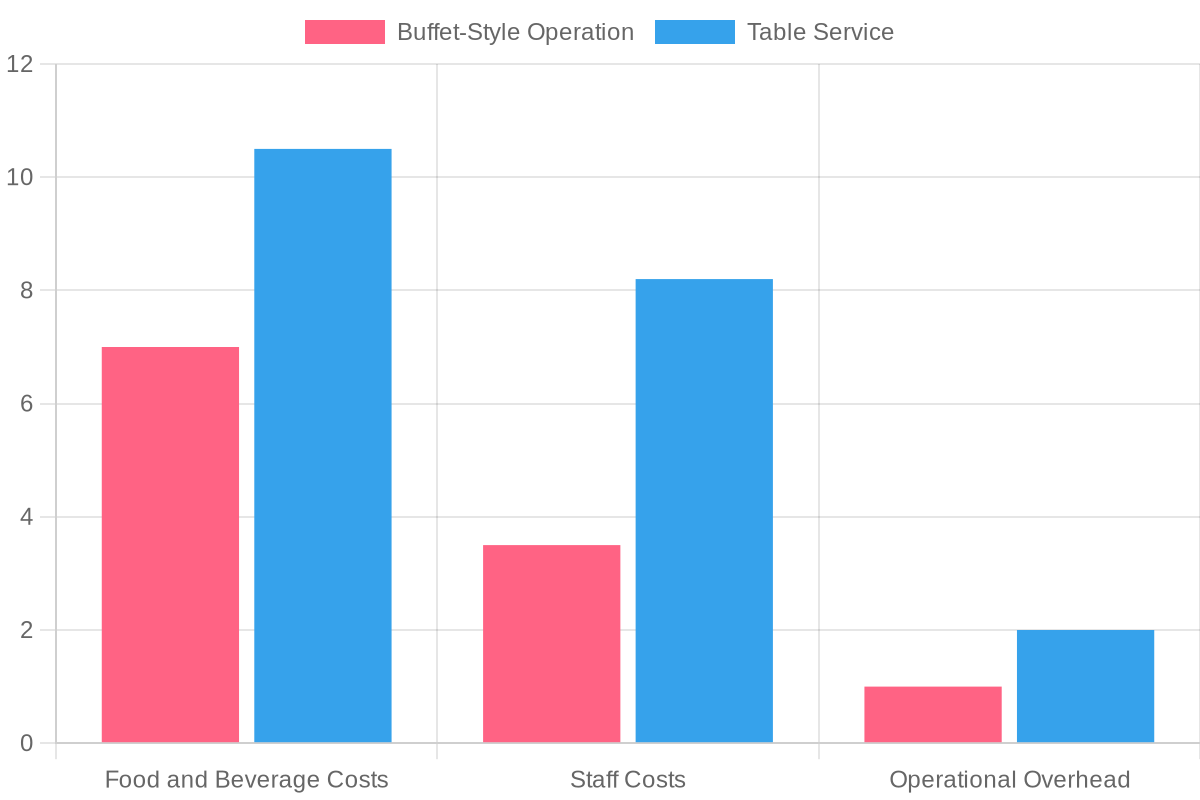
This data highlights that while initial investments in buffet setups can be higher, the overall operational efficiency tends to favor buffets, especially for mid-range to casual dining establishments.
Understanding Customer Preferences: Buffets vs. Table Service
The debate over whether buffets or table service offers a superior dining experience has been significantly shaped by user feedback and preferences. This exploration reveals key insights about customer satisfaction and profitability factors that restaurant owners should consider.
Customer Satisfaction Insights
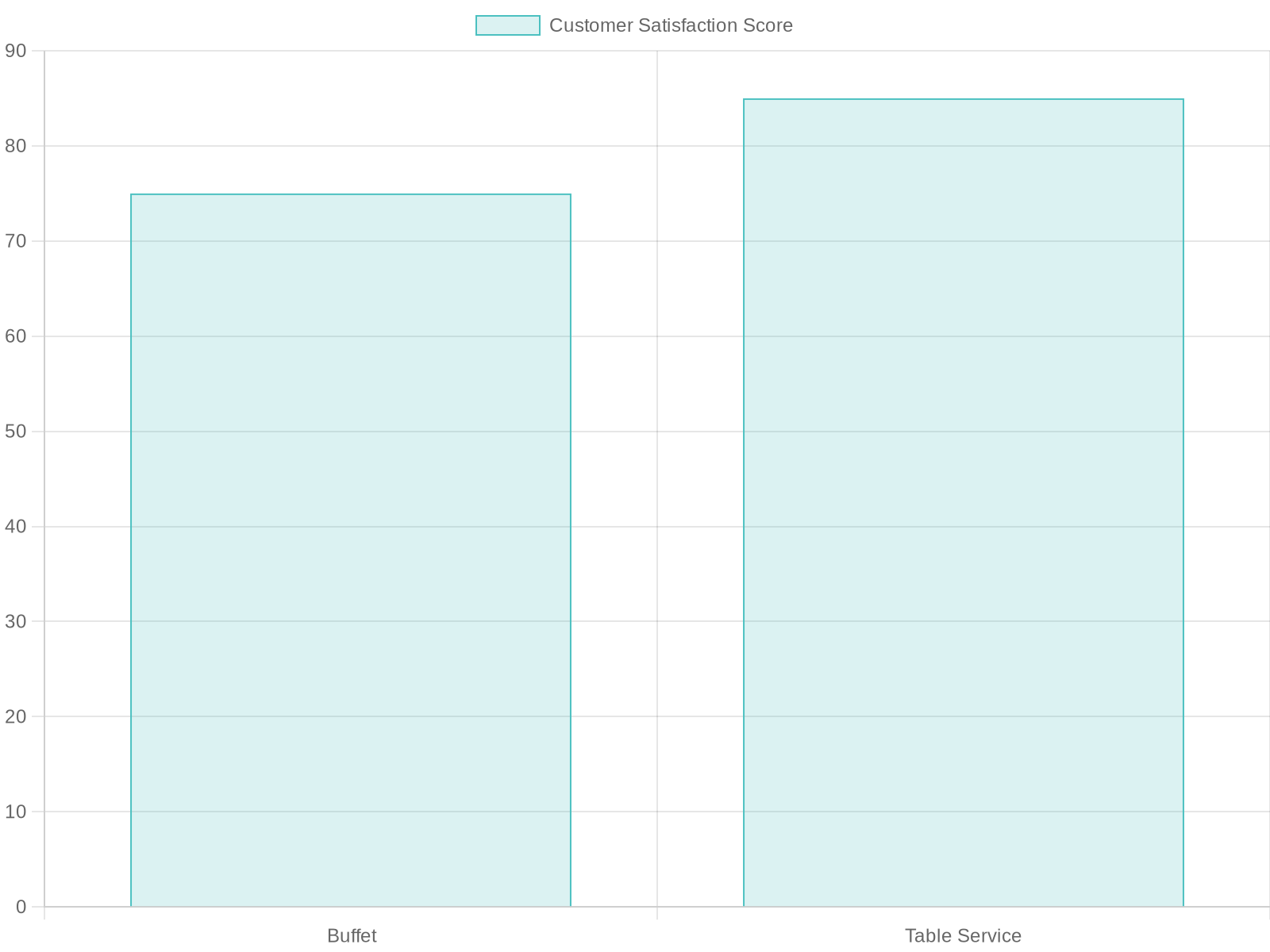
Recent analysis shows that buffets are preferred for family gatherings, with 58% of patrons opting for this style due to its variety and flexibility. In contrast, 65% of respondents favor table service for business dinners, appreciating the personalized touch and professionalism it brings.
| Occasion | Buffet Preference (%) | Table Service Preference (%) | Source |
|---|---|---|---|
| Family Gatherings | 58% | 42% | Statista – Dining Preferences by Occasion, 2025 |
| Business Dinners | 35% | 65% | Forbes – Corporate Dining Trends 2025 |
| Casual Dining | 62% | 38% | National Restaurant Association – Consumer Dining Survey 2025 |
A key element for customer satisfaction in buffets is the diversity of food offered. According to Harvard Business Review, users are attracted to buffets for their extensive selections. “I loved the wide array of options – it felt like a feast!” one customer remarked, underlining how buffets cater well to diverse tastes.
Profitability Considerations
Buffer restaurants often succeed through volume and the ability to manage food costs effectively. However, they must continuously monitor food freshness and service speed to maintain high levels of customer satisfaction. Feedback consistently cites that slow replenishment of popular dishes can lead to dissatisfaction: “I had to wait too long for the shrimp to be refilled, which dampened my experience,” reflects one guest.
In conclusion, while buffets appeal broadly due to variety and cost-effectiveness, especially for casual or family-oriented occasions, they must also address service and quality issues to maximize profitability. Restaurant owners must balance these elements to cultivate a loyal customer base.
Analysis of Operational Challenges in Buffets vs. Table Service
When comparing buffet-style dining to traditional table service, restaurant owners face a unique set of operational challenges. Understanding these challenges is crucial for optimizing costs and ensuring customer satisfaction. Here, we explore notable issues like food waste management, hygiene, and staffing requirements during peak hours, alongside potential solutions.
Food Waste Management
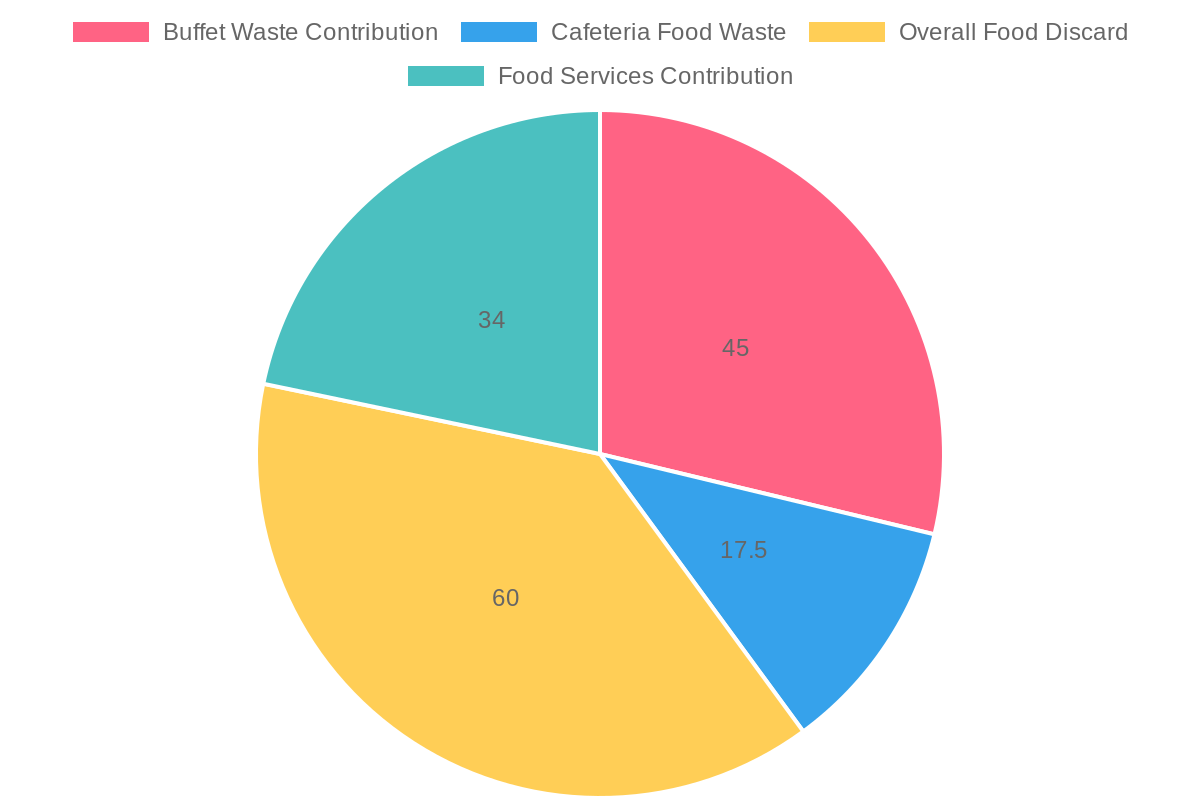
Buffets often result in higher levels of food waste than table service. This is primarily due to the self-service nature of buffets, which encourages patrons to take more than they may consume. According to a 2022 study, buffet-style settings contribute significantly to food waste in the hospitality sector, with estimates suggesting as much as 45% of all food waste coming from buffets. For instance, it’s highlighted that 60% of food is discarded throughout the consumption process, with food services accountable for around 34% of that waste.
Potential Solutions:
- Utilizing Smaller Portions: Offering smaller serving sizes can help minimize waste. Customers can always return for more if desired.
- Implementing Waste Tracking: Installing systems to monitor what food items are commonly left behind can help managers adjust their food preparation strategies accordingly.
- Composting or Donating: Partnering with local charities to donate excess food can reduce waste while benefiting the community significantly.
Hygiene Issues
Hygiene is another major concern in buffet operations. Buffets can easily become breeding grounds for bacteria if not managed with stringent sanitary practices. Since food is continuously exposed and self-served, there’s an increased risk of cross-contamination.
Potential Solutions:
- Regular Staff Training: Conducting continuous training on hygiene practices can ensure that all staff is aware of cleanliness standards.
- Implementing Time Limits: Establishing time frames for how long food items can remain out can help minimize risks associated with prolonged exposure.
- Utilizing Sneeze Guards: Transparent barriers can help protect food from contaminants caused by guests reaching over trays.
Staffing Requirements During Peak Hours
Buffets typically require more staff than standard table service, especially during peak hours. The challenge of sufficiently staffing a buffet is complicated by the constant flow of guests needing assistance, replenishment of food, and maintaining cleanliness.
Potential Solutions:
- Strategic Scheduling: Analyzing traffic patterns can help manage staff schedules more effectively, ensuring adequate coverage during busy times.
- Cross-training Employees: Employees trained in multiple roles can shift responsibilities as needed, providing flexibility during peak and off-peak periods.
Conclusion
Managing a buffet restaurant presents unique challenges compared to table service, particularly in areas like food waste, hygiene, and staffing. By implementing targeted strategies, buffet owners can enhance operational effectiveness and ultimately improve profitability. For more details about buffet options and management strategies, feel free to visit Royal Buffet or explore our menu offerings here.
Key Advantages of Buffets Over Table Service
- Speed of Service: Buffets significantly reduce service time as customers serve themselves, enhancing table turnover and accommodating more guests during peak hours.
- Lower Staffing Needs: The self-service model requires fewer waitstaff, which can lower labor costs and improve profit margins for restaurant owners.
- Increased Customization: Diners can choose from a variety of options and serve themselves according to their preferences, leading to higher satisfaction.
- Scalability: Buffets can easily scale operations to handle larger crowds without increasing complexity, making them ideal for busy environments like hotels and airports.
- Streamlined Operations: Centralized food preparation and display simplifies kitchen workflows and reduces inventory waste, utilizing standardized preparation methods.
- Enhanced Customer Experience: The autonomy in selecting food can improve the overall dining experience, especially in family-oriented settings where guests value variety.
- Higher Revenue Potential: Buffets can attract more customers through all-you-can-eat pricing, which can ultimately increase revenue per hour.
- Profit Margin Variability: While buffets generally have lower profit margins due to food waste, they can still be highly profitable with efficient inventory management and cost control systems, as noted in studies on buffet profitability.
Conclusion and Action Steps for Buffet Implementation
In the competitive landscape of the restaurant industry, the profitability of buffets compared to traditional table service restaurants has become increasingly clear. Recent industry reports reveal that buffet-style restaurants boast an average gross profit margin of 68%, significantly higher than the 57% seen in full-service table dining establishments. This impressive profitability can be attributed to various factors, including lower labor costs and the ability to serve more customers with fewer staff. As labor costs continue to rise, buffets are positioned to offer a cost-effective dining option without compromising customer satisfaction.
As highlighted by Forbes, successful buffet operators, such as Golden Corral, achieve a 70% gross margin through operational efficiencies, serving more guests while managing fewer resources. Moreover, buffets generate approximately 30% more revenue per square foot compared to traditional dining due to their robust customer throughput.
For business owners considering the buffet model, there are essential strategies to implement effectively. It’s crucial to optimize food costs through portion control and menu engineering, enhancing beverage offerings to maximize profits, and focusing on efficient kitchen workflows. Additionally, creating an appealing layout and utilizing dynamic replenishment systems for popular dishes can significantly influence customer experience and retention (learn more about effective strategies here).
The time is ripe for dining establishments to rethink their service models. By embracing the buffet format, restaurateurs can tap into a thriving market with the potential for greater profitability. With thoughtful planning and execution, buffets not only stand out as a favorable choice but can redefine the dining experience for guests seeking value and variety.