
Buffet restaurants present a unique business model that leverages the charm of variety and perceived value, allowing them to thrive in competitive markets. Understanding how these establishments generate revenue can help business owners in hospitality and food service optimize their practices. This exploration delves into two critical aspects: how economies of scale contribute to financial success and the role of cognitive bias in shaping consumer behavior. Together, these chapters highlight the strategies that transform the buffet concept from a seemingly risky venture into a profitable business model.
Rations at Scale: The Hidden Profit Engine of Buffet Restaurants
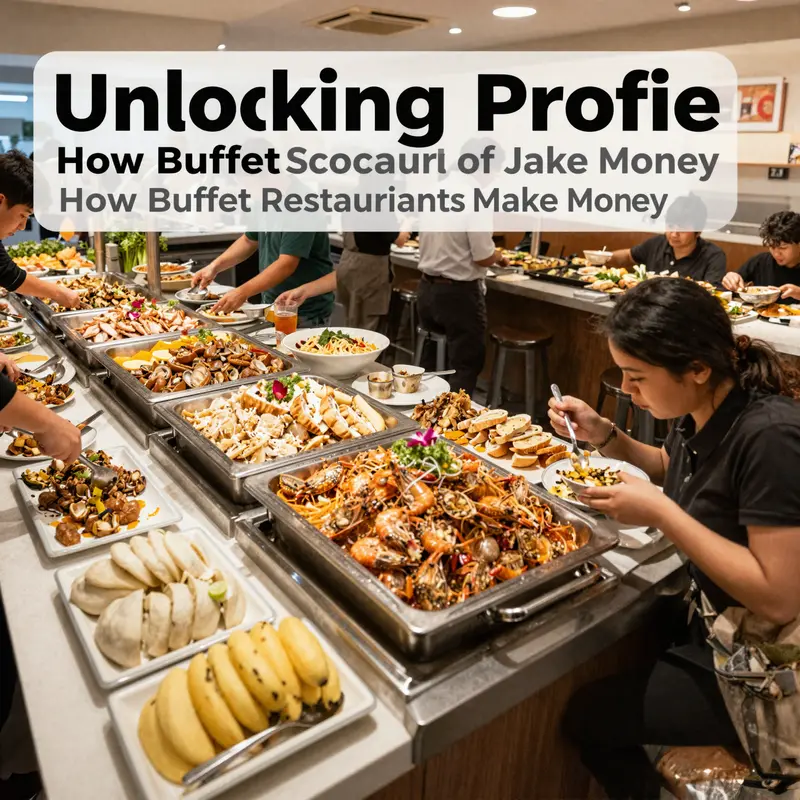
Buffet restaurants wear their economics on the surface—their price tags promise unlimited plates and a parade of choices. Yet beneath that generous proposition lies a disciplined architecture of cost, flow, and volume. Economies of scale are not merely a buzzword here; they are the practical engine that converts a high-capacity dining hall into a reliable profit machine. A fixed-price model loses money if every slice of kitchen effort and every square foot of space is charged to a handful of diners. It gains strength when a single setup serves hundreds or thousands of guests in a day, spreading the same overhead across a wider base. The logic is simple, but its execution is a careful craft. The moment a restaurant commits to serving a large audience with a standardized menu and fixed infrastructure, it begins to pull a series of levers that soften costs per head and lift throughput. The result is a business that can offer competitive prices while still realizing healthy margins, provided the scale is managed with precision.\n\nAt the heart of scale is the fixed-cost structure. A buffet restaurant invests heavily in the kitchen layout, the display lines, the steam tables, the refrigeration, and the plumbing that keeps hundreds of dishes heated and accessible. Those investments are largely fixed once the building is standing and the equipment is installed. The more guests those lines serve, the more the initial outlay allocates across meals. When a guest sits down, the marginal cost of that next plate is far lower than the cost of producing a single à la carte dish in a traditional restaurant. This dynamic is not about giving away food; it’s about extracting more value from every square foot of the kitchen and every hour of the staff’s time. The math becomes favorable as volume climbs, turning what might look like a risky, unlimited-consumption model into a sustainable, high-throughput operation.\n\nBulk purchasing is another pillar of scale. Buffet operators source staples—grains, vegetables, soups, breads—in large quantities, negotiating discounts that only appear when orders flow in steady, predictable patterns. The same is true for proteins, dairy, and other ingredients that can be standardized across dozens of menu items. By turning to bulk suppliers, the per-unit cost of food drops, and the need for specialized, individually plated preparation declines. Food is prepped in bulk, staged in labeled stations, and kept in temperature-controlled zones. The result is simpler inventory management and a reduced risk of waste. When waste is minimized, the savings multiply across thousands of meals. The kitchen becomes less a sequence of bespoke recipes and more a continuous production line, tuned for consistency rather than novelty. In this setup, the kitchen is not a place of gourmet experimentation, but a steady engine that delivers a dependable experience at scale.\n\nThe layout and the flow of the dining area reinforce the scale concept in tangible ways. Dishes are arranged to facilitate a smooth, continuous turnover. Guests move through stations in a loop, guided by clear sightlines and intuitive matches between what is displayed and what is needed next. This layout reduces the reliance on waitstaff to take orders or deliver plates, a characteristic that traditionally inflates labor costs in casual dining. Instead, staff focus on maintaining stations, replenishing platters, and keeping the facility clean. Self-service beverage stations, pre-sealed utensils, and modular serving setups further compress labor needs without compromising service quality. The net effect is a lower labor cost per customer relative to the footprint and staffing required for a comparable as-needed, à la carte dining operation. The scale thesis, once again, rests not on expensive intensity but on steady, repetitive efficiency that grows more valuable as crowd sizes rise.\n\nThe menu itself is a tool of scale as much as a catalog of dishes. Buffet designers curate a mix of low-cost, high-volume staples and higher-margin specialty items. Staples such as grains, vegetables, and simple proteins form the backbone, ensuring short preparation times and predictable yield. Higher-margin offerings — whether premium meats, seafood, or specialty desserts — play a dual role: they lure guests toward items with better margin profiles and they create perceived value at a fixed price point. The balance is delicate. Too many low-margin items can erode profitability; too few high-margin options can dampen guest satisfaction and volume. The most successful buffets navigate this tension by orchestrating portion control, intelligent replenishment, and predictable plate usage. The kitchen and display teams work from standardized portion sizes and tray configurations, so the same loaf of bread or the same pan of noodles can be circulated to many diners with minimal variation. The efficiency gains here are not about restricting choice; they are about delivering a consistent experience with minimal waste and maximum throughput.\n\nThe economics of scale also interact with how diners behave once the price is fixed. Cognitive biases often push people to maximize their consumption when they’ve already paid. In a buffet, this dynamic is not incidental; it feeds into the throughput target by aligning guest behavior with the operational rhythm. The signage, desserts, and premium add-ons extend the profit envelope beyond the base meal. Premium beverage programs, dessert bars, and specialty stations can be designed to capture incremental spend without disproportionately raising the food cost. In a well-tuned buffet, the fixed-price bargain becomes a gateway to a broader revenue stream that scales with occupancy and turnover. The result is a virtuous circle: higher volume lowers unit costs, which supports competitive pricing, which in turn sustains even more traffic and a steady demand cycle.\n\nLocation and local market dynamics further shape how scale translates into profit. In dense urban centers or tourist corridors, rents are higher and foot traffic is more predictable, enabling better margin capture despite elevated fixed costs. Price discipline, seasonal promotions, and targeted marketing ensure the business remains attractive during peak and shoulder seasons alike. The scale advantage is not a universal shield; it requires disciplined pricing and precise demand forecasting. Yet when done well, it creates a buffer against price-sensitive competition and fluctuating labor markets. The ability to absorb minor cost fluctuations, like a spike in seafood prices or a temporary labor shortage, depends on the sheer volume of meals served. With hundreds and then thousands of diners passing through the doors weekly, a buffet operator gains resilience that a smaller concept cannot match.\n\nThe broader business implication is clear: economies of scale enable a fixed-price model to stay compelling without sacrificing margins. The initial capital investment in infrastructure becomes the anchor for a long, high-volume lifecycle. Bulk purchasing and standardized operations push unit costs downward. A leaner staff model, supported by smart station design and self-serve elements, keeps payroll from eroding profitability as guest counts climb. And because the menu is engineered for both breadth and margin, the restaurant can sustain price points that are attractive to guests while preserving the economics that keep the lights on and ovens humming. The taken-for-granted aspect of buffet economics—the idea that unlimited food is a risky gamble—transforms into a calculated bet on scale, with risk mitigated by process discipline, forecastable demand, and the relentless pursuit of efficiency.\n\nFor readers curious about the empirical backbone of these claims, there is a concise, data-driven treatment in the Harvard Business Review. The piece digs into how fixed costs, throughput, and purchasing power converge to make scale workable in buffet settings. It offers a framework that helps translate the qualitative intuitions described here into measurable metrics, such as marginal cost per guest, waste reduction percentages, and the correlation between guest turnover and revenue per hour. This external perspective complements the practical lens of supply, labor, and display dynamics that drive profitability in the real world. If you want to see the formal articulation of these ideas, it’s worth a look at the analysis linked in depth at the end of this chapter.\n\nOne more practical note ties the discussion to the reader’s context. A well-timed internal link can illuminate how scale ideas materialize in the real world of buffet dining. For instance, the menu page of a major buffet brand offers a concrete illustration of how a fixed-price proposition is animated by a balanced mix of staples and add-ons. To explore a representative example of how such menus are organized and presented, you can review the Royal Buffet Menu page. It demonstrates how a fixed-price concept is operationalized through standardized sections, predictable ingredient use, and clear portioning. After all, the most convincing case for economies of scale in buffets is not theory alone; it is the visible, repeatable pattern of menus, stations, and flows that guests experience night after night: a system designed to deliver value at scale without compromising reliability.\n\nIn sum, economies of scale in buffet restaurants arise from a confluence of fixed infrastructure, bulk procurement, streamlined labor, and a menu engineered for margin and throughput. The model thrives when turnover stays brisk, when the kitchen operates like a production line rather than a sequence of bespoke preparations, and when price points are calibrated to the economics of mass feeding. The interplay between volume, cost control, and menu design creates a durable profitability engine that can withstand fluctuations in demand and cost pressures. What looks like a simple, fixed-price offer is, in fact, a calibrated system designed to convert large numbers into predictable, repeatable profits. It’s a reminder that scale, when pursued with discipline, is not just about serving more people—it’s about serving them efficiently enough to sustain a viable business over time.\n\nExternal reference: How Buffets Make Money: The Economics of Scale (Harvard Business Review) https://hbr.org/2023/05/how-buffets-make-money-the-economics-of-scale\n\nInternal reference (for context in this chapter only): Royal Buffet Menu
Mind, Plate, Profit: The Cognitive Psychology Behind Buffet Economics
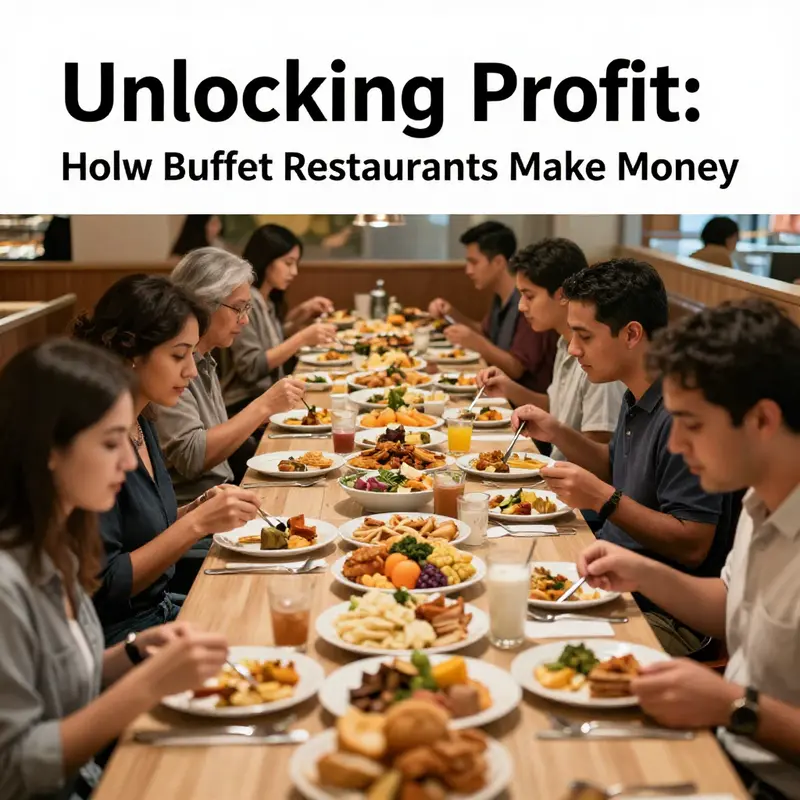
Profits in buffet restaurants hinge on more than the arithmetic of fixed prices and bulk buys. They rest on a careful blend of scale, efficiency, and a subtle understanding of how people think—and how that thinking translates into how much food is consumed. The all-you-can-eat model promises unlimited choice for a single price, but the true margin comes from shaping both the costs of serving and the psychology of appetite. When a guest hands over a flat fee, the dining room becomes a laboratory in which scale meets behavior, and where menu design and space management turn perception into revenue. Rather than viewing the buffet as a reckless gamble on consumption, it functions as a calibrated system that matches operational discipline with psychological levers to produce a predictable, repeatable flow of customers who feel they are getting value while the business extracts value from their choices.
At the heart of the model lies economies of scale. Buffets stock ingredients in bulk, prepare in advance, and spread fixed costs—labor, utilities, maintenance—across a large, rotating customer base. Once the initial food and labor setup are in place, the cost of serving the next diner remains comparatively low. This creates a cost structure where incremental guests add more revenue than cost, provided the menu and service keep waste under control. The challenge is not simply about feeding people but about managing the perishable inventory, the pacing of service, and the way customers move through the space so that turnover remains brisk without creating chaos in the kitchen or the dining room.
Yet economics alone does not explain why a fixed price can feel like a bargain while also delivering robust margins. Cognitive psychology steps into the frame with what researchers often call value perception and behavioral economics. The fixed-fee model invites a set of responses rooted in biases that psychology researchers have mapped for decades. The endowment effect, for instance, helps explain why diners feel a heightened sense of value after they have paid for access to the buffet. Once the barrier to entry—payment—exists, guests tend to attribute more value to the experience and to the food they take, sometimes continuing to eat even when satiation signals appear. The perception of value is not merely about quality or variety; it is about the sense that one is maximizing a sunk investment that already occurred. The result is a tendency to consume more, particularly when high-margin items are present or intermittently offered, because the incremental cost of adding a plate is perceived to be low relative to the price already paid.
The sunk cost fallacy reinforces this behavior. After paying, diners carry a mental calculation about not wasting the money. This cognitive trap makes stopping earlier feel like abandoning an investment. In a setting designed to encourage exploration and abundance, the impact compounds across hundreds or thousands of guests each day. Small behavioral nudges—how the buffet is arranged, where premium items appear, and how long a typical turn lasts—aggregate into meaningful lift in food usage and, consequently, revenue. What looks like a generous spread is, in practice, a carefully choreographed display where the psychology of purchase and consumption is a constant input into the operational engine.
What further sharpens this engine is how menus are engineered. A buffet’s menu is not only a list of dishes; it is a visual and sensory map that guides attention, perception, and choice. Low-cost, high-volume staples such as grains, vegetables, and simple proteins anchor the spread, providing bulk with relatively predictable costs. Between these anchors, higher-margin items—often regional specialties, desirable proteins, or prepared indulgences—are positioned to draw a line of sight from one end of the dining room to the other. The aim is to create an impression of abundance and variety that persuades guests to sample broadly, even as the kitchen manages portions to maintain overall cost control. The abundance narrative—the sense that guests have access to “everything”—is part theater and part supply-chain discipline. The impact is psychological as much as it is economic: when diners feel they are choosing freely within a well-curated universe, perceived value rises even if the actual meal mix remains tightly managed.
This is where customer psychology and operations converge. Beyond the broad buffet of options, many operators design the layout to optimize flow and reduce waste. Staff movements and station design are arranged so that plates move efficiently from serving areas to dining tables, with minimal backtracking. Portions are calibrated by station, knife-edge angles of serving, and the pace at which trays are replenished. A well-tuned operation minimizes both under- and over-serving, which translates into steadier food costs and steadier revenue per table. The labor cost is not simply the wage of servers and dishwashers; it is an optimized system where one staff member can oversee multiple stations, manage replenishment, and enforce hygiene and pace without inflating the per-guest cost.
Add-ons and premium experiences extend the profit curve without igniting costs in the same proportion. Many buffets offer herbal or specialty drinks, desserts bars, or premium meats at extra cost, tapping into guests’ willingness to pay more for heightened indulgence. The presence of these add-ons leverages the same cognitive biases: diners perceive greater incremental value when they are presented with an optional upgrade, even if the base price is fixed. The incremental cost of these add-ons, particularly beverages that can carry high gross margins, often falls on the supplier side while the customer experiences a relatively small perceived increase in total spend. That asymmetry—smaller additional cost for the operator, larger perceived value for the customer—creates a revenue lift that complements the base fixed price.
The pace and volume of turnover also matter. Buffets typically operate with shorter meal windows, encouraging new customers to begin their meals as others end theirs. This rapid turnover keeps seats filled and creates a steady stream of revenue across peak hours. It also supports the perception of value, since guests frequently feel that the price justifies trying a wider range of offerings before the seat turns. It is a strategic dance: maintain enough time for diners to explore, but not so long that per-table revenue stagnates. Location and pricing amplify this dynamic. High-traffic, desirable areas command premium pricing, a factor that can tilt the balance toward profit even if the per-plate cost remains constant. Seasonal promotions and targeted pricing further align demand with capacity, smoothing the peaks and valleys of daily traffic.
The chapter’s research results illuminate how fragile or robust this profit model can be depending on the region and the pace of new customer inflows. A key takeaway from the Michigan Journal of Economics analysis is that cognitive bias can be a central driver of profits only if there is a continuous influx of new diners within the local market. When new customers arrive with fresh perceptions of value and novelty, they are more susceptible to the psychological traps that amplify consumption. In markets with stagnant demand, the same biases may not yield the same outcomes, and operators must lean more heavily on cost-control measures and menu design to maintain margins. This finding helps explain why some buffet venues thrive in tourist hubs or urban centers where repeat visits are strong but seasonal, while others rely on relentless volume and aggressive efficiency in steady neighborhoods.
If one wants to glimpse a practical manifestation of this design, a quick tour through a well-constructed buffet menu can reveal how the pieces fit. The menu’s architecture often features a sequence of offerings designed to prime appetite, with a core of inexpensive, high-volume dishes anchoring the plate because they are easy to prepare in bulk. Interspersed are curated items that spark indulgence—rich proteins, seafood options, and decadent desserts—that entice guests to elevate their total spend. The visual and spatial rhythm of the buffet reinforces the experience: abundance is not just a physical reality but a carefully engineered expectation. For readers curious about how menus frame value in practice, see the Royal Buffet menu. It demonstrates how a single page or display can signal availability, variety, and choice in a way that nudges behavior toward higher consumption without sacrificing perceived value.
All of these elements—economies of scale, cognitive biases, menu design, labor efficiency, add-ons, turnover, location, and pricing—work in concert. The buffet operator’s task is to harmonize them so that the average guest’s spending surpasses the marginal cost of the food they consume. It is not merely a matter of giving away calories at a fixed price; it is calibrating every layer of the operation to sustain profitability while delivering an experience that feels like a bargain to the consumer. The psychology of “getting your money’s worth” is real, but it sits atop a foundation built from long hours of planning, precise procurement, and disciplined execution. The result is a business model that looks bold in its generosity but rests on a meticulous balance of perception and practicality.
External reference: Michigan Journal of Economics (https://mje.msu.edu/).
Final thoughts
The profitability of buffet restaurants is not merely a product of unlimited food offerings but a complex interplay of smart operational strategies. Economies of scale allow for lower food costs, while cognitive biases drive customers to consume more, maximizing revenue potential. Understanding these dynamics can empower business owners to make informed decisions, positioning their establishments for growth and sustainability in a competitive landscape.