
In the competitive landscape of the restaurant industry, buffet establishments stand out for their unique pricing and operational models. These restaurants generate income not just by offering an all-you-can-eat experience, but through a blend of carefully crafted revenue streams and efficient management practices. Understanding how buffet restaurants operate can provide invaluable insights for business owners seeking to optimize their own operations. This article will delve into two critical areas: first, the core revenue streams driven by per-person pricing, and second, the operational strategies that enhance profitability while managing costs and expanding revenue opportunities.
The Per-Guest Engine: Unpacking How Fixed-Price Buffets Convert Table Turnover Into Profit
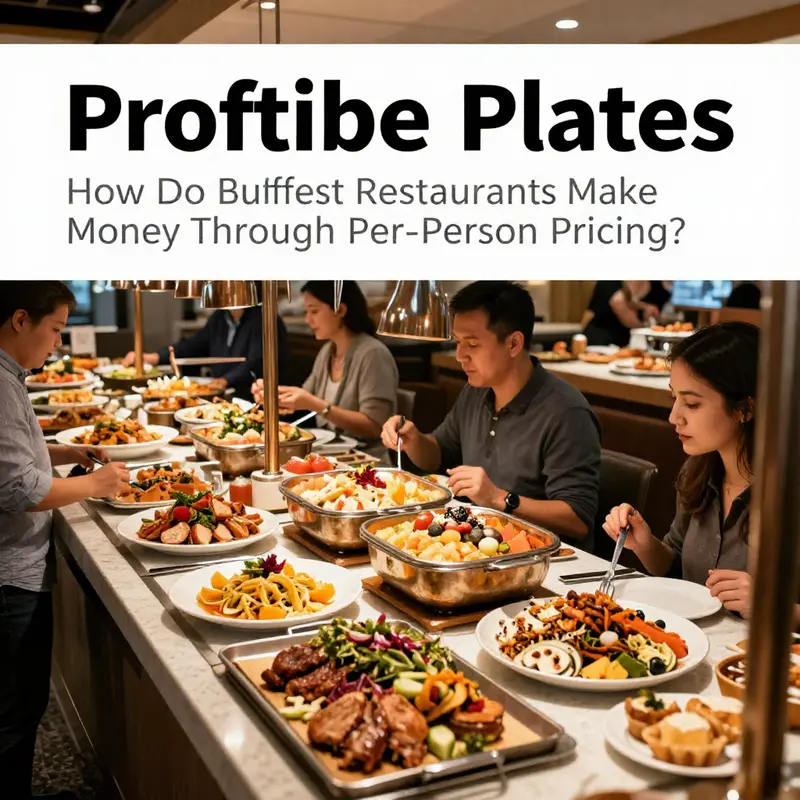
Every buffet rests on a deceptively simple engine: a fixed price per person that unlocks an entire dining room’s worth of appetite within a defined window. Yet simplicity is rarely synonymous with simplicity of profit. The core revenue stream—per-person pricing—acts as the bedrock, but it only works if a restaurant orchestrates a broader system around it. This chapter follows that logic in a fluid, continuous narrative, tracing how fixed-entry fees are amplified through tiered experiences, add-ons, waste control, and new revenue channels. The result is not a single transaction but a scalable business model that can expand to takeout, delivery, catering, and events, all while keeping labor and food costs in check. When done well, the per-guest formula becomes a reliable multiplier rather than a gentle glide along a fixed price line. It is the operational heartbeat that sustains growth even as food costs rise and demand shifts with the calendar and the economy.
At its most elemental level, per-person pricing converts a dining room into a throughput machine. The formula is straightforward: a fixed fee grants access to a sprawling buffet for a defined time, typically during lunch or dinner hours. The kitchen preps to a plan, the staff sustains service, and the guest experience hinges on the perceived value—how much variety, freshness, and comfort the customer feels they receive for that price. In a well-tuned operation, the incremental cost of serving one more guest is small once the kitchen is active, a consequence of economies of scale and highly standardized processes. The math is less about how much revenue one plate generates than how many guests can be seated, served, and delighted during peak periods. When a restaurant can turn tables quickly without compromising quality, the per-person price becomes a potent driver of margin.
Time of day is a fundamental determinant of price and, more importantly, of volume. The lunch window usually commands a lower price point than dinner, reflecting lower demand and a different competitive environment. But the differential is not merely about chasing more customers at a lower cost; it’s about balancing capacity with demand. A savvy operator calibrates the price to reflect the marginal value of a seat during each period. That means more guests served during the lunch rush, aided by a streamlined service model and a buffet line designed for minimal bottlenecks. By contrast, dinner invites higher-priced entries and premium proteins, which can increase average check size even when table turnover slows. The dual approach—lower price for higher volume at lunch, higher price for selective dining at dinner—lets operators realize the same kitchen capacity twice in effect. The result is a more predictable revenue cadence and steadier labor utilization across the week.
Beyond the hourly calculus, the type of buffet plays a decisive role in pricing. A standard model with a broad but ordinary assortment will carry one price point. A premium or thematic concept—surf-and-tine dishes, regional specialties, or international comfort foods—can justify a higher ticket with the same format. Not all premium experiences are created equal; some rely on rare ingredients or elaborate presentation, while others lean on guest perceptions of value through curated stations and attentive service. The pricing strategy, then, must reflect the perceived value and the cost structure that underpins it. In practice, a well-structured buffet may deploy tiered dining experiences—an all-you-can-eat baseline with add-ons that unlock premium protein options or specialty stations. The incremental price for those add-ons is where the operator can lift average ticket value without sacrificing the core volume.
Pricing, however, is not static. It moves with market conditions, seasonality, and even local events. A thriving buffet learns to read the demand curve and adjust accordingly, not by guesswork but by data. A few operators implement promotional timing to push traffic into high-demand windows. A well-timed pricing push can shift the distribution of guests toward peak hours, increasing overall revenue without dramatically raising the cost base. The same pricing discipline can support a stronger evening presence—an outcome that can translate into a meaningful revenue lift over a relatively short horizon. In numerical terms, a strategic adjustment of evening pricing combined with better seat utilization can push annual revenue from a baseline near 3.8 million to above 6 million within a couple of years, given favorable market conditions and efficient operations. The takeaway is clear: pricing is not a ceiling but a lever. When used wisely, it expands capacity without expanding fixed costs.
The pricing architecture often rests on the idea of tiered dining experiences. The baseline experience—unlimited access at a fixed price—forms the floor. Above that floor, premium options emerge. These premium options don’t merely add food; they reposition value. They signal to guests that a higher tier will deliver greater satisfaction through better proteins, more elaborate stations, or exclusive desserts. The all-you-can-eat framework remains intact, but the perceived value of the experience climbs. This alignment between menu planning and pricing has a practical effect on the restaurant’s economics. It raises the average ticket and distributes traffic across more profitable hours and items. The higher price point for premium components often carries a favorable margin, as these items typically cost more to prepare but are optimized for efficiency and waste reduction through better sourcing, portioning, and forecasting.
One essential mechanism behind the per-person model is waste control. Buffet profitability hinges on waste minimization: the less food thrown away, the lower the cost of goods sold, and the higher the net profit. Modern buffets invest in inventory management, demand forecasting, and precise ordering. They track which items are pulled most often, how long ingredients stay in the case, and how guests rotate through stations. The interplay of demand and supply is delicate: too little stock leads to shortages and dissatisfied guests; too much stock leads to spoilage and higher costs. The goal is to align procurement with consumption patterns so closely that the kitchen operates with lean buffers, not gluts. The Liang’s case study—though simplified in this discussion—illustrates the transformation that comes with embracing delivery as a strategic element. Shifting to technology-enabled third-party delivery partnerships, and integrating delivery into the service mix, reduces waste by concentrating orders through predictable channels and spreads fixed costs over a broader revenue stream. The net effect is a reduction in waste and a rise in net profit, not merely revenue, because food that leaves the kitchen as delivered meals replaces dishes that would have been wasted but still paid for seasonally or through guest consumption patterns.
Diversifying revenue streams beyond dine-in is now essential for modern buffet operators. The per-person price remains the core engine, but the business model evolves by expanding into takeout, delivery, catering, and special events. Takeout and delivery unlock a different kind of volume; they convert what would be idle kitchen capacity into a new, measurable revenue layer. The concept is straightforward: people who want to eat at home or in an office can purchase pre-packaged meals or meals assembled for delivery or pickup. The operational footprint often requires different packaging, a separate fulfillment process, and a dedicated order flow, but the incremental cost per additional unit is typically lower than the cost of providing a full dine-in experience. More importantly, delivery and takeout give the operator access to a broader customer base, enabling revenue growth that was previously unattainable through dine-in alone.
Catering represents a complementary revenue stream that scales with the event calendar. Private parties, corporate functions, and celebratory gatherings benefit from buffet formats because of their broad appeal and ability to serve large numbers with varied dietary needs. The economics of catering differ from dine-in in several ways: schedule rigidity, delivery logistics, and a different mix of labor requirements. Yet the core advantage remains intact—the ability to monetize the same kitchen and kitchen staff by serving many guests in a single, episodic event. Thematic nights, such as seafood nights or international cuisine weeks, add another dimension. These events command higher prices and draw new customer segments, often during slower periods. Online ordering platforms offer yet another channel, merging digital convenience with physical capacity. The operational challenge lies in creating a cohesive system that can fulfill both in-restaurant and off-premises demand without compromising service quality. The right technology, routing, and staffing plan become as important as the menu itself in sustaining profitability.
The operational backbone supporting the per-person pricing model is efficiency in staffing and workflow. Labor costs represent a major expense, and the buffet format magnifies the need for disciplined scheduling, cross-training, and productivity gains. Efficient scheduling ensures that the right number of servers, cooks, and attendants are on duty for peak hours without leaving seats underutilized during lulls. Cross-training enables flexible staffing: a waiter can assist at the beverage station or help replenish dishes; cooks can support preparation or display duties as needed. Technology helps too, from automated systems for takeout order taking to simple, repeatable processes that minimize waste and maximize speed of service. The aim is to protect the customer experience—consistency in food quality and timely replenishment—while keeping labor costs aligned with revenue. In a mature operation, the combination of lean inventory, precise forecasting, and flexible labor management yields a margin uplift even as the per-person price remains steady.
A practical takeaway from observing pricing dynamics is how pricing structures align with the kitchen’s capacity to deliver. A tiered pricing approach creates an invisible map of demand that guides both guest decisions and kitchen operations. Guests opt for the level of value they feel suited to their appetite and wallet, while the kitchen plans production, staffing, and replenishment around expected mix. This alignment reduces waste and improves service quality, reinforcing the overall profitability of the model. The numbers behind this strategy matter: when a restaurant refines pricing to better balance evening traffic and high-demand meal periods, annual revenue can rise in meaningful steps. The example cited in research results—moving from roughly $3.78 million to about $6.16 million over two years—highlights the potential upside of a well-timed pricing and demand management program. Of course, such growth depends on complementary improvements: stronger takeout and delivery, better catering, targeted events, and a more efficient back end. Still, the core truth persists: price is a powerful lever, and when the lever is pulled in concert with volume, quality, and waste control, profitability follows.
To connect these ideas back to the day-to-day experiences of guests, consider the menu structure that accompanies tiered pricing. A well-designed menu mirrors the pricing framework: a robust baseline assortment, plus optional premium options for guests seeking a heightened experience. The menu itself is not just a list of dishes; it is a narrative about value, variety, and convenience. A table set with the right mix of items can satisfy broad tastes while still leaving room for premium choices that push the ticket price upward in a way that feels natural rather than forced. Operators who calibrate the menu with pricing at a granular level—ensuring premium items and stations are present but not overrepresented—tend to see stronger margins and higher guest satisfaction. For a quick reference to how a menu can reflect these choices, a visit to the Royal Buffet Menu provides a practical illustration of the tiered approach in action. See Royal Buffet Menu for a sense of how structure and pricing interact in a live menu design.
As this narrative ties together, the per-person pricing model is less a single number than a carefully balanced system. It relies on the interplay of demand timing, product mix, waste management, and a diversified revenue portfolio. It requires a kitchen that can produce with reliability, a front of house that can maintain pace, and a supply chain that can forecast accurately enough to keep food cost in line with revenue. It also necessitates a willingness to experiment with what guests value most—whether that means a more lavish display of premium stations on certain nights or a streamlined buffet during lunch that emphasizes speed and variety. The goal is not to maximize price per meal at all times but to optimize the overall guest experience so that more guests choose to return and to bring friends, family, or colleagues back for the next event or workday lunch.
This integrated approach—core per-person pricing, tiered offerings, waste control, and diversified revenue streams—forms the backbone of a modern buffet business. It is a model capable of weathering fluctuations in commodity costs, shifts in consumer preferences, and even the pressures of a competitive dining landscape. It requires discipline and data, but it rewards consistency with steady growth. In practice, the most resilient operators are those who treat every dining window as a micro-business—carefully priced, meticulously staffed, and relentlessly tuned for efficiency. They understand that the value of a buffet is not only the volume of food on a plate but the reliability of the entire experience: the speed of service, the freshness of items, the sense that the price paid is well matched to the enjoyment received. When guests sense this harmony, the per-guest engine runs smoothly, and profitability accelerates as a natural consequence of well-executed strategy rather than sporadic luck.
For readers interested in a broader financial framework that situates these concepts within capital expenditure planning and a multi-stream revenue model, a comprehensive guide on buffet restaurant launches offers deeper detail on revenue modeling, capex planning, and long-term profitability. External resources provide a structured approach to building the financial backbone described here, illustrating how the per-person model interacts with broader strategic decisions over a five-year horizon.
External resource: https://www.restaurantfinanceinsights.com/buffet-restaurant-launch-guide
Balancing Plates and Profits: How Buffet Restaurants Profit Through Cost Control and Revenue Expansion
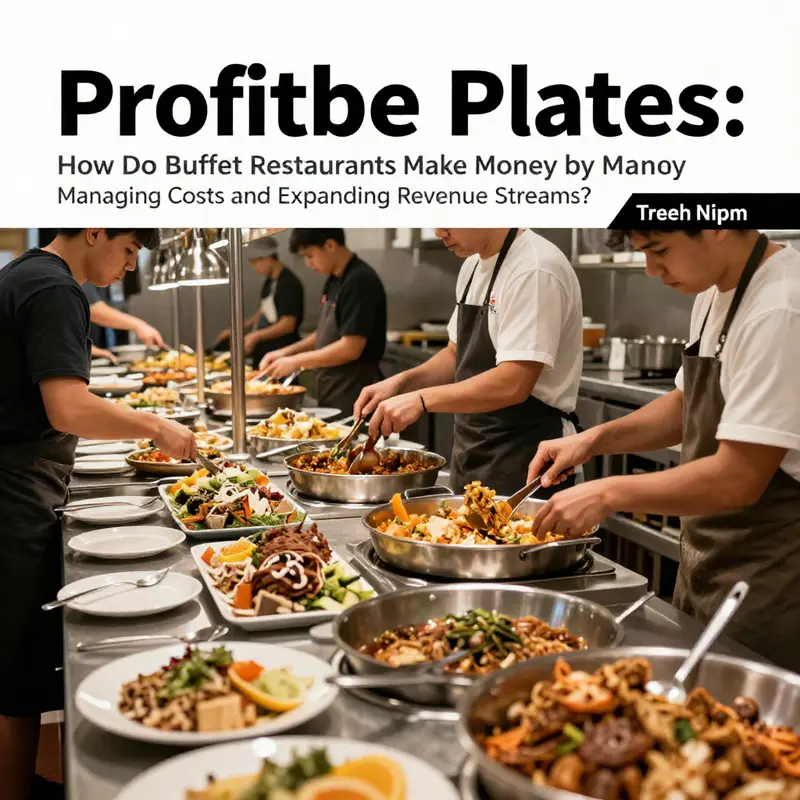
The paradox of a buffet is simple to describe and tricky to balance: customers pay a fixed price for unlimited access, yet the operation must stay profitable as food costs, labor, and overhead move with demand. The answer lies in a blend of volume, discipline, and a diversified revenue portfolio. In a well-run buffet, throughput becomes margin when costs and opportunities are choreographed across the dining room, takeout, catering, and events.
At the core, pricing covers fixed overhead while letting the kitchen scale with demand. Think of it as a cap on revenue per head but not a cap on profit. Fixed costs — rent, licensing, software, and maintenance — can be spread across a high guest count, pushing unit economics toward a stronger margin as volumes rise. For example, monthly fixed costs might include rent around 25,000; software and licenses near 4,000; and maintenance about 6,000. Together they sit around 35,000 per month. A high-volume operation absorbs these costs via per-seat throughput, but margins depend on controlling variable costs like food and labor.
A pivotal thread is waste reduction and portion control. Investments in scales and related tech can pay off gradually, with upfront costs that might reach roughly 450,000 but long-run savings as waste declines and portions become predictable. These improvements tighten cost of goods sold and widen the margin over time.
Beyond waste control lies diversification: takeout and delivery, catering, and events extend reach beyond the dining room. Each channel comes with its own costs, so pricing and packaging must preserve margins while ensuring quality. Some operators have added delivery to boost monthly revenue by tens of thousands of dollars, often with a menu designed to travel well.
Catering and private events broaden the revenue horizon, with higher potential spend per guest but more planning and staffing requirements. Special events and themed nights can justify premium pricing and attract guests who would not otherwise visit, reinforcing perceived value.
Online ordering adds another dimension, expanding market reach while requiring a different operations setup, from packaging to routing. The net effect is a steadier revenue stream that reduces seasonality and increases daily volume when aligned with quality and timeliness.
Finally, the marketing and demand-generation pieces—location strategy, pricing psychology, and promotions aligned with actual costs—enable the unlimited dining proposition to convert visits into repeat business without eroding margin. Labor efficiency remains critical: strategic scheduling, cross-training, and selective use of technology keep payroll aligned with demand as the business serves dine-in, takeout, and events.
All these strands must work together. When the kitchen scales volumes without waste creeping up, and delivery, catering, and events extend the dining room’s reach, profitability becomes a durable pattern rather than a statistical anomaly. The key is to design a system that converts throughput into value across multiple channels while preserving a reliable guest experience.
Final thoughts
Buffet restaurants leverage an intricate network of revenue streams and operational strategies to enhance profitability. By charging a fixed per-person price, they capitalize on economies of scale while effectively managing food costs and waste. Furthermore, diversifying revenue through takeout, catering, and themed events allows these establishments to reach a broader audience and increase overall sales. This understanding is crucial for business owners targeting sustainable growth and profitability in the competitive food service market.