
Tipping at a buffet restaurant involves more than just a coin toss; it hinges on the nature of service provided. As business owners in the food industry, understanding how to approach tipping etiquette can enhance customer experience and influence employee satisfaction. This article will explore the intricacies of tipping at buffet restaurants, focusing on two crucial aspects: the levels of service encountered and the appropriate tipping norms associated with each level. Equipped with this understanding, you can create a more informed and enjoyable atmosphere for your patrons.
Reading the Plate, Reading the Server: Tipping Etiquette Across Buffet Service Levels

Tipping at a buffet restaurant is less about a fixed rule and more about reading the rhythm of the service you’re receiving. The same buffet can feel like two different experiences depending on how much hands-on attention the staff provide. A practical way to approach tipping is to first identify the service level you’re experiencing, then align your gratuity with the value of that service. This approach respects the complex economics of hospitality where wages, tips, and the quality of a guest experience interlock to shape what is expected, or not expected, at the table. In the end, etiquette becomes a conversation between what you receive and what you choose to acknowledge with a tip. The central idea is simple: tip when service goes beyond the mere logistics of filling plates and seating guests; refrain when the experience is almost entirely self-serve with limited staff interaction. To connect the idea to a tangible reference without getting lost in generalities, you can explore a menu reference that helps you gauge the level of service attached to a given buffet setting. See the buffet menu page for context surrounding what service levels accompany different offerings. Royal Buffet Menu.
At all times, it helps to separate the experience into three broad categories. The first category is self-serve buffets, where guests load their plates, help themselves to stations, and rely mostly on seating staff for directions, refills, and occasional plate clears. In this model, tipping is generally not expected. The pay structure for staff in this setting often relies on a base wage rather than tips, and the personal interaction tends to be minimal. The moment a server steps in to clear plates, refill beverages, or offer assistance beyond basic seating, that changes the equation. When staff are doing more than bringing water and guiding you to a table, a gratuity begins to feel appropriate. It is not a wholesale obligation, but a signal that you recognize the added value of their presence during your meal.
The second category covers semi-assisted buffets. Here, the service is more visible: bussers clear tables, servers refill drinks, monitor food stations, and answer questions about ingredients or substitutions. In this milieu, a tip becomes not only acceptable but expected in many contexts. A practical guideline is to consider tipping $1 to $2 per person for the duration of a single meal, especially if several service moments occurred—like a plate refresh midway through the meal or a request for sauces or sides that required staff action. The per-person approach keeps tipping simple in groups and families, ensuring that the gratuity reflects the collective experience rather than a single moment of service. It also acknowledges the cumulative impact of multiple touchpoints during the dining experience.
The third category is full-service buffets, typically found in upscale venues—luxury hotels, resort settings, or cruise lines—where waitstaff take drink orders, deliver food to the table, and provide attentive, personalized service throughout the meal. In these environments, tipping of 15% to 20% of the total bill is customary, or a per-person flat rate of $3 to $5. The higher range reflects the expectation that service teams are coordinating multiple tasks: refreshing drinks, guiding you through carving stations or specialty dishes, and ensuring that dietary needs are respected with discretion and efficiency. These are the contexts where gratuities are often a meaningful part of staff earnings, given that base wages can be structured to rely on tips to sustain a livable income.
A practical way to internalize these tiers is to use your senses as the compass. Do staff members regularly check in during your meal, clear plates promptly, or bring items to your table without you asking? If the answer is yes to several interactions, the etiquette guidelines suggest a gratuity is appropriate. If staff are present merely to seat you and fill water periodically, tipping remains optional. This approach aligns with the broader principle highlighted by hospitality experts: the presence of service—more than the word buffet—determines whether a tip is appropriate. The notion from industry voices, echoed by practitioners, is simple: if someone is actively working to serve you, they deserve recognition.
Tipping in practice, however, is not just a matter of the service level, but also of context. In countries where tipping is customary as a supplement to lower base wages, skipping a tip in a semi-assisted or full-service setting can negatively impact staff income. Conversely, in places where tipping is uncommon or even discouraged, offering gratuity can cause confusion or discomfort. The key is to calibrate your response to the local norms while staying true to the observed level of assistance within the restaurant you’re visiting. When you travel, this becomes especially important, because the norms shift with culture, economy, and even restaurant type. The best approach for travelers is not to chase a universal percentage, but to read the room, observe the pattern of service over the course of the meal, and adjust accordingly.
To anchor this in a broader etiquette framework, consider the case of a more formally managed buffet spread in a hotel or resort setting. There, the service team is often responsible for clearing plates from the table, refilling beverages consistently, guiding guests through the buffet line, and answering questions about ingredients, allergens, or substitutions. If you’ve experienced this level of attentiveness, a gratuity in the range described above is a thoughtful acknowledgment of their ongoing efforts. A simple way to think about it is to measure how many service touchpoints occur: if there is a continuous thread of staff engagement from seating through dessert, tipping at the higher end of the semi-assisted or lower end of the full-service range makes sense. If the engagement feels episodic rather than continuous, a smaller tip may be more appropriate. The guiding principle remains: your tip should reflect the degree of professional service you’ve received, not simply the type of buffet you visited.
For guests who travel across borders, the practicalities of tipping also involve currency considerations and local etiquette. In some places, a gratuity is folded into the service charge, while in others, it remains entirely discretionary. When in doubt, a quick assessment of local expectations—what staff typically receive as payment, and how other guests in your party tip—can be a reliable barometer. A well-timed tip can also support staff who go beyond the basics, such as someone who offers to bring dipping sauces or creates a quick dietary accommodation on request. In contrast, if you do not receive such service, the choice to omit tipping is reasonable, provided you’ve clarified expectations with the staff when appropriate. The broader travel literature emphasizes that tipping norms are not universal, and misinterpretations can lead to awkward moments. A useful takeaway is to observe, then decide. If you see regular, proactive engagement, a tip is a courteous recognition of staff effort.
This discussion ties into a larger view of tipping as a form of social signaling—a way to acknowledge the labor that makes a buffet experience functional, enjoyable, and safe. The arithmetic is not just about percentages; it is about intention and fairness. If a server has contributed to your comfort by suggesting allergen-free options, coordinating a special dietary accommodation, or ensuring your beverages are refreshed in a timely manner, that is a service moment worthy of acknowledgment. Maria Thompson, a hospitality expert cited in contemporary tipping discussions, notes that “the presence of service—not just the word ‘buffet’—determines whether a tip is appropriate. If someone is working to serve you, they deserve recognition.” Her framing helps both hosts and guests align expectations without turning tipping into a rigid rule.
In practice, a few concrete tips can help you navigate these decisions with clarity. First, if you’re dining with a group and several service moments occur, rounding up or adding a modest per-person amount can be an efficient way to share appreciation without counting every interaction. Second, if you notice repeated service moments—such as a server attending to drinks or providing fresh utensils after each course—consider tipping at the higher end of the semi-assisted range. Third, if you’re unsure whether tipping is expected, a modest tip accompanied by a quick, friendly thank-you is usually well received and signals your recognition of service. Finally, keep a small amount in your wallet for unexpected occasions—special dietary accommodations, discreet help with seating, or a late refill that requires extra attention.
When you read through these nuances, the aim is not to rigidly apply a formula but to respond to a real, living interaction with courtesy. The tipping question becomes a reflection of the service you’ve received and the local norms that shape how hospitality workers are compensated. If you approach each buffet with a readiness to acknowledge good service, you’ll navigate tipping with ease, justify the gratuity you offer, and maintain a respectful, reciprocal dynamic with the staff who contribute to your dining experience. For readers who want a broader international reference, consider the latest reporting on tipping etiquette around the world. The New York Times offers up-to-date guidance that helps travelers adapt to diverse customs across continents. External resource: https://www.nytimes.com/2026/03/01/dining/tipping-etiquette-buffet-travel.html
Tip Worth the Spread: Reading the Plate of Service at Buffet Restaurants
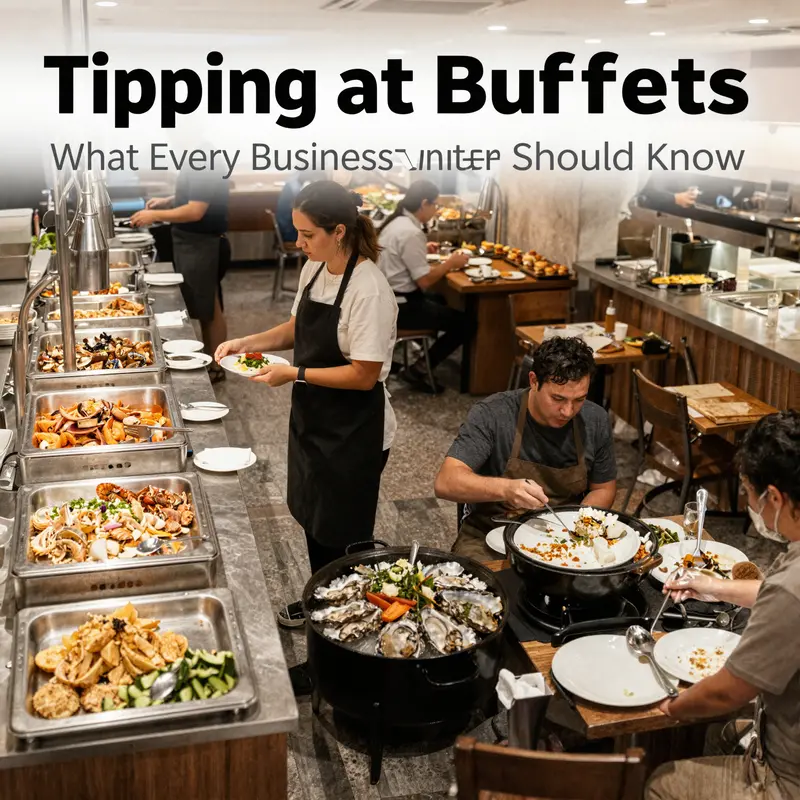
Tipping at buffet restaurants can feel like navigating a dining room with a moving buffet—different stations, different levels of service, and a need to read the room rather than apply a single rule. The basic principle is that tip amount should reflect the level of service you actually receive, which varies by the type of buffet you choose. In a self-serve setup where guests mostly serve themselves and staff focus on seating and basic support, tipping is typically minimal or unwarranted. If a staff member goes beyond the basics—clearing plates, refilling beverages, or answering questions with a proactive attitude—a small gratuity, such as a dollar or two per person, can acknowledge extra effort without turning the meal into formal table service.
In a semi-assisted buffet, the balance shifts. Servers may clear plates, maintain a steady flow of drinks, offer sauces or sides on request, and help guests with dietary needs. In these settings, a tip of one to two dollars per person is widely considered appropriate. It recognizes attentiveness without implying full-service expectations.
The full-service buffet represents a higher level of attention. Waitstaff may take drink orders, deliver food to the table, and offer personalized recommendations. Here, tipping typically ranges from 15% to 20% of the total bill. Some venues also accommodate per-person gratuities—such as two to five dollars—especially when service includes significant table-side interaction or complex courses. These figures reflect the economic model in upscale hotels, resorts, or cruise settings where gratuity supplements base wages and acknowledges the staff’s time and care.
Regional nuances matter. In major metropolitan areas with elevated service standards, tipping toward twenty percent or a similar per-person amount is common even at buffet-style venues with attentive staff. In more casual or rural markets, fifteen percent may be the ceiling, with adjustments up or down based on the specifics of the encounter. The key is to observe the level of interaction: a warm greeting, regular checks in, timely beverage refills, and seamless clearing justify a higher tip; limited involvement benefits from a more modest approach.
A practical approach is to assess the experience as you move through the meal. If the staff anticipate needs, stay visible without hovering, and contribute to a smoother dining experience, a higher gratuity can be warranted. If service is largely self-directed with occasional assistance, a smaller tip or even none is reasonable, perhaps accompanied by a courteous rounding of the total as a nod to the staff’s efforts.
To anchor expectations, consider a hotel or resort buffet brunch where staff deliver drinks, clear plates promptly, and respond to requests with courtesy. In such settings, one to two dollars per person for semi-assisted service or a 15%–20% tip for full-service dining are common benchmarks. The core message remains: the tip should reflect the service level you experienced, not merely the price of the food. If the venue explicitly adds a service charge, that should be taken into account in your total calculation rather than adding an additional tip on top of it.
Final thoughts
Understanding the nuances of buffet tipping can be key to enhancing your dining experience while simultaneously synergizing with your operational goals as a business owner. By distinguishing between the varying levels of service and adjusting tipping norms accordingly, you facilitate a respectful and positive interaction between patrons and staff. This knowledge not only promotes customer satisfaction but also positively impacts employee morale and retention. As you embrace these practices, consider educating your staff and customers about the importance of fair tipping, creating a culture of respect and appreciation throughout your establishment.