
Controlling food costs in buffet restaurants is vital for ensuring profitability, especially given the nature of the all-you-can-eat model, which can lead to rapid erosion of margins. Restaurant owners must be proactive in managing costs to safeguard their bottom line. Strategic menu engineering plays a fundamental role, allowing buffet owners to balance quality and cost effectively. Additionally, advanced inventory and procurement management can streamline operations while minimizing wastage and improving food safety. The following chapters delve into these two crucial aspects, providing actionable strategies that every business owner should implement in order to thrive in this competitive industry.
Anchoring Value: Strategic Menu Engineering and Item Selection to Contain Food Costs in Buffets
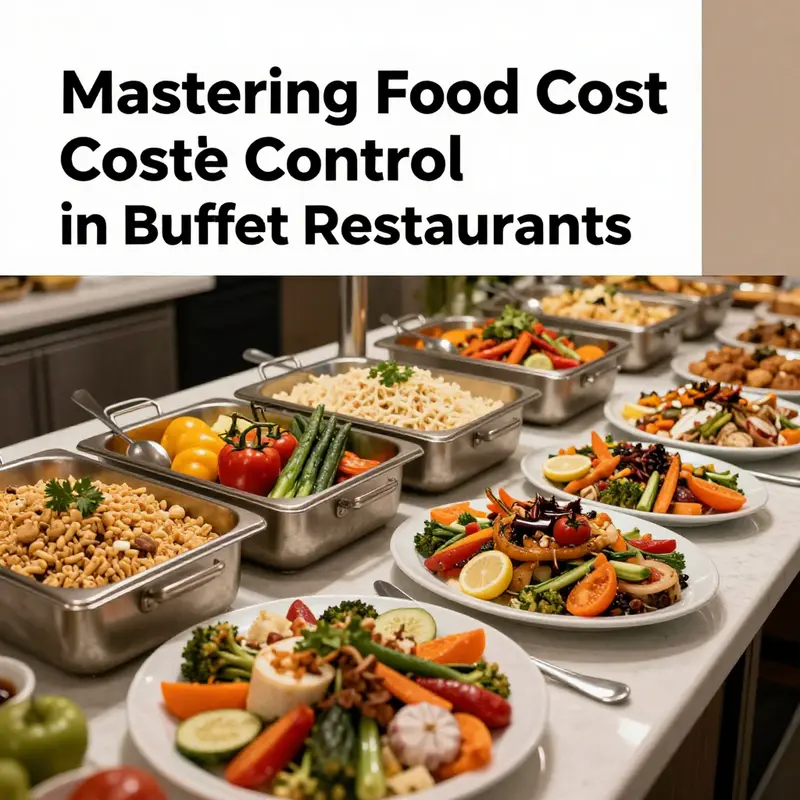
In a buffet, profitability hinges on more than the sum of its flavors. It rests on how the menu design nudges guests toward combinations that feel generous while keeping the actual cost of ingredients firmly under control. Strategic menu engineering is not about starving guests; it is about shaping perception and behavior through thoughtful choices, precise portioning, and disciplined production. The all you can eat model amplifies the importance of every decision, because high guest consumption can erode margins quickly if the wrong items dominate production or if waste climbs. The core idea is to create a menu that offers variety and satisfaction through high margin, low cost components while still delivering abundance. When executed with discipline, menu engineering becomes a silent partner to procurement, kitchen operations, and guest experience, aligning what is offered with what can be consistently delivered at a controllable cost per plate. The approach begins with a clear assessment of the menu as a living system rather than a static list of dishes. It continues with a deliberate pricing psychology, a well thought out buffet layout, and a production plan that reduces waste without compromising guest perception of value. The result is a menu that guides guest choice while keeping the price tag on ingredients where it belongs—in check, even as plates empty and guests linger at the line to savor the moment of abundance.
A practical starting point is to frame the menu around the most reliable producers of volume relative to cost. This means focusing on high-margin, low-cost ingredients such as grains, legumes, potatoes, and seasonal vegetables that can stretch across many dishes without inflating cost per serving. The temptation to feature expensive showpieces—prime cuts of meat or imported seafood—should be tempered by data on popularity and repeatability. A handful of signature or premium dishes can anchor the buffet and justify higher price points, but the majority of the selection should come from economical, high-volume items. This balance helps guarantee perceived value while maintaining tight control over the kitchen’s daily output. In practice, this translates into designing clusters of dishes that share core ingredients and common preparation methods. A grain bowl, a robust pilaf, a steamy bean medley, and a roasted vegetable assortment can all be built from a few staple staples, with subtle variations that keep the menu interesting without introducing new waste streams. When the kitchen staff can execute these items reliably, yields improve and waste declines, creating a virtuous circle that protects overall cost of goods sold.
Assessing the menu through the lens of cost and demand is essential. The most valuable dishes in a buffet are not always the ones guests praise most loudly. Instead, they are the ones that deliver consistency in portion, flavor, and yield. The concept of stars, puzzles, and plowhorses helps managers make decisions grounded in data. Stars are high-margin, high-traffic items that should be featured prominently. Puzzles are high-cost or low-traffic dishes that drain resources without delivering proportionate sales, and they deserve redesign, substitution, or removal. Plowhorses are reliable performers that may not be glamorous but consistently move volume; these items deserve careful pricing and steady production. By analyzing plate counts, waste, and the true ingredient cost per serving, managers can determine which dishes belong in the front line and which should be revised. The assessment work feeds directly into how the menu is presented, where the anchors sit in the buffet line, and how signage communicates value to guests. A well-structured assessment also helps identify seasonal opportunities. In season, cheap produce can shine in multiple preparations, providing variety without escalating cost. The seasonal calendar becomes a lever to refresh the lineup while preserving margin, rather than a reason to chase fleeting trends that blow up waste.
Pricing strategy in a buffet goes beyond simple cost plus a markup. It is a behavioral tool that leverages the psychology of choice. The way dishes are positioned—front and center, or tucked away—affects what guests pick up and how much they taste of each option. High-margin dishes deserve visibility and a clear story that supports perceived value. Descriptive signage can enhance appetite without inflating cost, offering a sense of provenance, freshness, or tradition that makes guests feel they are getting more for their money. This is not about deception; it is about aligning guest expectations with the reality of what costs are being contained behind the scenes. The concept of anchor items is central: a premium yet affordable dish placed in a strategic location encourages guests to sample other options in the same vicinity, which in turn can raise the overall average check. An anchored section also allows the kitchen to control portions more tightly since guests often measure based on the first few bites of a dish. A well-planned layout ensures that what is perceived as a generous spread does not translate into an uncontrollable surge in waste. In practice, a few anchor items—such as a hearty grain-based dish or a robust legume curry—set the tone for value. The goal is to create the impression of abundance while ensuring that the calories, cost, and waste stay within the target range. For operators seeking a tangible example of where to begin, the Royal Buffet menu offers a template for combining variety with cost efficiency, and the page can be reviewed to observe how a curated selection supports margin while satisfying guest expectations. Royal Buffet menu
Buffet layout and item selection further reinforce cost discipline by guiding guest flow and consumption without diminishing experience. A well designed buffet line uses a logical progression: core staples first, then proteins and vegetables, followed by desserts and beverages. The layout should minimize crowding and excessive handling of food, which reduces waste and spill risk. Standardized serving utensils and clearly defined portion guidelines help guests experience consistency and feel they receive ample value without over-serving themselves. The use of display materials and appropriate food grades also influences guest trust and satisfaction, a key driver of repeat visits. It is important to avoid overcrowding the display, because a congested line can lead to spills, rushed servings, and inaccurate portions. A clean, coherent presentation reduces the cognitive load on guests, encouraging reasonable portions and easier decision making. The visual cue of abundance must be balanced with the operational discipline to keep production aligned with actual demand. The anchor dishes, the star items, and the low-cost fillers should be arranged so that guests naturally sample a broad mix, rather than clustering around a narrow subset of dishes that could inflate waste. In this sense, layout becomes a subtle, continuous form of cost control, stitching together guest psychology, kitchen capacity, and supplier realities into a cohesive system. The sign language around the dishes, the language used in signage, and the placement of utensils all contribute to a perception of generosity that does not translate into unsustainable waste. This is the art of building value through structure rather than simply piling food on a tray.
Producing a menu that stays within budget also means rigorous standardization and careful yield management. Standardized recipes protect against drift in ingredient usage that quietly raises costs over time. A recipe card that specifies precise weights, cooking times, and batch sizes creates uniformity from one service to the next. When cooks know exactly how much of each ingredient goes into a dish and how much it yields, they can forecast daily production with far greater accuracy. Yield testing should be routine, adjusting for variations in supply, seasonal size differences, and supplier changes. Consistent portion control is essential; even small deviations can compound when multiplied across hundreds of servings. The staff must be trained to scoop, ladle, and plate to the same standard, and servers should be empowered to help guests manage portions in a friendly, nonconfrontational way. A culture of cost consciousness should permeate all levels of operation, from the dishwashing station to the front line. When a kitchen runs with standardized procedures and a shared sense of purpose, waste declines, and the cost per serving becomes predictable. This predictability is the backbone of a sustainable buffet business model. The menu should support this by using ingredients that are versatile and easily repurposed, enabling cooks to adjust dishes in real time to align with demand while minimizing leftovers. A flexible approach to production, grounded in data and reinforced by training, ensures that the menu remains profitable through the fluctuating rhythms of a buffet day.
To bring the concept to life, consider the practical effects of the assessment, pricing, and layout decisions on daily operations. Inventory management and procurement should connect with the menu design so that the most frequently used items are always readily available at favorable terms. Bulk purchasing on staple ingredients, combined with seasonal sourcing to reduce waste and storage costs, can dramatically improve cost performance. An ABC analysis that concentrates tighter controls on the A-items—those high value and high turnover ingredients—helps prevent overstocking and spoilage that eat into margins. Meanwhile, B-items and C-items receive appropriate attention to avoid unnecessary investment in slow movers. This disciplined approach is what transforms a promising menu concept into a repeatable, cost-aware system. The ultimate aim is not merely to lower the cost of ingredients but to optimize the entire ecosystem: menu design, guest behavior, kitchen execution, and supplier relationships. When these elements align, the buffet offers abundant variety while maintaining a healthy bottom line. The pursuit is continuous improvement, with data feeding decisions about what to keep, what to modify, and what to remove entirely. It is a dynamic balance—one that respects guest expectations for value and novelty while sustaining a financially robust operation. For operators who want a practical reference as they refine their own menus, a detailed look at menu engineering principles and examples can be found on the broader industry resource platform that hosts practical guides and case studies for buffet operators.
In sum, strategic menu engineering and careful item selection form the most reliable defense against runaway food costs in a buffet business. By assessing the menu through the stars, puzzles, and plowhorses lens, pricing with an eye to guest psychology, arranging a layout that promotes sensible portions, and standardizing recipes to guarantee predictable yields, operators can deliver generosity without waste or erosion of margins. The result is a buffet that feels expansive and welcoming, while the kitchen runs smoothly, waste stays low, and the financials stay on track. The approach is not a single hack but a coherent system that integrates menu design, guest experience, and operational discipline. When executed with rigor and supported by data, strategic menu engineering becomes a sustainable engine of profitability for buffet restaurants, turning a high consumption model into a model of predictable margins and enduring guest satisfaction. External resource: https://www.restaurant.org/
Tightening the Chain: Inventory and Procurement Systems That Hold Buffet Food Costs to 17–20%
Inventory and Procurement: Systems, Forecasting, and Supplier Strategy
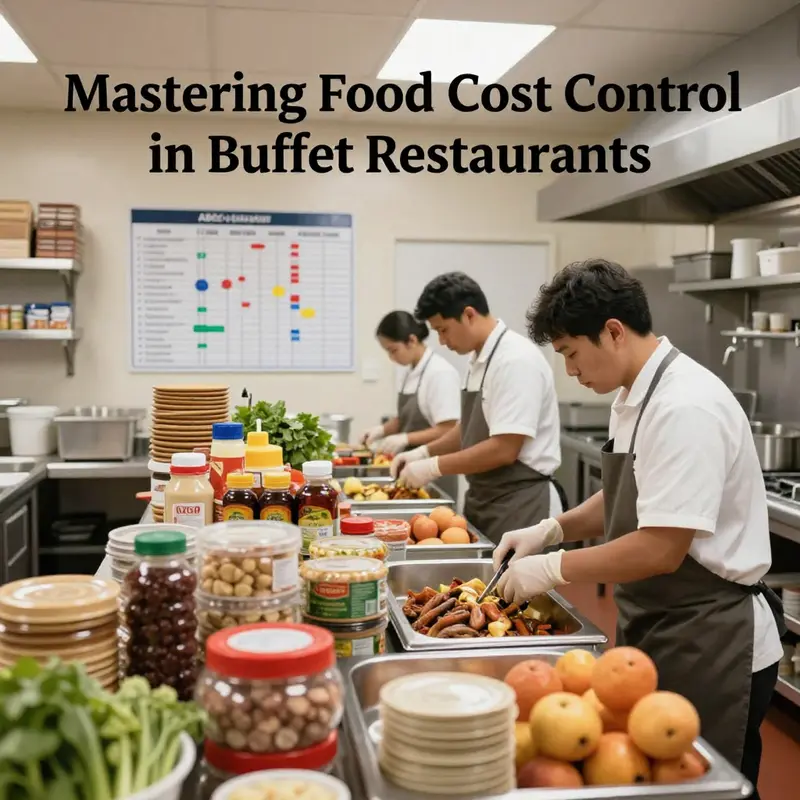
Controlling food cost in a buffet starts long before food reaches a steam table. The procurement and inventory chain defines your cost baseline. When systems are aligned and decisions are data-driven, a buffet can reliably operate within the 17–20% food-cost benchmark while preserving guest satisfaction. This chapter explains how to build that chain, step by step, and how each link reduces waste, shrinks variability, and improves predictability.
Start with a single source of truth: accurate, real-time inventory data. Cloud-based inventory platforms remove the lag that kills margins. They capture purchases, deliveries, production usage, and waste in near real time. When stock levels update automatically, buyers stop relying on gut feel. Automated reordering triggers when par levels are reached. That prevents emergency purchases at premium prices. It also prevents excess inventory that spoils and inflates cost.
Automated reordering needs smart par levels. Set those levels from historical consumption patterns, not broad guesses. A cloud system can analyze daily and weekly demand cycles. It can also factor seasonality and special events. Use that analysis to calculate par for each SKU. For high-turnover items, tighten par and reorder frequency. For slow-movers, lower physical par and avoid tying up cash.
Cycle counting replaces disruptive full inventory days. Small, frequent counts are less error-prone. Schedule counts by category, rotating through the stockroom each week. Combine cycle counts with ABC analysis to focus effort where it matters most. Class A items—high value and fast turnover—receive daily or weekly checks. Class C items get monthly verification. That targeted approach catches discrepancies quickly. It narrows the gap between theoretical and actual inventory, which directly affects food-cost accuracy.
First In, First Out (FIFO) is simple but essential. When staff follow FIFO, perishables move predictably and spoilage reduces. Make FIFO visible with clear labeling and date codes. Train staff to rotate goods when stacking deliveries. Small visual aids and a consistent layout reduce mistakes. Pair FIFO with temperature logs and storage best practices. Cold-chain failures or poor stacking turn otherwise usable ingredients into write-offs.
Demand forecasting is the bridge between inventory and procurement. Use historical consumption data to forecast by day part, by day of week, and by holiday. Forecasts should be granular. Forecasting by category — proteins, starches, vegetables — lets you align purchases to actual usage. Link forecasts to production schedules. When forecasts say chicken demand will drop for three days, reduce chicken orders accordingly. The result is less leftover protein and lower waste.
Procurement must mirror forecasting. Rather than large, irregular orders, structure buying into smaller, predictable cycles. That unlocks better pricing and fresher product. Negotiate delivery cadences that fit your production rhythm. Suppliers can accommodate weekly or even semi-weekly deliveries for staples, while less frequent bulk shipments serve non-perishables. When procurement aligns with demand, storage needs shrink and spoilage falls.
Supplier relationships are a strategic lever, not just transactional exchanges. Build partnerships that reward volume and reliability. Long-term contracts can deliver lower per-unit costs and more consistent quality. At the same time, diversify your supplier base to reduce risk. If one vendor misses a shipment, an alternate can step in without forcing last-minute retail purchases. Maintain a small pool of trusted backups for critical items.
Leverage negotiation beyond price. Ask vendors about flexible packaging sizes, consolidated deliveries, and vendor-managed inventory for certain staples. Explore consignment options for expensive proteins when possible. Request performance guarantees and service-level agreements that include delivery windows and quality thresholds. When suppliers know your operation runs on data, they often propose creative terms that lower your landed cost.
Data-driven procurement also opens the door to smarter substitutions. When a premium ingredient spikes in price, the procurement team can proactively suggest cost-effective swaps. Use standardized recipes to quantify the impact of substitutions on both cost and guest perception. For example, swapping a portion of imported seafood with a local, sustainable alternative can significantly lower cost while retaining quality. Communicate substitutions to culinary and service teams so execution and presentation remain seamless.
Inventory management must be integrated with production planning. Route waste and usage data back into the recipe and purchasing models. If a dish consistently generates leftovers, the forecast must reflect that. Where waste clusters appear, revise recipes or reduce batch sizes. Smaller batches maintain freshness and reduce the volume of food that sits under heat lamps. They also give staff a moment to recalibrate when guest patterns change mid-service.
Technology offers more than reorder automation. Use systems that tie point-of-sale (POS) data to inventory and waste logs. When a POS records a high volume of a particular dish, purchasing logic should increase procurement of the core ingredients. Conversely, if a dish underperforms, automated alerts should trigger recipe reviews and purchasing adjustments. This creates a continuous feedback loop between guest behavior and purchasing decisions.
Reporting is the language of continuous improvement. Monthly and weekly reports should show theoretical versus actual usage, spoilage trends, and variance by vendor. Highlight items with recurring variance and assign ownership for corrective action. Use visual dashboards to make trends obvious. A single chart that shows a rising spoilage rate for a protein can prompt immediate supplier or production changes before costs escalate.
Control over receiving and storage tightens every dollar saved. Institute a disciplined receiving process. Check delivery quantities against purchase orders. Inspect for quality and temperature on arrival. Record any deviations and resolve them with the vendor immediately. Proper receiving prevents bad lots from entering inventory and avoids disputes later. In the storage area, standardize bin locations and label everything clearly. The easier it is to find an item, the less likely cross-contamination and loss become.
Inventory accuracy improves when culinary and purchasing teams speak the same language. Establish a single set of SKUs and naming conventions across systems. When chefs and buyers use consistent terminology, orders match recipes. That reduces substitutions and misorders that inflate cost. Include culinary input in the procurement cadence. Chefs can recommend cross-utilization strategies that stretch ingredients across multiple dishes, improving yield and reducing waste.
Price benchmarking and market intelligence should inform procurement cycles. Track commodity price movements for key categories like proteins, dairy, and staples. When market trends indicate an upcoming price rise, consider advancing orders for shelf-stable items. Conversely, delay purchases for non-perishables when prices peak. Small timing shifts across large volumes produce tangible savings.
Finally, measure and hold the system accountable. Use food-cost percentage as the headline metric, but monitor the underlying drivers. Track spoilage as a percentage of purchases. Measure on-hand variance. Monitor supplier fill rates and on-time performance. Assign clear KPIs to procurement, receiving, and culinary leads. When teams have targets and the tools to hit them, behavior changes. Savings follow.
A buffet thrives on scale. With scale comes complexity, and complexity demands systems. Cloud inventory, automated reordering, granular forecasting, disciplined receiving, and strategic supplier relationships convert complexity into control. That control lets operators offer abundant choices without sacrificing margins. When procurement is proactive and inventory is accurate, a buffet can operate consistently within the 17–20% food-cost range while delivering a satisfying guest experience. For a practical overview of advanced inventory approaches used by foodservice operators, see this resource: https://www.netsuite.com/portal/resource/articles/restaurant-management/advanced-inventory-management-strategies.shtml
For menu alignment and practicality, review your buffet offerings against procurement realities. Small menu nudges can dramatically reduce procurement friction. For inspiration, compare your lineup to a proven example like the Royal Buffet menu and note how high-turnover dishes anchor the offering. (https://royalbuffet.shop/royal-buffet-menu/)
Adopt these practices incrementally. Start by stabilizing inventory counts and par levels. Add automated ordering and cycle counts next. Layer on forecasting, reporting, and supplier strategy. Each step reduces variance and builds confidence. Over time, procurement and inventory management stop being cost centers. They become profit engines that let a buffet deliver value and stay profitable.
Final thoughts
Successful management of food costs in buffet restaurants involves a multifaceted approach, relying heavily on strategic menu engineering and advanced inventory management. By focusing on high-margin ingredients, optimizing procurement methods, and fostering a culture of cost-awareness, buffet owners can significantly enhance profitability. Each strategy discussed paves the way for not only cost control but also improved customer satisfaction through a well-designed dining experience. Empowered with the right tools and insights, business owners can build a sustainable buffet operation that thrives despite the inherent challenges of the all-you-can-eat model.