
Why Refill Timing, Not the Recipe, Defines a Weekday Lunch
At midday in Troy, Ohio, the Chinese buffets fill up the same way. Trays are warm, the line keeps moving, and the room smells of soy, garlic, and ginger. What separates a good weekday lunch from a forgettable one is rarely the recipe.
It is refill timing: how fast and how consistently the steam table gets restocked as the food is taken. A dish left too long dries at the edges, loses its shine, and turns lukewarm under the lamps. The same dish, topped off at the right moment, tastes like something else entirely. At China Buffet Troy Ohio, and at most local buffets, that rhythm decides most of what you taste.
What Diners Actually Notice
Most lunch patrons are not analyzing sauces or comparing heat levels. They notice simpler things:
- Whether the General Tso’s chicken is still glossy or drying into the pan.
- Whether the fried rice looks freshly turned or clumped and cold.
- Whether the egg rolls and crab rangoon still crunch or have gone soft under the lamp.
None of that is about talent in the kitchen. It is about when someone last carried a fresh pan to the line.
The weekday crowd makes the effect sharper. Between roughly 11 a.m. and 1:30 p.m., smaller and faster turnover drains the steam table steadily. A buffet that reads the flow and refills ahead of it feels busy and fresh; one that waits for trays to run near empty feels tired, even with the same recipes. For a closer look at how this local spot operates, the weekday lunch rhythm at China Buffet Troy Ohio is a useful reference point.
Across the region, from nearby towns to the larger Ohio cities with their own buffet scenes, the pattern holds. Recipes travel easily. Refill timing is the harder habit to keep.
Why Refill Timing Beats the Recipe
At any Chinese buffet, the recipe gets all the credit. Diners praise a sauce or blame a noodle and assume the kitchen’s formula decides whether lunch lands. On a weekday, the truth is plainer: the recipe sets the ceiling, and refill timing decides how close your plate gets to it.
Walk into a busy buffet around midday and you are not really tasting the chef’s intent. You are tasting the last twenty minutes of the steam table’s history. A dish can be flawless on paper and still disappoint, purely because of how long it sat under the lights.
- Texture drifts first. Gentle steam softens a crisp coating, vegetables that should stay firm go limp, and noodles clump into dense ribbons. The recipe never changed; the clock did.
- Temperature tells the real story. A steam table holds food warm and keeps cooking it. Left too long, edges dry out and centers go mushy, and anything that slips to a dull, lukewarm heat feels tired before you lift the spoon.
- Appearance sets the expectation. Dull color, a skin forming over the sauce, separated oil: the eye reads all of it as “old” before the first bite. Perception starts at the line, not at the table.
A well-timed refill resets all three at once. Fresh pans restore texture, bring food back to its intended temperature, and return the glossy look that makes a buffet inviting. That is why a modest dish refilled on schedule often outshines a great recipe left to wilt.
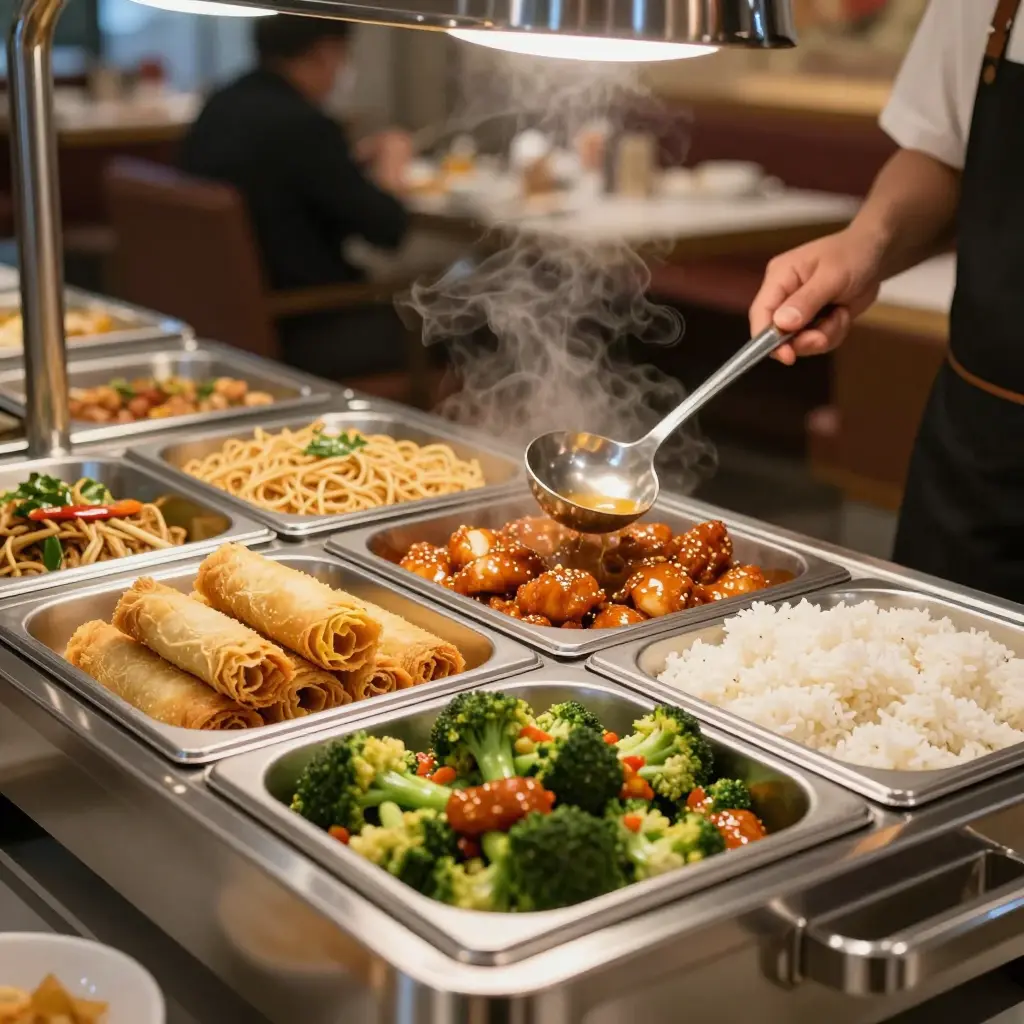
At a place like China Buffet Troy Ohio, the gap between a forgettable lunch and a memorable one rarely comes from a new recipe. It comes from whether someone is watching the trays and topping them before they fade rather than after. Watch for it on your next visit: fresh color, steady steam, food that tastes just made. That, more than any secret formula, is what defines weekday lunch at a Chinese buffet.
How a Steam Table Actually Works
From the diner’s side of the sneeze guard, a steam table is a row of shiny pans. Behind the glass it is a small climate-control system doing four jobs at once: adding heat, trapping moisture, holding a steady temperature, and managing turnover. Miss any one of them and a good recipe still tastes tired by the time it reaches your plate.
Heat starts from below. Hot water or a heating element warms the well, and the stainless pan resting inside spreads that warmth upward. The food never touches a flame, so sauces rarely scorch, but the temperature also climbs slowly.
Moisture is the second job. Steam drifting up into the pan keeps rice fluffy and noodles loose. Too little dries out dumplings; too much turns anything fried into a soggy disappointment.
Holding temperature is the third. Most buffets keep hot dishes at or above 140 degrees Fahrenheit, above the 135-degree hot-holding minimum in the FDA Food Code and clear of the USDA’s 40-to-140-degree danger zone. That range is warm enough to stay safe without cooking everything into mush.
Turnover is the fourth, and the most overlooked. A busy pan is a fresh pan. When trays sit half-empty, oil separates and vegetables go dull.
All four feed straight into weekday lunch quality at China Buffet Troy Ohio. The midday crowd arrives fast and clears out fast, so refill timing often matters more than the recipe itself. Diners scouting nearby spots frequently compare notes in local guides, such as this look at buffet options around the region, before deciding where to spend their lunch hour.
Five Signs the Steam Table Is Being Refilled Well
Watch a station for a few minutes and you can read its health.
- Rising steam. A tended pan puts up visible heat and a soft cloud of vapor; a cold, still pan means the well is running down.
- Color that stays vivid. Bright greens and glossy reds mean recent additions; gray or brown-edged vegetables mean food that has been sitting.
- Texture that holds. Noodles stay springy and dumplings soft, never gummy or dried at the edges.
- Fresh garnish. Recently sprinkled scallions, sesame seeds, or cilantro usually mean someone is actively tidying and topping off.
- Visible refills. Staff swapping in a full pan during lunch, rather than waiting for one to run empty, is the clearest sign of good turnover.
Notice these details on your next visit, and you will taste the difference between a steam table that is merely warm and one that is actually being run well.
The 15-Minute Window: Why Refill Timing Beats Recipe at a Weekday Lunch
Ask people about the best Chinese buffet in Troy, Ohio, and the conversation drifts toward recipes, seasoning, or whether the General Tso’s leans sweet or spicy. After a dozen weekday lunches at the steam table, the same pattern keeps repeating: the food isn’t what changes. The clock is. The biggest variable in how your plate tastes is how long ago someone topped off the pan.
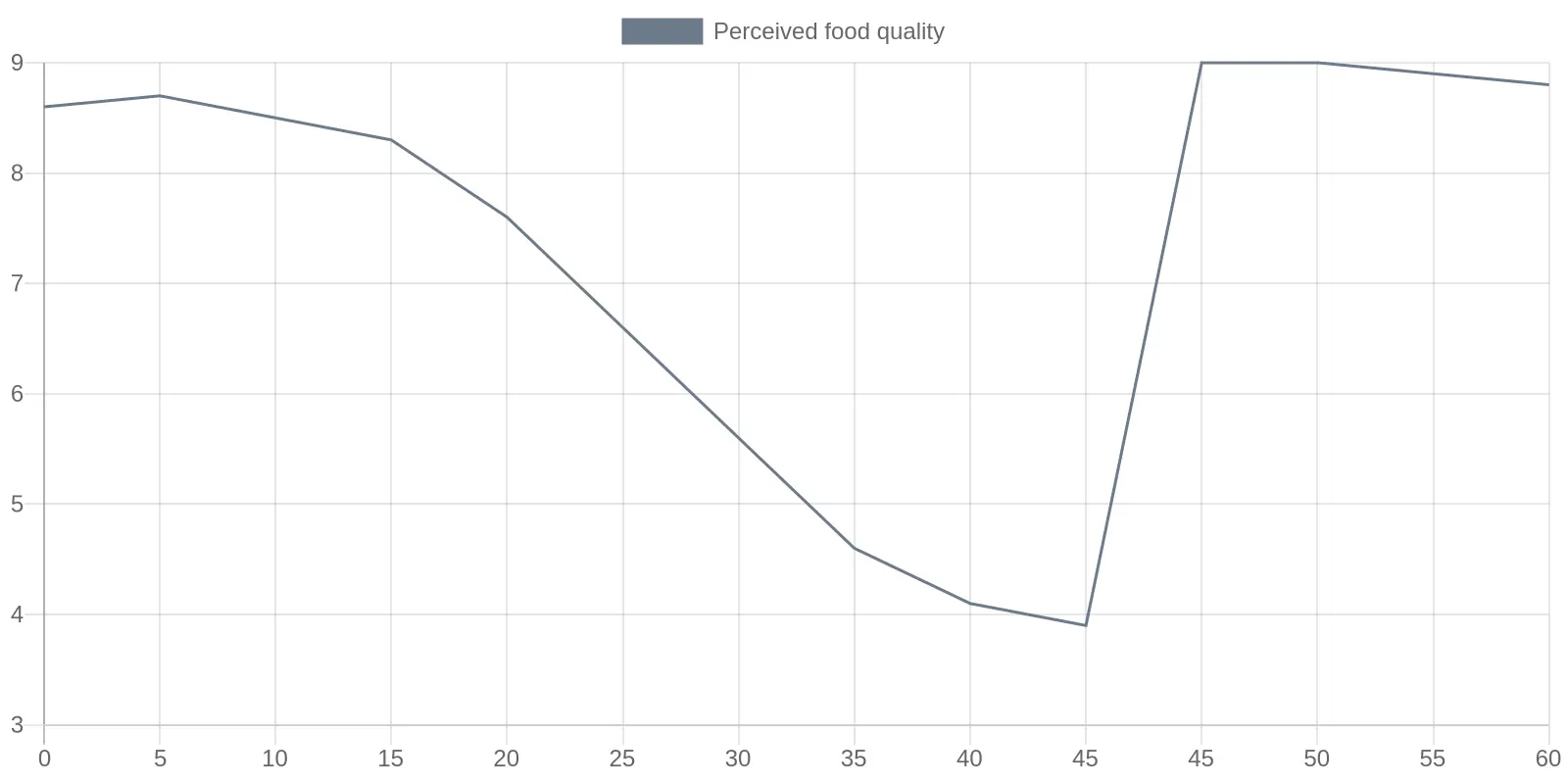
The chart below sketches that relationship as a working rule of thumb. Quality holds for roughly the first 15 minutes after a refill, then slips as heat and moisture take their toll, and snaps back the moment a fresh batch hits the line.
Reading the Curve
- Minutes 0-15, the fresh zone. Quality peaks and holds. Orange chicken is crisp, broccoli still snaps, and the lo mein has not yet turned to paste.
- Minutes 15-45, the slide. It drops steadily. Nothing dramatic at first, just a slightly softer noodle or a duller sauce sheen, but by the 35-minute mark the difference is easy to taste.
- Minute 45, the rescue. A new tray resets the clock. Quality climbs back toward the top of the scale, even though the recipe never changed.
That vertical jump on the right side of the graph is the whole argument in one image: the kitchen, not the cookbook, decides your lunch.
Why This Matters for Weekday Lunch
Weekday crowds arrive in waves, a rush just after 12:00 and another around 12:45. Smart timing means walking in shortly after a wave clears, when staff have just refreshed the hot line. If you can find out how a place handles its steam table operations, you can plan your visit around the refills instead of gambling on them.
The practical version:
- Watch the pans, not the menu. A busy, frequently restocked line beats a quiet one that has been sitting.
- Sit near the action if you can. You will notice a fresh tray the second it lands.
- Go early or go just after a surge. Both put you closer to the top of the quality curve.
The recipe is the constant. The refill schedule is the variable, and it is the one you can actually plan around.
Observing Refill Patterns During the Weekday Lunch Rush
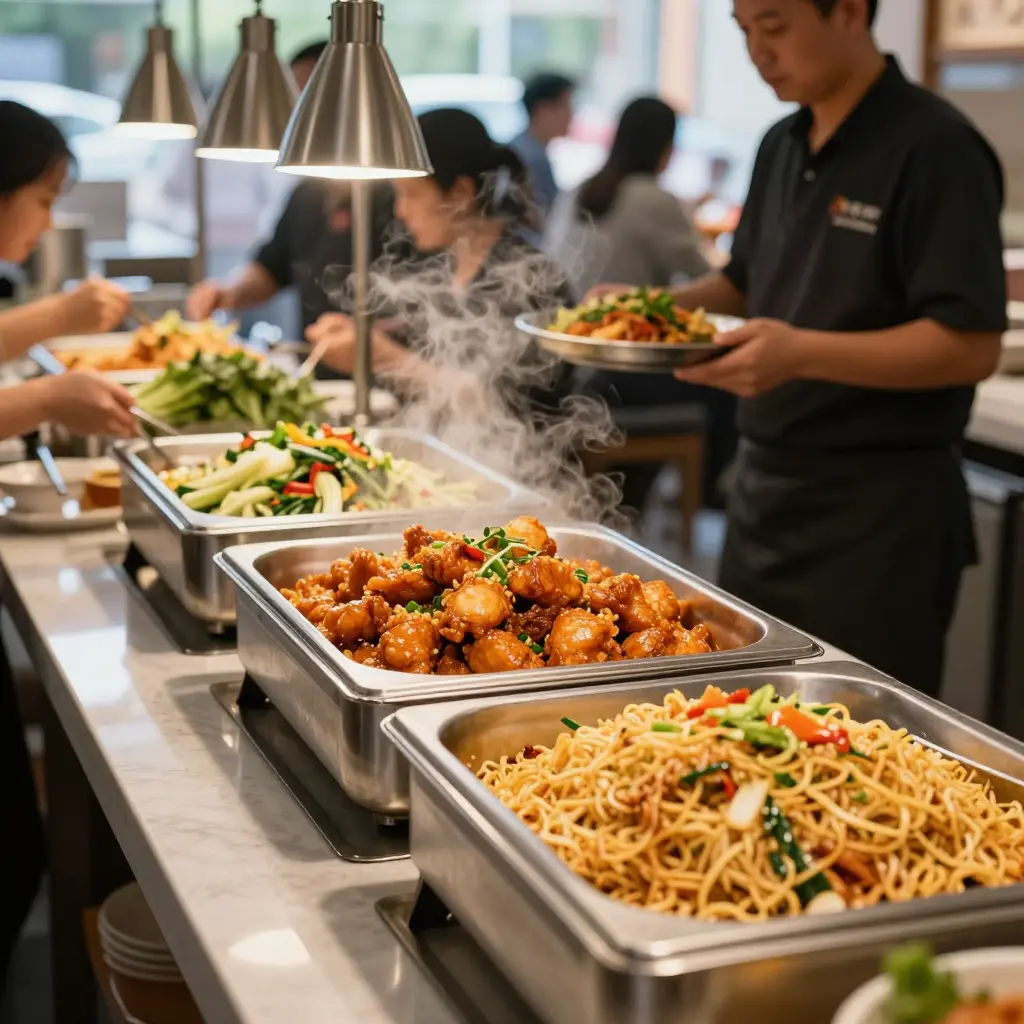
Walk into a Chinese buffet just before noon on a Tuesday and you can almost set a watch by it. At a place like China Buffet Troy Ohio, weekday lunch runs on a tight rhythm, and the most revealing thing on the floor is not the recipe card. It is the steam table.
The rush rarely arrives all at once. It builds in a slow wave between about 11:45 a.m. and 1:15 p.m., when office workers, shift crews, and retirees collide over a quick plate. During that window, an empty tray tells you more about the kitchen than any menu could.
Traffic peaks drive everything downstream. When the line doubles up, the popular proteins drain fastest, and the gap between “scraping the bottom” and “fresh pan arrives” becomes the real test of refill timing. Watch how staff read the room: a good crew anticipates the empty tray and walks a new batch out before the last scoop disappears.
Patterns Worth Watching
- The lead indicator. Whichever tray empties first at 11:50 a.m. almost always stays the most popular item all afternoon.
- The heat-lamp tell. Tired, dried-out edges on a dish usually mean it has been sitting since the previous refill cycle.
- The midday lull. Between roughly 1:00 and 1:30 p.m., refill frequency drops even though the line still looks busy.
- The staff sweep. When a server circles the steam table with a fresh pan in hand, a genuine reset is usually seconds away.
For an observant diner, lunch becomes a small study in logistics. You learn to time a visit for the moment a favorite dish is steaming hot, and which stations to trust when the room is packed.
Regional kitchens handle the same pressure differently, and the pattern shifts from town to town. Diners curious about a nearby comparison can explore how refill rhythms compare at a Circleville Chinese buffet to see how the same weekday lunch logic plays out in another Ohio dining room.
Watch the trays, not the clock. The steam table is always talking, and the diners who listen eat best.
How to Read This Refill Flow
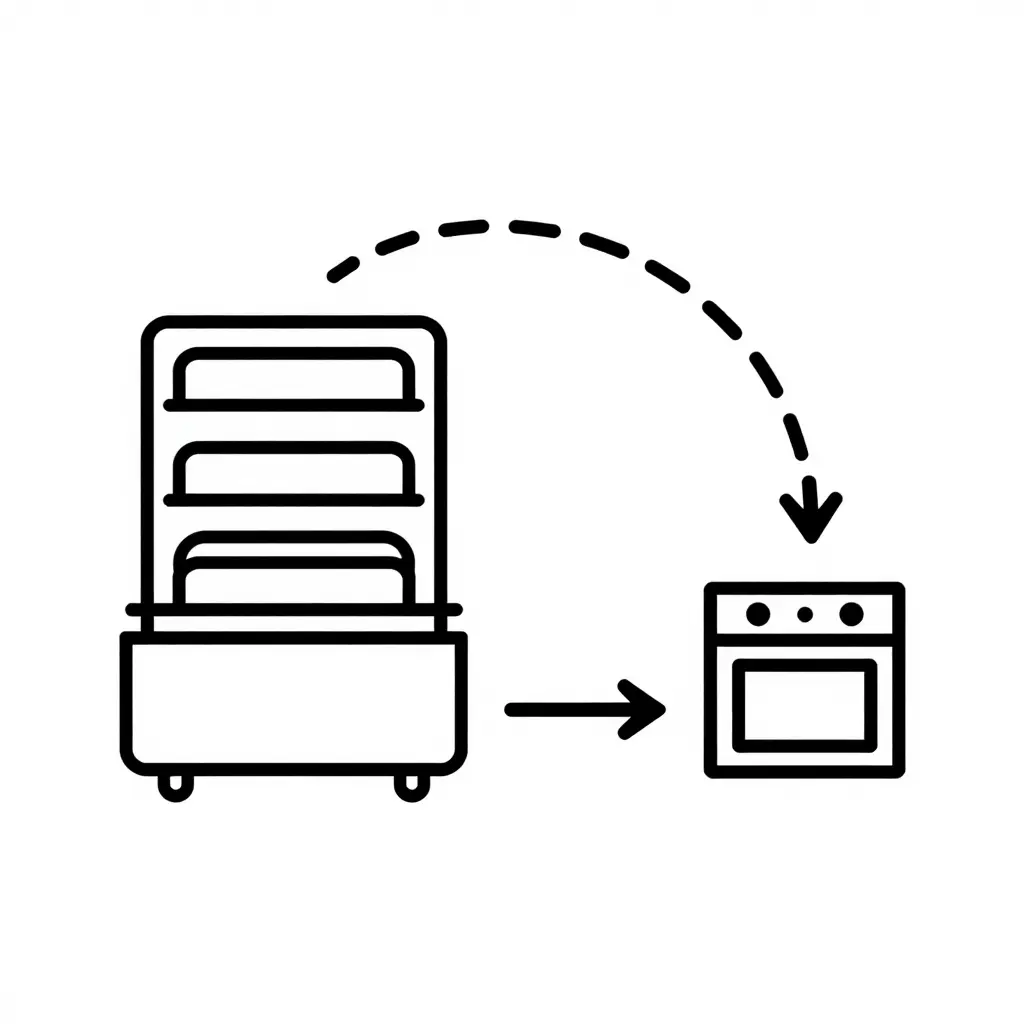
The diagram above reduces the weekday lunch operation to its essentials: a steam table on one side, a kitchen station on the other, and the loop between them that keeps trays full and food fresh.
- The steam table (left): Three shallow trays sit in a heated well, the same setup you see at any China buffet in Troy, Ohio during the midday rush. Each tray is its own mix of temperature and turnover.
- The kitchen station (right): Where a fresh batch is prepped, cooked, and carried out, not stored endlessly under a heat lamp.
- The solid arrow path: One directional route traces the refill cycle, kitchen to table and back, showing that replenishment is a repeated trip rather than a one-time action.
- The dashed loop: Wrapping around the table, this loop stands for continuous monitoring. Someone is always glancing at tray levels, checking the hour, and deciding whether the next batch goes out now or in ten minutes.
Why the Cycle Matters More Than the Recipe
On a busy weekday, the difference between a great plate and a tired one usually is not the sauce or the cut of meat. It is whether the refill loop is running smoothly. A tray that sits too long loses its texture and sheen; a tray swapped too early wastes food and money. The sweet spot lives somewhere in that monitoring loop, and it is what separates a well-run lunch service from an average one.
To see the flow, read the timing: how often trays are refreshed, whether the food looks like it was just set out, and how alert the staff are during the peak hour. That routine is the real quality signal.
Recipe Consistency vs. Timing Variability
Walk into China Buffet Troy Ohio on a Tuesday at 12:15 and the spread looks strikingly similar to what you saw last Friday. That sameness is recipe consistency, and it matters more than most diners realize. It is the baseline promise of any buffet: the General Tso’s chicken tastes like General Tso’s chicken, the lo mein holds its chew, and the sauces never swing wildly from one visit to the next. If you want to picture what that stable lineup is aiming to deliver, you can browse the full buffet menu and see the dishes the kitchen works to keep consistent week after week.
Timing variability is a completely different animal. It has nothing to do with how a dish is supposed to taste and everything to do with how fast it reaches you once it starts to run low: the gap between the moment a tray empties and the moment a fresh batch lands on the steam table.
The split, in short:
- Recipe consistency is about the what: flavors, seasoning, portioning, and the same recognizable dishes every visit.
- Timing variability is about the when: refill timing, batch freshness, turnover speed, and how long food sits under the heat lamps.
- Recipe consistency is set in the kitchen by the cook and the recipe card.
- Timing variability is set in the dining room by floor staff watching trays, gauging the lunch rush, and reacting.
A stable recipe is necessary but not sufficient. A perfect sauce does nothing for chicken that has been drying under a lamp for twenty minutes by the time you scoop it up. The recipe guarantees the ceiling; timing decides where you actually land on any given weekday.
That is why weekday lunch quality at China Buffet Troy Ohio rises and falls with refill timing rather than the recipe book. The kitchen can nail every dish, but the steam table is where the experience is won or lost. A fast, attentive refill turns an ordinary Tuesday lunch into something sharp and hot. A slow one turns the very same recipe into something lukewarm and tired.
Watch the steam table on your next visit. The food tells you which variable was winning that day.
Frequently Asked Questions: China Buffet Troy Ohio Weekday Lunch and Refill Timing
Why does refill timing matter more than the recipe?
A recipe only sets the ceiling on how good a dish can taste, but refill timing decides how close any given plate gets to that ceiling. At a Chinese buffet, food spends minutes sitting under heat, and every one of those minutes reshapes texture and moisture. Well-run kitchens treat the steam table as a live system, swapping pans before quality visibly drops rather than well after.
What times tend to be best for fresh food?
The sweet spot usually lands at the edges of the rush, not its peak. Arriving as a weekday lunch wave begins, when trays are being filled to meet demand, often means hotter and fresher items than showing up during the calm mid-afternoon lull. Watch for the moment staff start carrying out new trays, since that visible activity is your most reliable freshness signal.
How can I tell if the steam table is being maintained well?
Look at the details rather than the food alone. A well-kept steam table has pans that stay at least half full, sauces that are not congealing at the edges, and serving utensils resting clean instead of buried. If you notice staff rotating items, wiping rims, and checking temperatures, refill timing is being handled with care. Curious diners can explore more context on China Buffet Troy Ohio to compare what a well-run operation looks like.
How does weekday lunch differ from weekend service?
A weekday lunch tends to be calmer, with fewer diners and a tighter spread of dishes built around faster turnover. Weekend service draws larger crowds, which can actually help freshness because popular items sell through quickly, yet it also strains staff attention. In the end, the rhythm of refills, more than the menu itself, is what shapes the overall weekday experience.
Conclusion: What Sets the Weekday Lunch Standard
If there is one idea worth carrying out the door, it is this: at China Buffet Troy Ohio, weekday lunch quality is decided by refill timing far more than by any single recipe. The kitchen may nail the sauce, but a dish that has been sitting too long on the steam table tells a different story to your taste buds.
The Practical Points, Distilled
- Arrive early. Mid-service, right after a fresh batch lands, is when trays are hottest and most complete.
- Watch the tray, not the menu. A dish that looks half-empty or dried at the edges is a clue the next refill is overdue.
- Track the rhythm. Weekday lunch crowds are predictable, and so are the peak refill windows.
- Judge with patience. A quiet 2 p.m. visit and a busy 12:15 p.m. visit are effectively two different restaurants.
A Balanced Closing Thought
None of this is a knock on the food. It is simply the nature of a buffet system: freshness is a moving target, and timing is the variable diners actually control. Some afternoons you will catch the kitchen at its best; other days you will walk in during the gap between batches.
For local diners, that reality is useful rather than discouraging. Learn the flow, adjust your expectations to the hour, and you can read the steam table almost like a clock. A little observation goes a long way, and it turns an ordinary weekday lunch into a much more predictable, satisfying one.
If you want a broader sense of what this location offers before you go, you can explore more about China Buffet Troy Ohio and plan your next visit around the busiest, freshest hours.