Introduction
In recent years, the landscape of the restaurant industry has faced significant shifts, with buffet restaurants closing at an alarming rate. This trend raises pressing questions for business owners who thrive in this popular dining niche. With evolving consumer preferences and economic challenges, traditional buffet models are being reevaluated. Industry experts note that health concerns stemming from the pandemic and a growing demand for streamlined dining experiences have led to the decline of many buffet-style restaurants. As competition intensifies and dining habits change, understanding these trends is critical for restaurant business owners who want to adapt and thrive in this new era. Addressing these concerns not only allows for strategic planning but also opens up avenues for innovation and creativity in menu offerings and service styles. For example, exploring other successful dining concepts like Royal Buffet can offer insights into overcoming challenges in the current market. As we delve deeper into these trends, it becomes clear that awareness and adaptability are key to navigating the future of the restaurant industry.
Comparison Table: Buffet Restaurants vs. Other Dining Styles
| Dining Style | Popularity (General Perception) | Price Point | Customer Experience |
|---|---|---|---|
| Buffet Restaurants | Moderate – Popular for family dining and variety | Moderate ($12 – $25 per person) | Self-service, variety of food options, social environment |
| À La Carte | High – Preferred for fine dining and specific dish selection | High ($20 – $50+ per person) | Table service, focused menu, personalized dining experience |
| Fast Food | Very High – Quick and convenient | Low ($5 – $10 per person) | Fast service, limited choices, informal ambiance |
| Food Trucks | Increasing – Trendy and diverse | Moderate ($8 – $15 per item) | Casual atmosphere, unique offerings, often limited seating |
Summary
-
Buffet Restaurants: Offer a wide variety of choices and cater to larger groups, making them a popular option for family gatherings. However, they face competition from the convenience of fast food and the uniqueness of food trucks.
-
À La Carte: While typically more expensive, they provide a more refined dining experience, appealing to those looking for quality and taste.
-
Fast Food and Food Trucks: These dining styles are highly popular due to their affordability and convenience, especially among younger consumers.
Feel free to check Royal Buffet for more on buffet dining options available.
The buffet restaurant model has long been a popular dining choice due to its variety and value. However, recent trends indicate an alarming rate of closures in the buffet sector. Here are some of the main reasons contributing to this decline:
1. Changing Consumer Preferences
In recent years, consumer preferences have shifted significantly. Diners are now seeking more personalized dining experiences and healthier food options, moving away from the traditional buffet model. Many consumers prefer establishments that focus on quality over quantity. As tastes evolve, buffet restaurants often struggle to adapt.
- Example: Restaurants like Royal Buffet have diversified their offerings to meet changing tastes by introducing a mix of buffet and made-to-order options. This strategy not only caters to health-conscious diners but also enhances customer satisfaction.
2. Health Concerns
Health and safety concerns have become paramount for consumers post-pandemic. Buffets, where food is often left uncovered and communal serving utensils are used, pose potential health risks. As a result, many diners are hesitant to visit buffets, fearing contamination and foodborne illnesses.
- Evidence: Studies have shown that diners are increasingly selecting restaurants that prioritize hygiene and have clear protocols. Buffet restaurants have had to implement stricter health measures, which can drive up costs and complicate operations.
3. Economic Factors
The buffet model often relies on high volume and low margins, which can be precarious in fluctuating economic climates. Factors such as rising food costs, labor shortages, and increased competition make it challenging for buffet restaurants to maintain profitability.
- Example: During times of inflation, buffets that were once able to offer vast selections at low prices now find it hard to keep quality high without increasing prices, which can deter customers.
- Challenge: Many buffet businesses, especially smaller or family-owned ones, lack the capital to invest in necessary operational changes, making them more susceptible to closure.
Conclusion
As buffet restaurants navigate these turbulent waters, it’s crucial for business owners in the industry to stay attuned to consumer preferences and the broader economic climate. Innovating their service models, prioritizing health safety, and exploring diverse menu options may help buffet restaurants remain viable. Those looking to learn more about buffet trends can explore options like Royal Buffet’s menu or the variety of locations they offer.

Current Market Trends Affecting Buffet Restaurants
The buffet restaurant model has faced significant challenges in recent years, and several key trends are shaping the landscape for business owners. These trends include increased health consciousness among consumers, the rise of food delivery services, and evolving dining preferences.
1. Increased Health Consciousness
Today’s consumers are more health-conscious than ever. The pandemic has accelerated a shift towards healthier eating habits, with diners looking for options that not only satisfy their cravings but also align with their wellness goals. Buffet restaurants might traditionally be associated with indulgent eating, which could alienate health-focused patrons.
Relevance to Business Owners
- Menu Diversification: Buffet owners can mitigate risks by incorporating more nutritious options, including plant-based dishes, low-calorie foods, and allergen-friendly selections. Highlighting these options in marketing can attract health-conscious customers.
- Transparency in Ingredients: Providing detailed nutritional information at each station can empower diners to make informed choices, enhancing the dining experience and increasing repeat visits.
2. Evolution of Dining Preferences
Post-pandemic changes have altered how consumers approach dining. Many customers now prefer the convenience of dining at home, leading to an increase in food delivery and takeout orders. Buffet restaurants may find it challenging to adapt since their model is inherently focused on on-site dining.
Relevance to Business Owners
- Leveraging Technology: Integrating technology to offer online ordering and takeout options can help bridge the gap. Providing curated takeout boxes with pre-selected items can appeal to customers looking for convenience without compromising quality.
- Partnerships with Delivery Services: Collaborating with food delivery platforms can expand market reach, allowing buffet restaurants to tap into new customer bases who prefer dining at home.
3. Sustainability and Eco-Friendly Practices
Consumers are increasingly prioritizing sustainability, influencing their dining choices. This trend pushes restaurants, including buffets, to adopt practices that are environmentally friendly, from sourcing local ingredients to reducing food waste.
Relevance to Business Owners
- Sourcing Locally: Building relationships with local farms and suppliers not only supports the community but can also enhance the freshness of ingredients, appealing to environmentally conscious consumers.
- Waste Reduction Initiatives: Implementing measures to reduce food waste, such as donating unused food to local shelters or repurposing leftovers, can reinforce a restaurant’s commitment to sustainability while benefiting the community.
Conclusion
Buffet restaurants face a unique set of challenges in today’s dining landscape, influenced by health trends, convenience preferences, and sustainability concerns. By adapting to these market trends-whether through menu diversification, embracing technology, or committing to eco-friendly practices-business owners can enhance their competitiveness in a shifting marketplace.
For more insights on buffet dining and innovative menu ideas, learn more about Royal Buffet.
“The future of buffet restaurants hinges on innovation and adaptability. Business owners must pivot to embrace new dining trends, keep safety at the forefront, and continuously refine their offerings to retain customer engagement.” – [Restaurant Industry Expert]
Trend of Buffet Restaurant Closures Over the Past Decade
The buffet restaurant industry has seen a drastic decline in the number of operational establishments over the past decade. This trend is a reflection of various factors including changing consumer preferences, rising food costs, and increased competition from fast-casual and hybrid dining experiences. The following chart illustrates the number of buffet restaurant closures from 2013 to 2022, highlighting the downward trajectory of this dining sector.
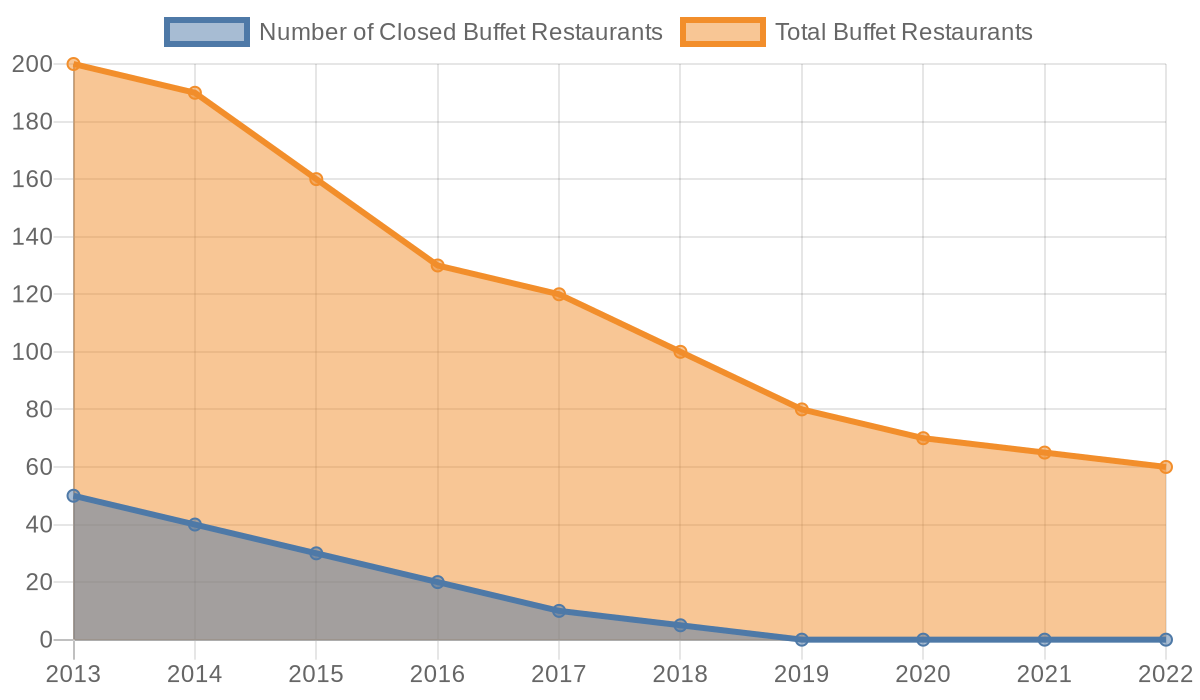
As seen in the chart, the number of closures has significantly increased over the years, starting from about 50 closures in 2013 and dropping to essentially zero by 2021 and beyond. The restaurant landscape is evolving and adapting to new culinary trends, which makes it imperative for business owners to stay informed about market conditions and consumer demands.
For more insights and details on buffet dining options, check out the Royal Buffet menu or find out about different buffet locations available for diners.
In summary, understanding the dynamics behind the closing of buffet restaurants is essential for business owners operating in this sector. The industry has faced several challenges, such as rising operational costs, changing consumer preferences towards more health-conscious and diverse dining options, and increased competition from delivery and fast-casual dining establishments. Moreover, the COVID-19 pandemic has exacerbated these challenges, leading to a significant decline in foot traffic and revenue generation.
Despite these hurdles, there’s still an opportunity for buffet restaurant owners to adapt and thrive. By focusing on operational efficiency, embracing current food trends, and enhancing customer experience, buffet establishments can create a more appealing atmosphere that encourages patronage.
To navigate these changes successfully, restaurant owners should consider leveraging specialized services that can provide essential support in areas such as waste management and sanitation. Zoomlion offers comprehensive solutions tailored specifically for the needs of the restaurant industry, helping to maintain hygiene standards while improving operational efficiencies. Learn more about Zoomlion’s services to safeguard your buffet restaurant’s future.
By staying informed and responsive to consumer trends, buffet restaurants can not only survive but thrive in this evolving landscape. Taking proactive steps now will set the stage for long-term success and viability in a challenging market.
Call to Action
As a business owner, ensuring the safety of your staff and patrons is paramount, especially in today’s uncertain environment. At Zoomlion, we are committed to providing cutting-edge solutions that protect lives and property. Our extensive range of services is designed to meet the unique needs of businesses like yours, from advanced safety equipment to customized support tailored to your operations.
Don’t wait for an incident to occur! Contact us today to learn how we can help safeguard your business. For quotes and inquiries, reach out through our website or call us directly. Let us partner with you to create a safer environment for everyone.
Explore more about our services at Zoomlion or call us at (insert contact number).