
Why the Hibachi Station Becomes the Dinner Rush Bottleneck
Walk into a busy Toledo Chinese buffet at seven on a Friday and the room feels like a small city. Steam tables run in long glowing rows, piled with orange chicken, lo mein, and fried rice. The sushi bar sits off to one side, cool and quiet. Near the back, a dessert island glitters with pudding cups and tiny cakes. Everything is within reach, and that is the appeal.
Then there is the hibachi station, and almost every night it draws the same crowd. You see the line before you see the grill: a dozen people balancing plates, craning their necks, waiting for a cook to add another squirt of sauce and a flick of the wrist. It is the busiest point in the building.
The reason is not mysterious. The grill cooks to order, orders stack up behind it, and one cook works through the backlog. That is the whole story, and once you know how the three fit together you can decide when to join the line and when to walk past it.
What Is a Hibachi Station?
A hibachi station is the made-to-order grill area inside many Chinese buffets in Toledo. Instead of scooping pre-cooked food from a warming tray, you hand a bowl of raw ingredients to a chef who cooks it on a large flat-top griddle, often called a teppan. The chef sears chicken, beef, or shrimp, folds in vegetables, noodles, and rice, and finishes the plate in a few minutes while you watch.
Cooking to Order, One Batch at a Time
That is where the station separates itself from the rest of the room. Steam tables are self-serve and instant: lift a lid, spoon out what you want, move on. A made-to-order grill cannot work that way. Every plate is cooked from raw to finished, one griddle holds only so many portions at once, and the chef starts the next order only when there is room.
Batching is what turns the grill into a line whenever demand rises. Steam tables scale without effort, because guests simply take more. The hibachi station is capped by the chef’s pace and the size of the griddle. On a busy night, one corner of the buffet keeps moving while the other stalls, and that difference shapes the whole meal.
The hibachi counter also sits within a wider Asian grill buffet tradition that puts live cooking and traditional self-serve stations under one roof.
Visualizing the Hibachi Station Flow
The schematic below traces the hibachi station through a dinner rush: guests arrive, merge into a single queue, order their ingredients, hand them to the chef, and watch the flat-top before the finished plate comes back. Everyone funnels into one narrow channel, and that pinch point, marked in red, is where the bottleneck forms once the dining room fills.
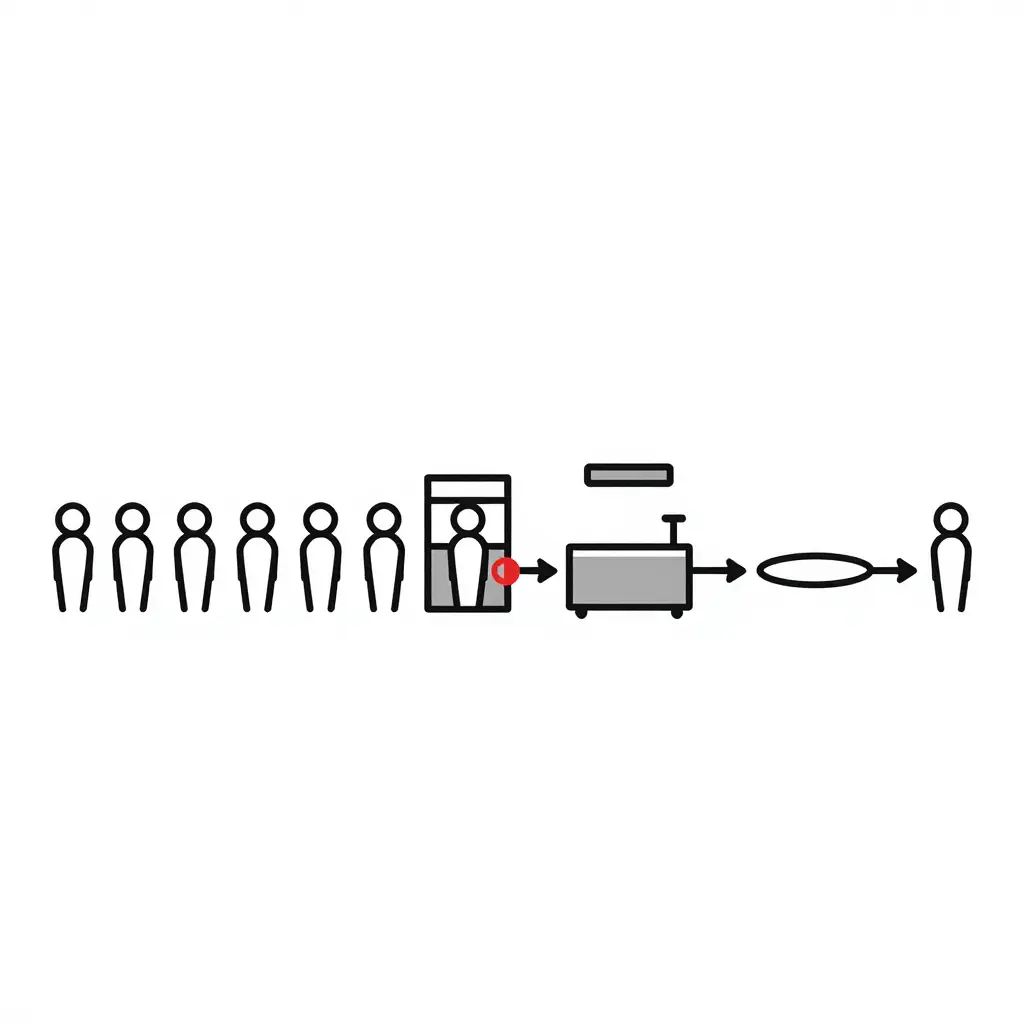
The result is arithmetic. Because every guest passes through the same single-file step before reaching the grill, throughput is capped by that one channel, no matter how many seats or burners the rest of the buffet offers.
The Psychology and Social Dynamics of the Hibachi Queue
Diners join a line they can already see is long, and the reasons sit partly in their heads and partly in the crowd around them. The two feed each other, which is what makes the station so sticky.
Fresh, Hot, Made-to-Order Wins
Most stations let food sit under a heat lamp. Hibachi does not. You watch your plate hit the grill and land in front of you still steaming, and that freshness feels worth waiting for. The line grows even when the steam tables sit wide open and empty.
The Theater Factor
A chef working a hot flat-top is dinner and a show: flames, a flying spatula, a wall of sizzle. The performance pulls in eyes and feet, so the wait becomes part of the buffet dining experience instead of a cost of it.
The Herd Instinct
A visible queue also signals value: if everyone else is waiting, the food must be good. The longer the hibachi queue grows, the more it looks worth joining, which makes it grow.
Delegated Waiting
Groups rarely stand in line together. One person holds the spot while the rest graze and come back. The queue looks crowded the whole time, and it moves slower, because the holder waits for late arrivals to finish whatever else they are eating.
Stacked on Top of Capacity
None of these habits replaces the physical limits: grill space, one chef, a fixed cook time. They amplify them. Demand peaks at the moment capacity cannot speed up, and the bottleneck tightens.
Together they turn a small station into the dinner-rush choke point of a busy Chinese buffet in Toledo.
Buffet Station Throughput: A Toledo Chinese Buffet Comparison
Line the five major stations up side by side and the reason the grill feels slower shows up in the numbers. One caveat: these are ballpark figures based on the rhythm of a typical busy evening, not stopwatch readings. Read the table as a rough map of where crowds stall.
| Station | Typical Service Method | Est. Wait per Diner (Dinner Rush) | Made to Order? | Relative Bottleneck Risk |
|---|---|---|---|---|
| Hibachi Grill | Guest orders at the grill; chef cooks each order in batches on a shared flat-top | 8-15 min | Yes | High (primary bottleneck) |
| Steam Tables | Self-serve scooping from heated trays | 1-3 min | No | Low |
| Sushi Bar | Self-serve from a chilled display, periodically restocked by staff | 1-2 min | No (mostly pre-rolled) | Low to moderate |
| Dessert Island | Self-serve grab-and-go | Under 1 min | No | Very low |
| Salad Bar | Self-serve, build-your-own style | 1-2 min | No | Very low |
Four of the five stations let diners serve themselves and move on in a minute or two, which is why they rarely clog. The hibachi station is the only made-to-order stop, and that single difference changes the math. When every plate has to be cooked fresh on a shared surface, the line moves only as fast as the chef, and no guest can speed it up by taking a scoop of their own. Same demand, a fraction of the throughput.
The wait-time column tells the same story. Steam tables, sushi bar, dessert island, and salad bar all land in the one-to-three-minute range. Hibachi sits alone at eight to fifteen on a typical evening. That is not a small inefficiency; it is roughly a fivefold difference, and it compounds every time another guest joins the queue. Which is why the pinch point at a Toledo Chinese buffet is the hibachi station and not the long buffet lines.
The Hibachi Bottleneck at a Glance
The bar chart below shows how average hibachi waits rise and fall across the dinner hours at a Toledo Chinese buffet, from the calm early seating to the mid-evening surge. For a closer look at the venue behind the numbers, see this Toledo Chinese buffet overview.
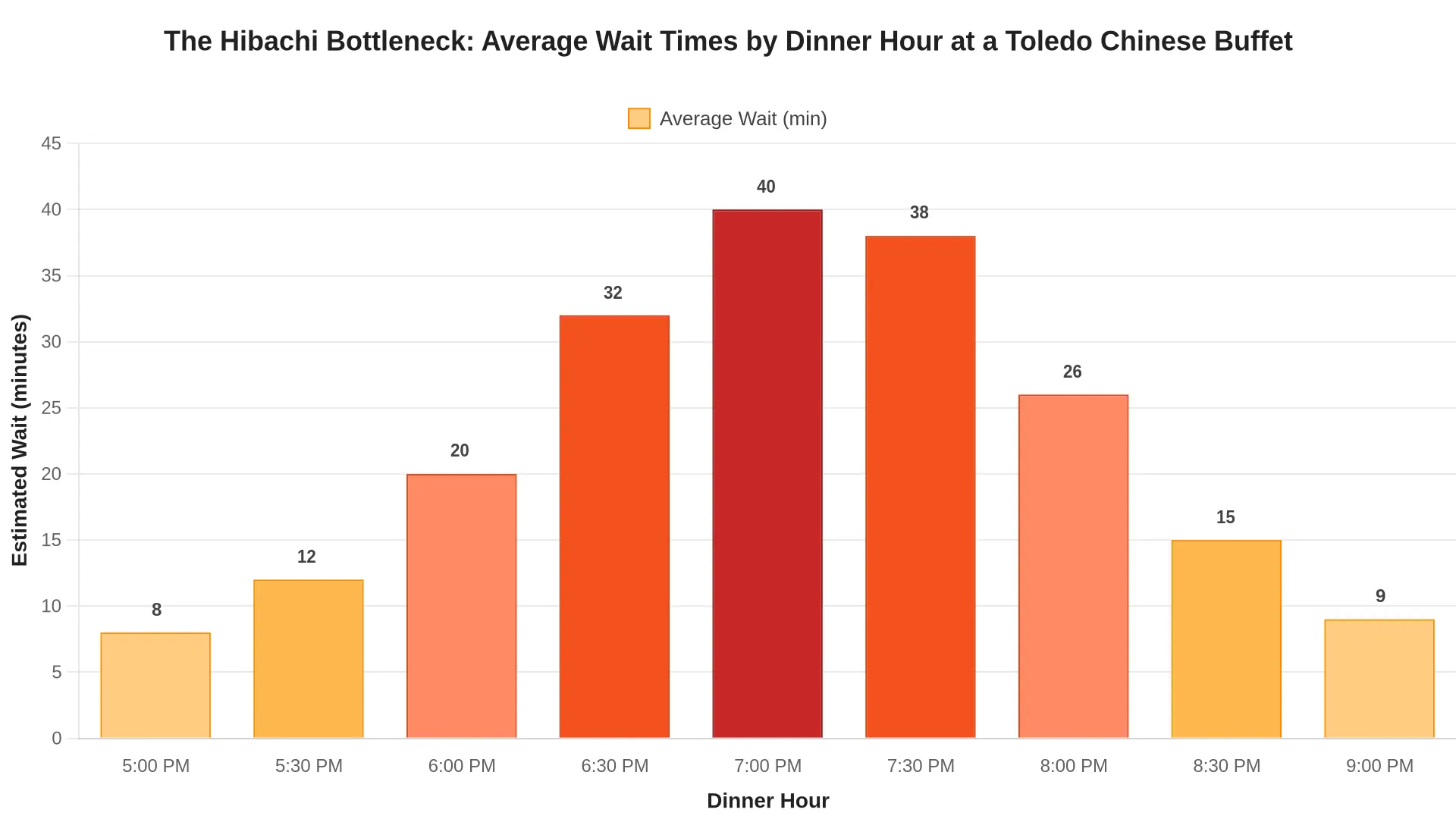
Takeaway: Wait times climb from about 8 minutes at 5:00 PM to a peak near 40 minutes at 7:00 PM, then fall back toward single digits by 9:00 PM. That mid-evening summit is the bottleneck in one image, so the shortest lines come with an early 5:00-5:30 PM seating or a late one at 8:30 PM and after.
The Economics of the Hibachi Bottleneck: A Balancing Act for Buffet Owners
From the owner’s side of the counter, the hibachi station is not a freebie. It is one of the few features that pair high perceived value with modest operating cost: an inexpensive spread of proteins and vegetables turned into a made-to-order spectacle. Diners remember the show, photograph it, and tell their friends. For a buffet operations team, that buzz is marketing the restaurant would otherwise have to buy.
The same queue that signals popularity also taxes the room. During a dinner rush, a guest standing at the hibachi station is not sitting at a table, and every stalled minute eats into turnover exactly when each seat matters. The useful way to read the station is as a dial to tune rather than a flaw to remove, and three levers move it.
1. Hibachi chef staffing. One chef on a full flat-top can only plate so many orders an hour. A second pair of hands at peak shortens the wait but adds labor cost, worth it whenever the queue starts turning diners away.
2. Griddle capacity. A larger or better-arranged cooking surface clears more skillets per cycle, lifting throughput without a single extra hire.
3. Ingredient restock timing. If the protein and veg bowls run dry mid-line, the entire queue pauses. Restocking just ahead of the peak keeps the line moving and the mood civil.
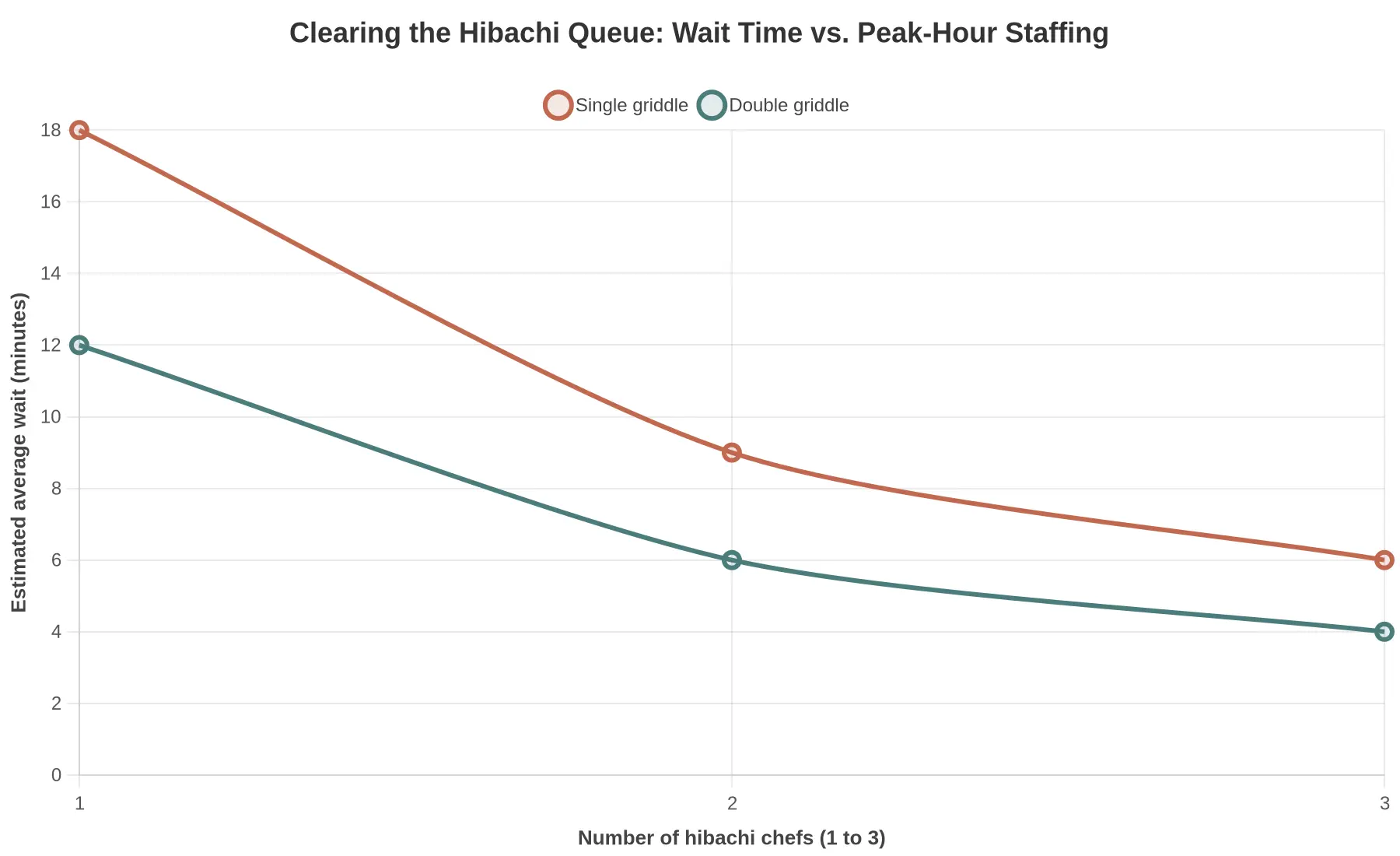
Handle all three and the station becomes what a buffet wants it to be: a high-value draw that brings repeat visits and word of mouth without strangling table turnover. The goal is balance, not removal. When a guest searches for a “Chinese buffet near me,” the hibachi line should be the part of the night they remember, not the wait that ruined it. To see how a well-tuned station fits into a larger operation, start at the Royal Buffet main page.
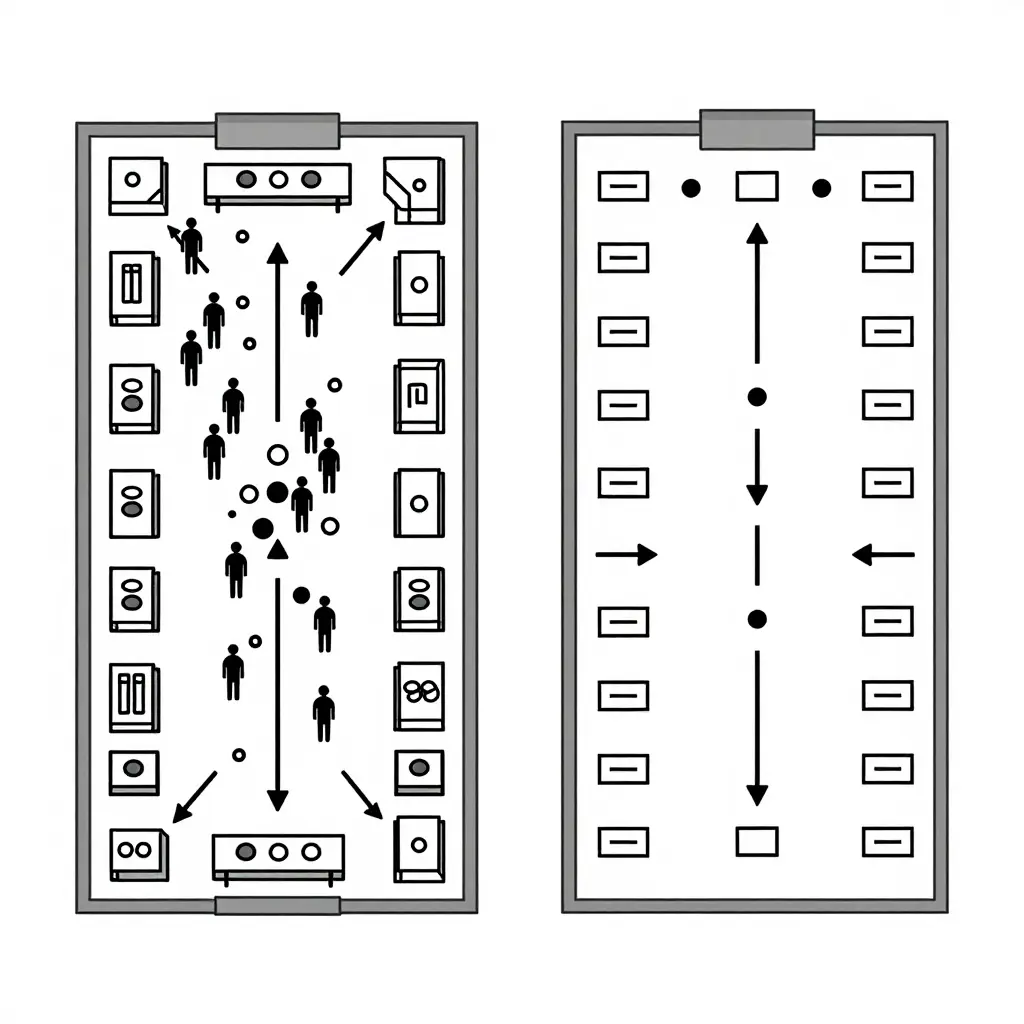
Put the hibachi station in one crowded corner and every waiting guest ends up in the same pocket, so foot traffic stalls where demand is highest. Move it so the queue feeds along its own separate lane and the same number of diners moves with far less friction. Same food, same crowd, different flow.
FAQ: The Hibachi Bottleneck at a Toledo Chinese Buffet
When is the hibachi station busiest?
Heaviest traffic falls in the evening dinner rush, usually between 6:00 and 8:00 p.m. on Friday and Saturday nights. That is when most parties arrive together and head straight for the made-to-order grill. For a shorter line, come at opening or after 8:30 p.m.
How long does the wait typically run?
On an average weeknight, the wait at the grill usually runs about five to ten minutes. On a packed weekend evening it can stretch to fifteen or twenty minutes per order, and the 7 p.m. peak of a busy night can run longer still. How long you wait depends mostly on how many diners are ahead of you and how much each one piles onto a single plate.
Can diners skip the line and still enjoy hibachi food?
Yes. Most Toledo Chinese buffet locations offer grilled and stir-fried dishes on the main steam tables, so you can get similar flavors without queuing at the grill. The trade-off is that those pre-cooked items are not customized to your preferred sauce or spice level. If customization matters to you, the few extra minutes at the hibachi station are worth it.
Is the bottleneck worse on weekends?
Yes. Weekends are consistently busier because larger groups, families, and celebrations tend to dine out then, and Sunday evenings can be nearly as crowded as Saturday thanks to post-church and family gatherings. Midweek lunches and early weeknights remain the calmest times to visit.
How does the hibachi station differ from the self-serve steam tables?
Steam tables hold pre-cooked dishes under heat lamps, so you serve yourself instantly with no waiting. The hibachi station is made-to-order: you pick raw ingredients, hand them to a cook, and wait while they are grilled fresh in front of you. That freshness and control are exactly why the grill draws a crowd, and why it becomes the focal point of the dinner rush bottleneck. For a broader look at how these setups compare across the region, explore additional Findlay-area buffet options.
The Bottom Line: A Predictable Highlight, Not a Failure
The hibachi station is the reason people walk into a Toledo Chinese buffet excited, and the reason they crowd one line at 6:30 p.m. It is also the most predictable bottleneck in the building.
Both come from the same three facts. The cooking is single-channel: one grill, one chef, a fixed number of servings per round. Freshly grilled food beats a warming tray, so the line stays popular. And everyone wants dinner at the same hour, so demand arrives in a spike.
Put the three together and the dinner rush bottleneck is not a surprise. It is structural. A buffet that cooked aggressively all night would waste food; one that grilled slowly would lose the very draw that fills the room.
Understanding this changes how you use the place. Diners who arrive before or after the rush eat better and wait less. Managers who stagger grill rounds and pre-stage ingredients move the line faster without adding a single burner.
The bottleneck is manageable once you see it coming. Treat the hibachi line as a timer rather than a trap, and plan around it the way you would any popular attraction. For anyone scouting options beyond one city, sister locations such as a nearby Findlay buffet spot show how the same pattern plays out in different dining rooms.
The grill will still be busy. Plan around it, and you will not be caught off guard.