
Starting a buffet restaurant can be an exciting venture, but it requires a substantial financial commitment. From the initial investment to ongoing operational expenses, understanding the full scope of costs is crucial for prospective owners. This guide provides a comprehensive breakdown of the expenses associated with launching a buffet restaurant, as well as strategies for effective financial planning to ensure your business can thrive in a competitive market. The following chapters will detail the initial investment breakdown and the operating costs, equipping you with the necessary insights to navigate your entrepreneurial journey successfully.
null
null
Balancing the Plate and the P&L: Practical Costs and Cash-Flow Planning for a Buffet Restaurant
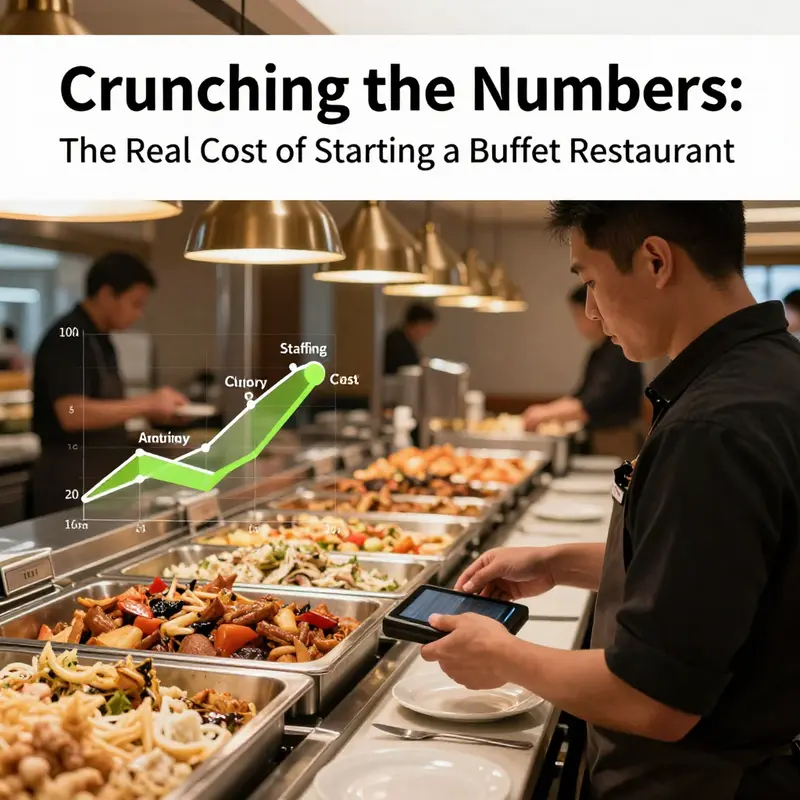
Opening a buffet restaurant is as much an exercise in financial foresight as in culinary planning. The question of how much it costs to start a buffet is not a single number but a spectrum shaped by location, space, brand ambitions, and the market you intend to serve. Based on a synthesis of 2024 industry data, prospective owners should expect a realistic starting point in the broad range of fifty thousand to two hundred thousand dollars. That envelope covers essentials—from equipment to initial operating capital—so you’re not caught in a cash crunch as you chase your first meals served. A venue of about 150 to 300 square meters typically demands substantial investments across several pillars: the kitchen backbone, the dining floor, and the systems that keep everything moving. The initial capital can be lean if you open at a smaller scale or in a market with favorable terms, but even then you’re often looking at a minimum outlay that preserves your ability to operate with dignity through the first cycle of business. The exact mix, of course, follows your ambitions and constraints. A compact venue in a busy suburb may skew toward equipment and leasehold investments, while a corner in a premier district could bump up lease costs and branding outlays. What remains constant is the need to size the business for a first 6 to 12 months of activity with enough working capital to weather what can be a volatile first year while you establish a reliable guest flow and a sustainable cost structure.
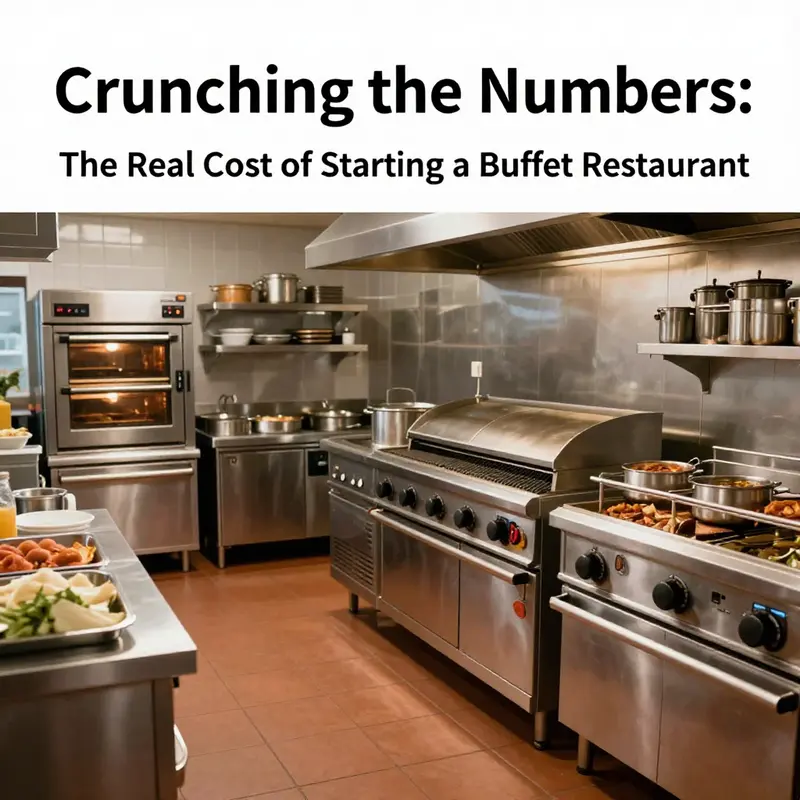
The equipment bill is a major early checkpoint. For a standard buffet kitchen—one that supports varied hot and cold stations, sauté and steaming lines, and robust cold chain—you’ll face a spread that typically falls between about $15,000 and $50,000. The variance comes from choices about new versus used gear, the scale of your steamers and ovens, and the refrigeration footprint you choose. Walk-in coolers, freezers, dishwashing systems, and sanitation stations accumulate quickly, but they deliver the reliability that a buffet operation cannot do without. The leasehold improvements that transform a raw space into a serviceable restaurant—new flooring, proper ventilation and exhaust, lighting, plumbing, and ADA compliance—are another sizable chunk, often $20,000 to $60,000 upfront, with some markets requiring by-the-book upgrades that can push costs higher. In parallel, you should budget a marketing push and grand opening plan that ranges from a modest $3,000 to as much as $10,000 to generate initial awareness and trial. If you decide to operate under an established brand or franchise umbrella, expect an upfront franchise fee in the ballpark of twenty to fifty thousand dollars, plus ongoing royalty obligations typically running five to ten percent of sales. Going independent avoids those ongoing fees but forces you to invest more heavily in branding, signage, and local marketing to carve out your share of the market.
The people and the product come next. Staffing a buffet operation requires a mix of cooks, kitchen crew, servers, hosts, cashiers, and supervisors. A practical starting payroll for a lean, mid-sized operation—often eight to twelve employees—tends to land somewhere between eight and fifteen thousand dollars per month, depending on local wage levels and scheduling. The cost of goods is not merely the price of ingredients; it includes beverages, condiments, and the ancillary supplies that enable a buffet to function smoothly, from serving utensils to tray liners. An initial stock of food and beverages typically runs five to ten thousand dollars. Ongoing, the food cost line is a critical lever and is frequently expected to hover around thirty to thirty-five percent of total revenue in many buffet operations—though this benchmark can drift with menu design, supplier terms, and waste management practices. Marketing remains essential beyond the grand opening. A measured starting budget of three to ten thousand dollars helps you establish a presence in the local market, produce attractive signage, and drive a few early promotional events that translate into trial dining. These numbers are not just budgeting figures; they serve as guardrails against two common pitfalls: undercapitalization and misaligned pricing that fails to cover core costs.
Beyond the obvious line items, you will encounter a disciplined framework of fixed costs that anchor the business. In many analyses, fixed costs include rent, software and licensing, and ongoing maintenance. A representative model lists rent around twenty-five thousand dollars per month, with software and licensing fees near four thousand dollars and maintenance/calibration expenses approximately six thousand dollars. This fixed-cost trio forms the baseline you must cover regardless of customer turnout. It’s easy to underestimate how quickly even modest changes in rent or software can ripple through your monthly cash flow. In parallel, the variable costs—food procurement, labor wages, utilities, and general supplies—rise and fall with guest volume, but they are rarely the same from one week to the next. A month with above-average traffic can push electricity and gas bills higher, and a larger crowds mean more frequent restocking, more dishwashing cycles, and more staff coverage. The balance between fixed and variable costs defines your break-even point and your margin for error as market conditions shift.
The story of buffet economics is not merely about counting costs; it is about managing a system that tastes like profit when guests party and fizzle when days are slow. A not-insignificant challenge across the broader restaurant industry—supported by studies and industry observations—is the persistence of relatively low operating profitability despite intense competition and a constant push to deliver value. Two forces drive that reality. First, food and labor costs tend to rise over time in many markets, squeezing margins if price increases lag behind input costs. Second, the capital intensity of buffet formats—where guests expect variety, quality, and speed—creates a heavy dependency on volume and operational discipline. These realities underscore the importance of proactive cost control and strategic pricing rather than reactive fixes after the cash register rings. The takeaway is simple but powerful: the path to durable profitability is paved with disciplined budgeting, precise supplier terms, waste reduction, and a pricing strategy that reflects the true value of the experience you offer, not just the buffet price tag.
Several pieces of research amplify the need for a robust financial plan. In the realm of long-term planning, some analyses suggest that entering the buffet space with the ambition to scale rapidly or to sustain a high-volume operation can require a substantial capital cushion—presentations and models sometimes illustrate minimum cash investments that run into the millions when one accounts for aggressive growth plans, comprehensive renovations, and the scale needed to maintain consistent turns throughout the day. These numbers remind us that ambitious pathways demand more than a bright concept; they demand a shield against volatility and a map that ties labor, inventory, and equipment to predictable revenue streams. In the more conservative and practical end of the spectrum, however, credible planning still centers on the fundamental levers of profitability: turning tables efficiently in the evening hours, refining menu design to steer waste toward profitability, and leveraging technology to squeeze value from inventory and staffing. The ScienceDirect-based observations about profitability and cost pressure serve as a reminder that success hinges on managing every dollar with intention, not on chasing volume alone.
Given this landscape, a practical startup roadmap helps translate theory into ready-to-execute steps. Some strategic projections in industry analyses propose a sizeable upfront investment—on the order of approximately two million two hundred eighty-five thousand dollars—to reach a level where sustainable growth is plausible. In that scenario, revenues might ascend from nearly two million dollars in year one to almost twelve million over five years. While such figures represent a high-growth path, they illustrate a fundamental truth: the scale of modern buffet operations, especially in competitive markets, requires not just clever menus but a carefully staged financial plan that aligns capital deployment with realistic revenue trajectories. The realistic counterpoint to that high-arc projection is a more cautious approach that emphasizes steady, incremental growth: invest enough to safeguard quality and service, build a loyal customer base, and expand capacity as demand confirms itself. Either way, the mathematical backbone remains the same. You must forecast turnover with precision, set a target for prime dining windows, and ensure that your pricing structure is calibrated to cover the core costs while producing a sustainable margin.
To steer toward profitability, several levers consistently rise to the top. Increasing evening dining turns can dramatically improve capacity utilization during peak hours. In a buffet context, that means refining staffing models and service flow so guests experience speed and clarity during dinner without compromising food quality or the dining room ambiance. Menu design then becomes more than a shopping list; it becomes a tool for profitability. Strategic menu engineering—prioritizing high-margin items, controlling waste, and designing replenishment cycles that minimize spoilage—can quietly push the bottom line without sacrificing guest satisfaction. Technology also plays a growing role. Inventory management software and labor scheduling platforms help align procurement with demand, reduce waste, and optimize staffing during unpredictable weeks. A disciplined approach to data—tracking price changes, lead times, and consumption patterns—allows operators to adjust menus and keep margins intact. Some industry examples highlight the payoff when these levers are pulled in concert, with moderate-to-strong revenue growth accompanied by improved efficiency in labor and waste control, ultimately translating into a more resilient operation during economic swings.
Costs are not neutral, and neither is risk. The prudent buffet owner builds a stress-tested plan that accounts for capex surprise, supply disruptions, and wage volatility. It means maintaining a reserve fund for emergencies, negotiating favorable payment terms with suppliers, and modeling multiple scenarios in your financial plan. A flexible budgeting approach, in which you reforecast monthly and adjust capital expenditures in response to performance, tends to outperform a rigid six- to twelve-month forecast that assumes perfect conditions. In practice, a balanced strategy combines fixed and variable cost discipline with revenue-focused tactics: optimize the menu mix for higher-margin items, elevate the guest experience during peak times to justify price pacing, and invest in systems that minimize downtime and maximize throughput. The objective is not simply to spend less; it is to allocate spend where it matters most—on quality, service reliability, and the capacity to deliver consistent dining value that encourages repeat visits.
For readers building a plan from scratch, the takeaway is straightforward. Start with a thorough cost map that captures all upfront investments and the first year of operating costs. Build a conservative revenue model anchored to realistic guest counts, average checks, and turnover rates, then stress-test that model against plausible disruptions. Keep a clear line between what is essential to open and what enables sustainable growth. Do not underestimate the value of accurate quotes for rent, permits, and equipment; do the legwork to anchor your budget in local realities, because even in a thriving market, rent and build-out costs can swing significantly from one location to another. And remember that a buffet is as much a customer-retention engine as it is a menu and station layout: the kind of experience you deliver impacts repeat business, which in turn stabilizes revenue and supports healthier margins over time.
As you navigate these considerations, a single truth emerges: cost planning is not a one-off exercise but a discipline that evolves with your business. It begins with understanding the fixed costs that must be covered every month and extends to optimizing variable costs as guest volumes fluctuate. It includes recognizing the profit opportunities embedded in your menu, your service cadence, and your back-end systems. It requires a strategic mindset about capital planning, not a check-the-box approach to opening day. When these elements cohere, a buffet business can transform from a hopeful concept into a durable enterprise that can weather market cycles while delivering reliable value to guests. For those seeking a broader framework on operating costs and sustainable financial planning for buffet concepts, see the detailed analysis linked in industry resources. And for related local perspectives on buffet operations and menus that illustrate how scaling and operations unfold in practice, you can explore a representative example at Royal Buffet locations.
External resource for further reading: https://www.businessplansuite.com/restaurant-operating-costs/buffet-restaurant-operating-costs/
Final thoughts
Launching a buffet restaurant involves a significant financial commitment, but with careful planning and strategic decision-making, your venture can prosper. By understanding the initial investment breakdown and effectively managing operating costs, you’re setting the foundation for long-term success. Pay close attention to budgeting for each aspect of your business, from equipment to payroll, and remain adaptable to market changes to navigate the challenges ahead. Your journey may be complex, but with the right preparation and execution, a buffet restaurant can become a rewarding business opportunity.