
Buffet restaurants have carved out a unique niche in the dining industry by appealing to cost-conscious customers with their all-you-can-eat model. However, behind the rich variety of food and enticing prices lies a calculated business strategy that focuses on high-volume sales and operational efficiency. Understanding the dynamics of buffet profitability involves delving into critical elements such as customer engagement, pricing strategies, and meticulous cost management. This article will break down these aspects into two key chapters: the first will explore how buffets leverage high-volume sales and innovative pricing strategies to draw in customers, while the second will emphasize the significance of effective cost control and operational efficiency in sustaining profits. By examining these components, business owners can acquire insights into optimizing their restaurant operations for better revenue outcomes.
Turning Plates into Profit: How Buffets Use Volume, Pricing, and Five Operational Levers
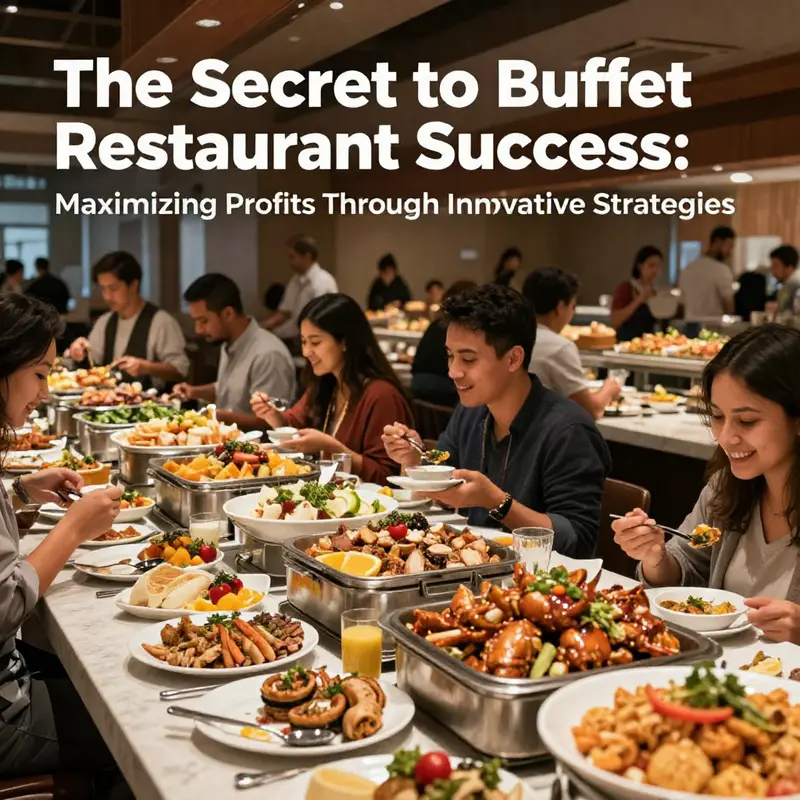
Turning Plates into Profit: How Buffets Use Volume, Pricing, and Five Operational Levers
Buffet restaurants turn the simple promise of unlimited access into a surprisingly sophisticated revenue engine. At first glance the model seems risky: guests pay a fixed price and can eat as much as they want. But that fixed price is the keystone of a system designed to extract predictable, repeatable profit from scale. By leaning on high-volume traffic, careful pricing, and five operational levers, buffets convert many small margins into a healthy bottom line.
The core math is straightforward. Fixed costs—rent, major kitchen equipment, insurance—are spread across hundreds or thousands of meals each week. That lowers the effective cost per meal as volume grows. When a restaurant fills seats consistently, even thin per-person margins compound into large total profits. This is why buffets prioritize consistent foot traffic and high turnover. The unlimited offering becomes a value proposition that attracts broad demographics: families, groups, budget-conscious diners, and those seeking variety. Each of these segments contributes to steady volume.
Pricing strategy sits at the heart of profitability. Buffets typically set the base price to cover projected food costs and variable labor, then build margin through ancillary items. Smart operators do not simply choose a flat rate and hope for the best. Instead, they map expected plate consumption patterns and set price tiers that align with behavior. For example, lower lunch prices capture daytime traffic where consumption tends to be lighter. Higher dinner prices reflect heavier food intake and the opportunity to sell premium add-ons. Time-based pricing and weekday discounts also smooth demand across slow periods. The effect is more consistent occupancy and better utilization of fixed assets.
Beyond headline pricing, five operational levers shape how effectively a buffet turns covers into profit. The first lever is optimizing the menu mix. Not all dishes cost the same to produce. Buffets favor items that look generous yet have low ingredient costs or high perceived value. Rice, pasta, vegetables, and house sauces are inexpensive and flexible. Proteins are carefully portioned and placed strategically. High-margin items, such as premium beverages and specialty desserts, are highlighted near the exit or on special displays. Driving even a small shift in the mix toward those items raises average spend per guest without raising the base price.
The second lever is portion control. At buffets this does not mean stingy presentation. It means designing serving methods that control the flow of costly components. Chefs use smaller serving trays for expensive dishes, replenish them more often, and place them deeper in the line so only committed diners reach them. Self-serve utensils and signage encourage sampling rather than full-plate servings of premium items. When guests see abundant variety, they feel satisfied, even if expensive ingredients are portioned thoughtfully. Portion control reduces the variance in food cost per guest and improves predictability.
Third is waste management. Spoilage and overproduction are lethal to a buffet’s margins. Operators track inventory closely and match production to demand patterns. Many use simple forecasting models that learn from daily service data. Systems flag slow-moving items and adjust preparation accordingly. Cross-utilization of ingredients also minimizes waste: a roast used in both a hot station and a salad bar saves cost while preserving variety. Some buffets cook to order for select dishes, avoiding large batch overproduction. Reduced waste directly lowers food costs and increases gross margin.
The fourth lever is time limits on seating. A clear policy—such as a 90-minute maximum—shifts the dynamic from extended dining to steady turnover. Time limits must be enforced courteously but firmly. When done well, they increase daily covers by up to 40% during busy periods. Higher turnover spreads fixed costs across more guests and increases total daily revenue without changing base prices. Time limits pair naturally with service cues: seating policies at the door, friendly reminders from staff, and visible clocks in the dining area.
The fifth lever is encouraging upsells. Buffets offer obvious opportunities for ancillary revenue. Alcoholic beverages, specialty coffees, premium desserts, and curated pairings add margin at relatively low incremental cost. Servers and hosts can promote add-ons at booking, entry, and checkout. Bundled upgrades—like a dessert-and-coffee package—simplify choices for customers and lift average spend. Upsells are less about aggressive pitching and more about presenting appealing options that enhance the dining experience.
Together, these levers enable operators to increase revenue per guest without extending hours. For example, shifting the beverage mix toward curated, higher-margin drinks both raises gross profit and improves perceived value. Guests feel they get an elevated experience, and the restaurant captures more revenue without changing the buffet’s core offering. When seating policies and menu engineering are combined, the same dining room can handle four turns per evening. That multiplies revenue potential dramatically.
Operational execution underpins every strategy. Purchasing and inventory systems must be tuned to support menu engineering and waste control. Bulk purchasing lowers unit costs, but only if inventory turns are high enough to avoid spoilage. Standardized recipes and training ensure consistent plate cost. Labor scheduling is another lever—staffing peaks must align with demand. Cross-trained employees who can replenish food, bus tables, and serve drinks reduce the need for large crews. Some buffets use staggered staff shifts to maintain service quality while controlling payroll.
Energy efficiency and equipment choices also affect profitability. Heat-holding stations, blast chillers, and energy-efficient ovens reduce operating costs. Equipment that allows smaller-batch production helps keep items fresh and lowers waste. Lighting and HVAC settings optimized for guest comfort can also save on utilities without harming the dining experience. These technical improvements shrink the fixed cost base and improve margins subtly but consistently.
Customer engagement drives both volume and ancillary spend. Loyalty programs, targeted promotions, and family deals encourage repeat visits and group bookings. Digital reservations and waitlist systems smooth peak demand and reduce walkaways. Promotions aimed at evening hours or slower weekdays can create four turns per evening when paired with attractive pricing. Events and private bookings add predictable revenue on typically slow nights. Together, these approaches shape demand, making staffing, purchasing, and kitchen planning more efficient.
Real-world results show the power of this approach. Leading chains that executed dynamic pricing, menu engineering, and supply chain optimization reported dramatic revenue growth. One case increased revenue from $3.78 million to $6.16 million in two years by applying these levers, optimizing energy use, and focusing on customer engagement. The most successful operators treat pricing and operations as linked systems rather than separate decisions.
Even so, buffets face risks. Underpricing leads to losses, while overpricing alienates the core audience. Poor waste control, sloppy portioning, and weak staff training can wipe out the benefits of high volume. Successful operators balance generosity with discipline. They present abundance while controlling the economics behind the scenes.
A practical detail often overlooked is how the layout shapes consumption. Lines, station placement, and sightlines influence which foods diners take. Placing attractive, lower-cost items up front entices guests to fill their plates before reaching expensive stations. Strategic placement increases perceived value and guides consumption toward profitable choices. The environment, from plate size to buffet lighting, reinforces the desired behavior.
Finally, transparency and customer satisfaction matter. Clear signage, friendly enforcement of seating times, and visible freshness cues build trust. When guests feel respected and served well, they return. Repeat business reduces marketing costs and stabilizes revenue. Over time, a stable customer base makes forecasting easier and supports continued investment in operational improvements.
Buffets make money by mastering scale, aligning pricing with behavior, and leveraging five operational levers that shape what guests choose and how often they return. Volume is the engine, but discipline in menu design, portion control, waste reduction, turnover management, and upselling turns that engine into profit. When these elements work together, a buffet converts the neutral promise of unlimited food into consistent, measurable returns. For an in-depth look at how these strategies are applied in practice, see insights on buffet profitability strategies from a leading hospitality resource: https://www.hospitalitynet.org/articles/buffet-profitability-strategies
For a practical example of menu placement and presentation used by operators to shape guest choices, consult the Royal Buffet menu for typical layout and item selection ideas: Royal Buffet menu.
Balancing the Plate and the Ledger: Profit Through Cost Control in Buffet Operations
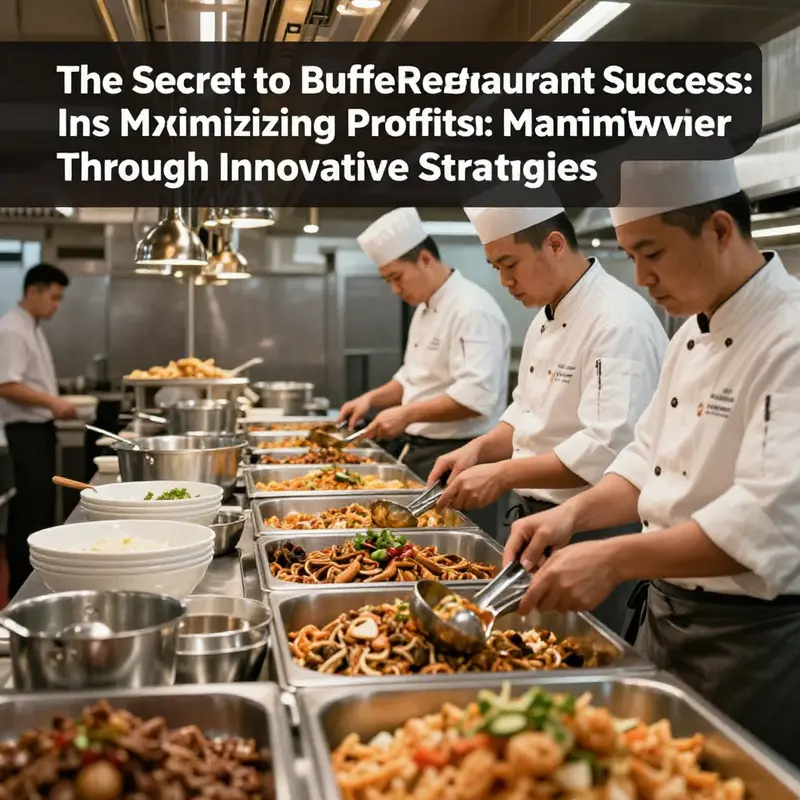
Profit in a buffet isn’t a magic trick or a single, flashy move. It’s a disciplined composition of volume, cost discipline, and precise operations that turn an all-you-can-eat concept into a sustainable business. The fixed-price model that defines most buffets promises unlimited access to food in exchange for a single per-person charge. But the real margin does not appear on the check; it emerges from the careful management of food costs, waste, labor, and fixed expenses, all synchronized to maximize revenue density without inflating prices. In this sense, the buffet is a test of efficiency as much as it is a test of appetite. When managers align menu, demand, and costs, even modest margins per guest add up to substantial profitability as turnover accelerates and waste declines. The heart of this dynamic lies in four interlocking levers: optimizing the food mix, increasing table turnover, embracing technology for forecasting and control, and disciplined management of fixed operating costs. Each lever reinforces the others, creating a system that can grow profitability without requiring more hours from staff or higher menu prices.
At first glance, the economics of a buffet can seem counterintuitive. A fixed price invites customers to consume more, but it also creates a ceiling on revenue per guest. The rule of thumb is volume over margin: the more guests served, the more total profit can accumulate even when the margin per guest is thin. To translate that into sustainable profit, operators must push the numerator (revenue) by generating higher guest density and the denominator (cost per guest) by tightening costs. The practical path to this balance begins with the food mix. High-margin items are not just luxury additions; they are strategic tools to lift overall profitability. Premium beverages, specialty dishes with favorable labor or ingredient economics, and carefully engineered combinations can move the average spend upward without persuading customers to abandon the buffet. Yet this must be done with care: offering too many low-margin, high-cost items can erode margins and create waste. A disciplined approach to the menu is essential. Standardized recipes and bulk purchasing are not ends in themselves but instruments that maintain consistency and control across a broad enterprise. When every dish is anchored by a precise specification—portion size, yield, and expected performance in the steam table—waste declines and predictability rises. In this way, the kitchen becomes not only a source of appetite but a lever of margin.
Minimizing waste is a second critical axis. Buffet lines can be surprisingly wasteful when demand fluctuates, the kitchen over-prepares, or trim and trimmings go unused. The discipline here starts with forecasting and inventory discipline. Food costs are a function of both price and waste. If cooks prepare more than will be consumed, the extra becomes a hidden cost that erodes the margin. Conversely, under-preparation creates shortages, drives customer dissatisfaction, and can trigger costly substitutions or slowdowns. The best operators build tight controls around yield. They train staff to execute precise portions, track spoilage in real time, and adjust production levels to the pace of demand. Real-time monitoring systems, sometimes aided by simple, robust data dashboards, provide visibility into what is happening on the floor. This enables kitchen teams to respond quickly—adjusting batch sizes, altering the mix of dishes offered, or steering procurement to align with actual consumption patterns. In practice, the result is a dynamic system where the menu is not static but responsive to day-to-day realities.
Table turnover represents the third pillar. A buffet’s capacity is limited by seat count and the length of the dining window. If a restaurant can seat more guests and turn tables more quickly, the revenue density increases even without raising ticket prices. A common tactic is to implement a seating policy that balances guest experience with turnover efficiency. A 90-minute seating window, for example, can increase the number of guests served per shift without requiring longer hours or more staff. The trick is to maintain a positive dining experience within that window: timely replenishment, clean and welcoming tables, and a pleasant ambience that encourages guests to stay within the allotted time. When the seating policy is paired with steady food quality and dependable service, the restaurant can push more occupancy through the same physical footprint. The math is straightforward: more guests per hour, and a consistent average spend per guest, equal more revenue per shift. Of course, this approach demands careful coordination between front-of-house and back-of-house operations. The dining pace must be managed so that replenishment occurs without creating bottlenecks or long lines at stations. When executed well, turnover becomes not a race but a rhythm that sustains a steady flow of guests through the dining room without compromising quality.
That rhythm increasingly relies on technology to stay synchronized with demand. The KAMII case study demonstrates how AI-driven forecasting can enable dynamic menu planning and real-time adjustments to ingredient ordering. AI tools analyze historical demand, seasonality, weather, local events, and even day-of-week patterns to predict which items will be most and least popular. The benefit is twofold: fewer unexpected shortages and less waste from over-preparation. In practice, this means places can adjust the mix of dishes posted on the line, replace underperforming items with better-sellers, and time the replenishment sequence to match guest arrival patterns. The technology is not about outsourcing judgment; it augments human insight with data-driven clarity. A manager can still decide which dishes to feature, but the decision is now anchored in precise forecasts rather than gut feel. This is the kind of capability that transforms a buffet from a simple volume-driven concept into a technology-led operation with measurable margins.
The financial scaffolding supporting these operational levers is equally important. Fixed operating costs are a steady drumbeat in the P&L, and their management often determines whether a buffet remains profitable in lean periods. Three costs commonly appear on the monthly statements: rent, software/licenses, and maintenance. Consider the numbers as a baseline: rent at $25,000 per month, software and licenses at $4,000, and maintenance/calibration at $6,000. Together, these fixed costs form a ceiling on profitability that cannot be ignored. They must be controlled with the same rigor as food costs. If the business relies on aggressive sales to cover a high fixed cost base, any variance in guest volume can push margins into the red. Savvy operators scrutinize these numbers and seek efficiencies that reduce waste and redundancy without compromising the guest experience. For example, better contract terms with landlords, renegotiation of license fees, or consolidated maintenance plans can yield meaningful savings without altering the guest-facing product.
The synergy between these components becomes most visible when considering how the chain scales. A notable example from recent industry analysis shows a restaurant growing revenue from $3.78 million to $6.16 million over two years by leveraging the five operational levers mentioned earlier: dynamic pricing, menu engineering, supply chain optimization, energy efficiency, and customer engagement. While the case study is an abstraction, it captures a strategic pattern: invest in demand forecasting, tailor the menu to profitability, optimize procurement and energy use, and cultivate guest loyalty to extend service windows strategically. When combined, these moves multiply the effect of each increment in volume and improve margins across the day. The core message remains constant: profitability in a buffet is not about squeezing more price out of customers but about enabling more value out of every dollar spent by the business on production and operations.
A practical way to think about this is to view the menu as a living instrument, not a fixed catalog. Menu optimization is about aligning the plate with financial performance. High-margin items should be favored in the lineup, but not at the expense of customer satisfaction or perceived value. The goal is a delicate balance where the most profitable dishes also satisfy the broad expectations of diverse guests. The economic logic extends to beverage strategy as well. Premium beverages can carry better margins when matched with disciplined cost control. Yet this should be balanced against the risk of pushing customers away from the core value proposition. The most successful buffets calibrate their offerings to create a sense of abundance while ensuring that the cost of goods sold remains closely aligned with revenue density. In other words, abundance must be paired with discipline so that the guest experience remains generous without tipping the financial scales.
Labor optimization completes the quartet of drivers. The buffet model allows for lean staffing by concentrating labor around peak hours and streamlining replenishment processes. Roles shift from constant, hands-on activity to a more rotational approach: cooks, line attendants, and hosts each perform a handful of critical tasks with minimal overlap. The result is a leaner payroll with less idle time and more consistent service quality. This approach does not imply sacrificing guest experience; rather, it is a matter of deploying people where they generate the most value and ensuring that critical touchpoints—food availability, station cleanliness, and table maintenance—are continuously managed. Training and standard operating procedures are essential here. When staff know precisely what to do and when to do it, the same team can support a higher guest volume without sacrificing service quality. It is in this domain that the buffet’s promise of value becomes a financial advantage: more guests served with controlled costs, not more hours paid to people performing repetitive, low-impact tasks.
An often-overlook dimension is the role of ancillary revenue streams. Buffets frequently supplement core meals with add-ons—premium options, dessert bars, or alcohol—creating incremental spend per guest. Corporate events or private functions can provide a secondary channel for revenue, particularly during off-peak times. These streams demand attention to pricing, service design, and capacity constraints, but their payoff can be meaningful when integrated into the broader operating framework. The trick is to ensure that these additions do not undermine the value proposition of the main buffet. If managed wisely, they become a way to raise average check size while maintaining the perceived value that attracted guests in the first place. The operational logic is straightforward: every additional revenue stream should be aligned with demand, cost control, and customer satisfaction so that the overall profitability equation remains favorable.
To bridge theory and practice, consider a scenario that binds these threads together. A buffet operator analyzes daily demand, leverages AI to forecast which dishes will be most popular, and tests a revised menu mix designed to lift the margin on high-value items. They implement a 90-minute seating policy during peak hours to increase turnover, while ensuring replenishment occurs in a disciplined, predictable rhythm. They renegotiate fixed costs where possible, especially in software licenses and maintenance contracts, to free capital for investments in energy efficiency and supplier optimization. They monitor spoilage and waste with real-time dashboards, triggering adjustments in production before the waste crosses a critical threshold. They design a dessert bar and a beverage add-on that offer meaningful margins yet remain accessible to guests seeking value. The result is not just higher revenue but a more predictable and controllable cost structure. The reality is that the best operators create a virtuous loop: improved demand forecasting leads to better menu planning, which reduces waste and stabilizes costs, which then enables more aggressive yet sustainable pricing or promotions that further boost turnout. Each cycle reinforces the next, turning what could be a fragile margin into a durable business model.
The path forward for any buffet operation lies in embracing this integrated view. It requires a willingness to test new approaches, measure their impact, and scale what works. It also calls for a careful attention to the guest experience. No amount of cost discipline can substitute for a consistent, satisfying dining encounter. Guests will judge value not only by price but by how well the buffet meets their expectations for abundance, freshness, and pace. The best operators walk that line with a clear strategy and a disciplined execution that keeps the menu fresh, the kitchen efficient, and the dining room moving at a steady rhythm. When this balance holds, the buffet becomes more than a place to eat; it becomes a model of operational efficiency where the math of revenue density and cost control aligns with the art of hospitality.
For readers who want a concrete touchstone on how technology and data inform these decisions, a practical exploration of AI-driven cost control offers actionable insight. The external research on AI-enabled forecasting demonstrates how predictive tools can reduce spoilage, optimize procurement, and adjust production in real time. While the specifics of each software stack will differ across venues, the underlying principle remains the same: forecasting accuracy and timely adjustments drive margins by aligning supply with demand more precisely than manual planning allows. This is not a distant ideal but a pragmatic shift that many thriving buffet concepts have already begun to implement. As the industry continues to evolve, the convergence of menu engineering, demand forecasting, and cost discipline will likely become the defining characteristic of successful buffet operations, enabling growth without sacrificing the core promise of value that attracts guests in the first place.
A practical takeaway from this synthesis is to treat the buffet as a system rather than a collection of separate tactics. It is a system in which menu choices influence waste, which in turn affects labor needs, energy use, and overall profitability. It is a system where demand signals shape production, which then informs pricing, promotions, and service design. The better a manager can align these pieces, the more predictable the results will be. And while external market conditions will always present challenges, the ability to optimize inside the walls of the operation—through menu planning, demand forecasting, waste reduction, turn optimization, and fixed-cost discipline—offers a durable path to profitability that remains accessible to operators who are willing to invest in the necessary systems and processes. In the end, the question of how a buffet makes money is answered not by any single clever move but by an orchestration of discipline, data, and hospitality—the trio that converts appetite into sustainable return.
To explore a concrete, retail-facing example of this approach, readers can examine a menu-focused reference that provides a sense of how a specific buffet lineup can be structured to support cost control while delivering value. For readers seeking a tangible connection to the broader industry concepts discussed here, the following internal reference offers a practical look at how such menus are presented and priced in a way that aligns with the operational levers outlined above. Royal Buffet Menu.
External resource for further reading on AI-driven cost management in buffet operations: https://www.researchgate.net/publication/345678912UsingAItoControltheCostofaBuffetRestaurant_KAMII
Final thoughts
The buffet restaurant model thrives on the delicate balance of high customer turnover and effective cost management. By prioritizing high-volume sales through strategic pricing and engaging customer experiences, coupled with disciplined control over food costs and operational efficiencies, buffet owners can secure their place in a competitive market. Ultimately, understanding these mechanisms not only enhances financial performance but also fosters a loyal customer base eager to return for more. For those looking to refine their own buffet operations, adopting these proven strategies could pave the way for sustained success.